


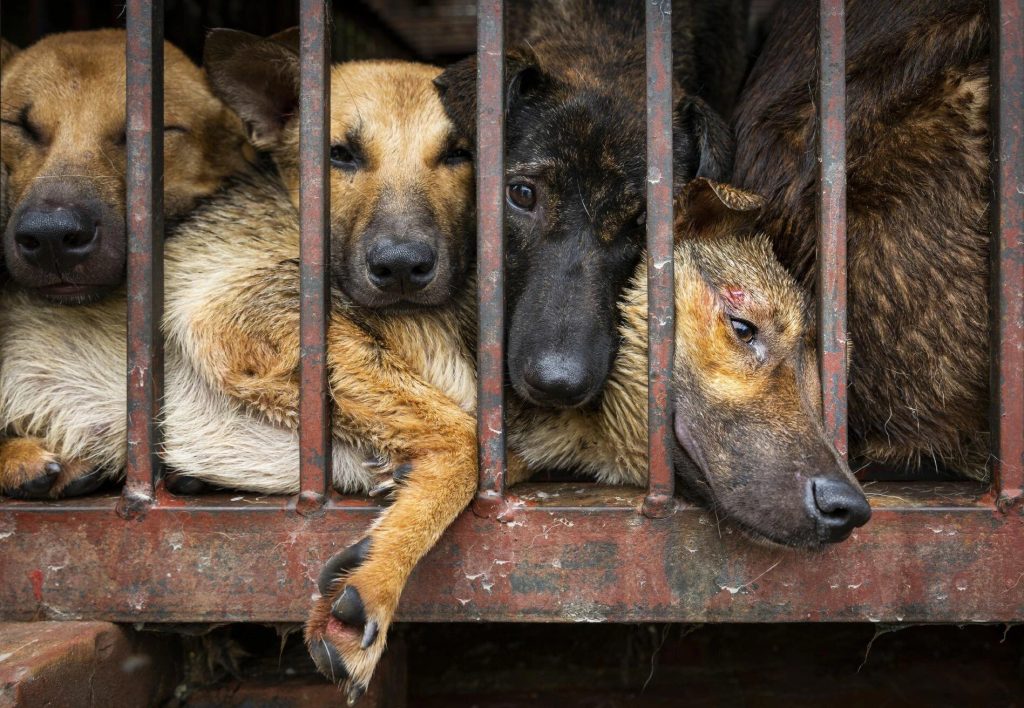
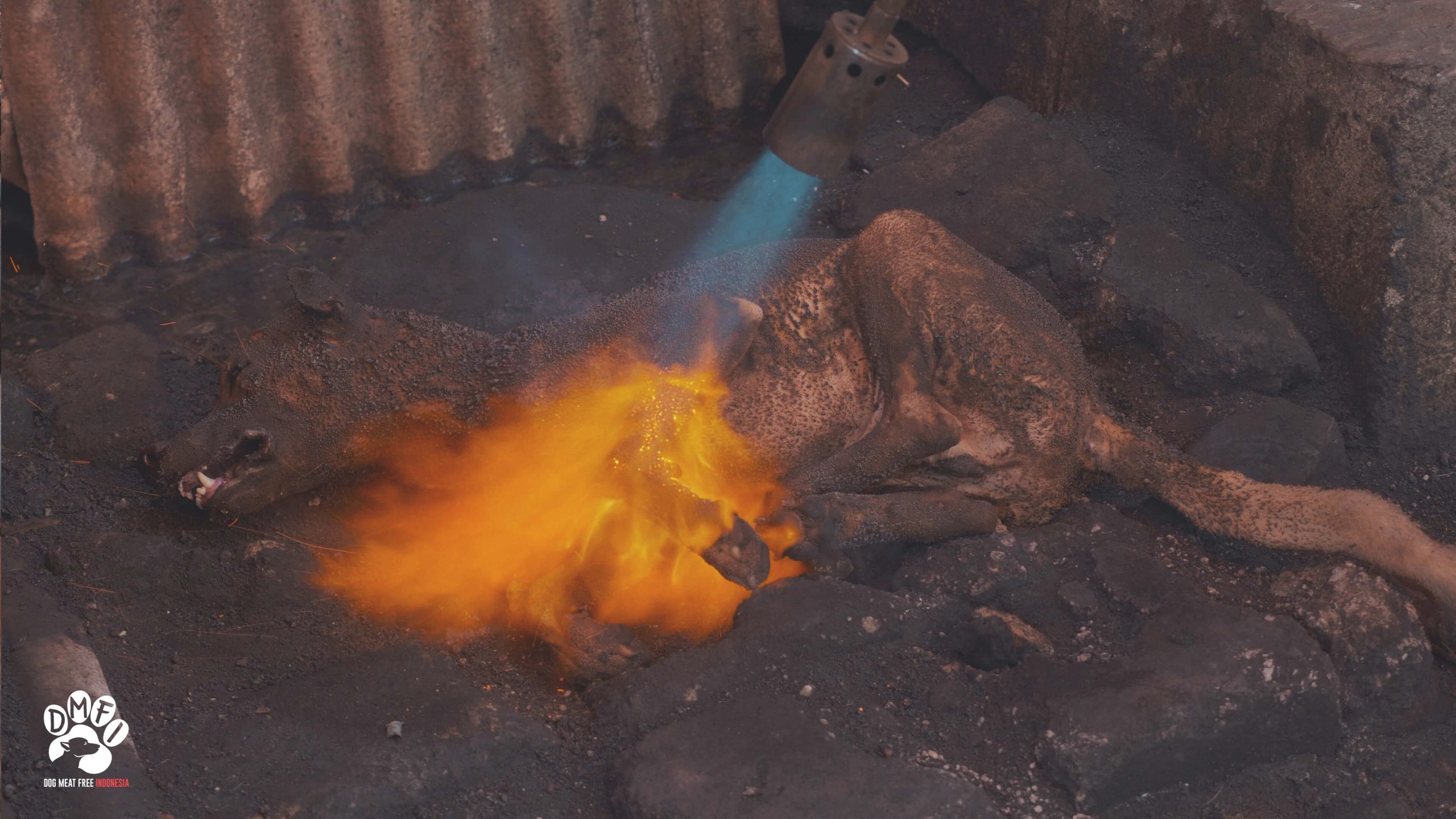
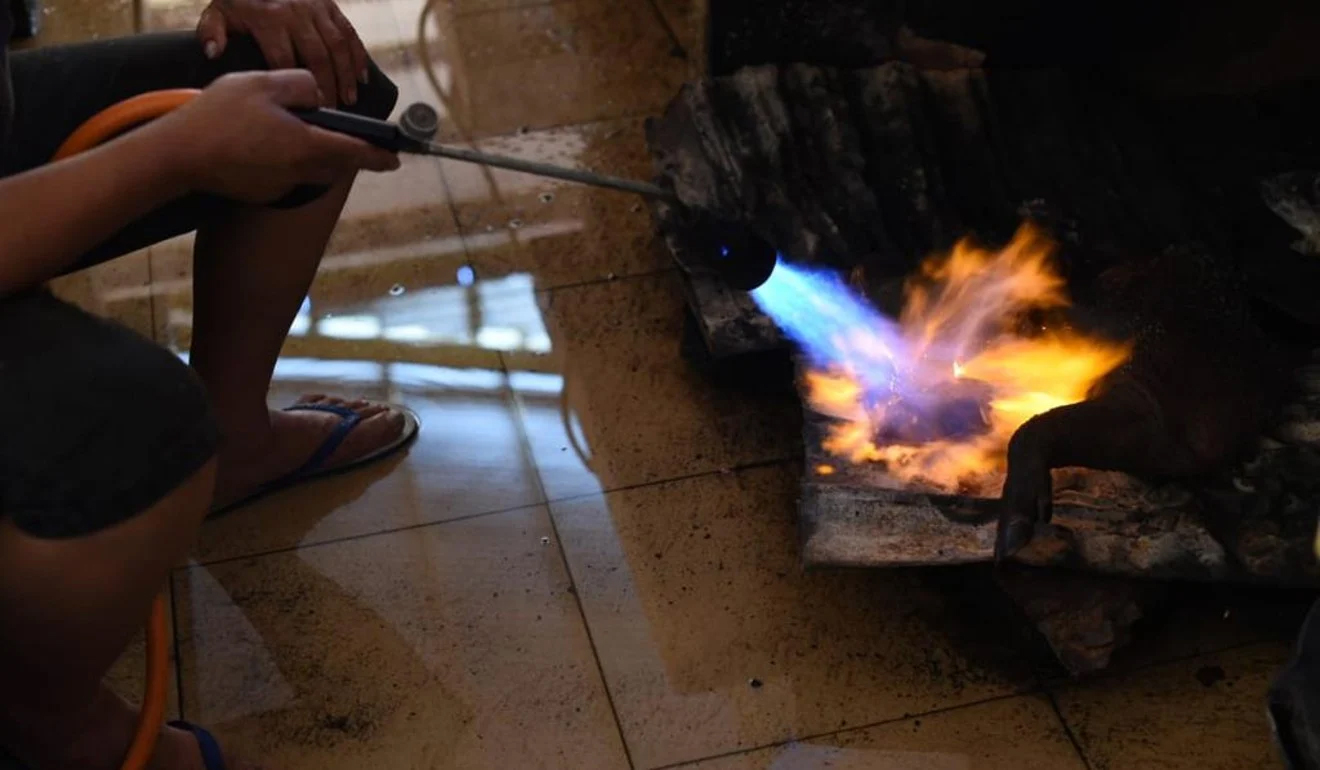
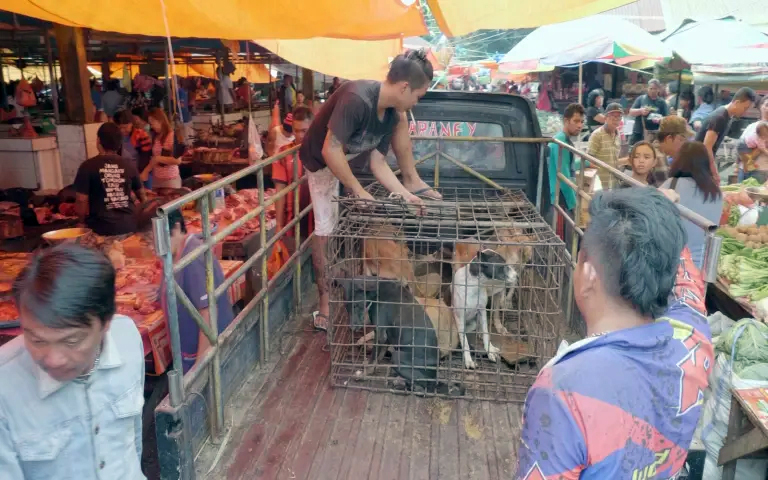
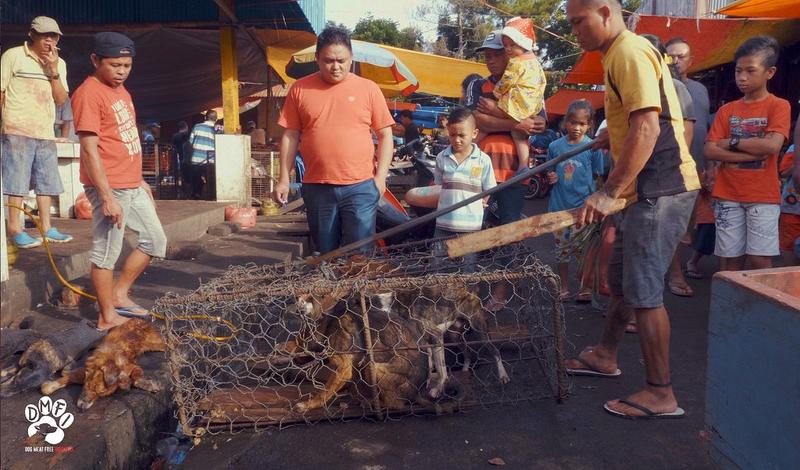
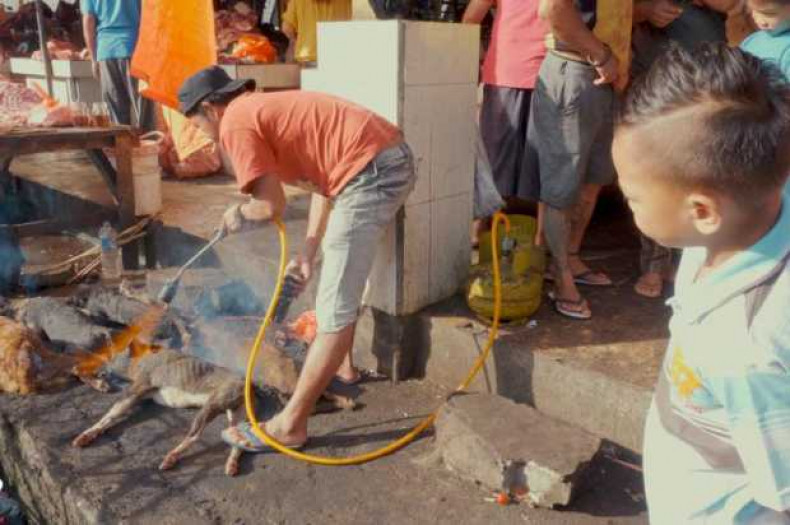
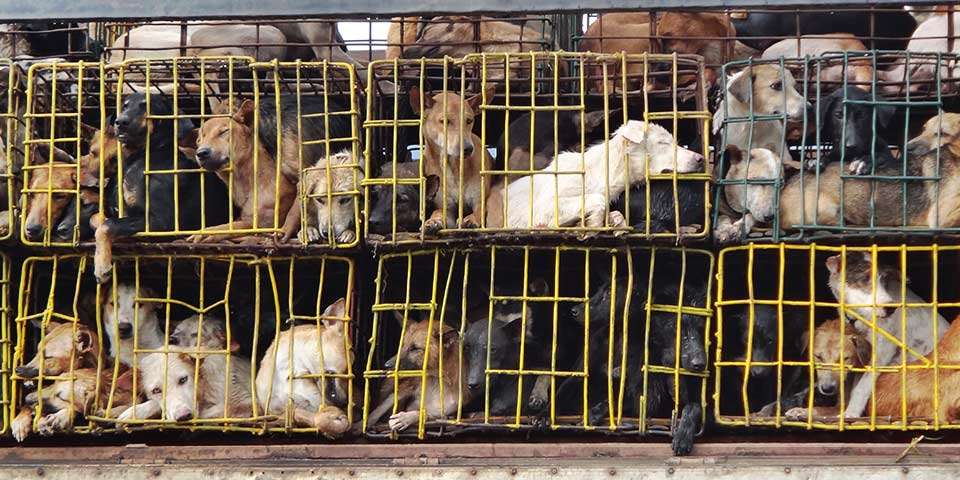
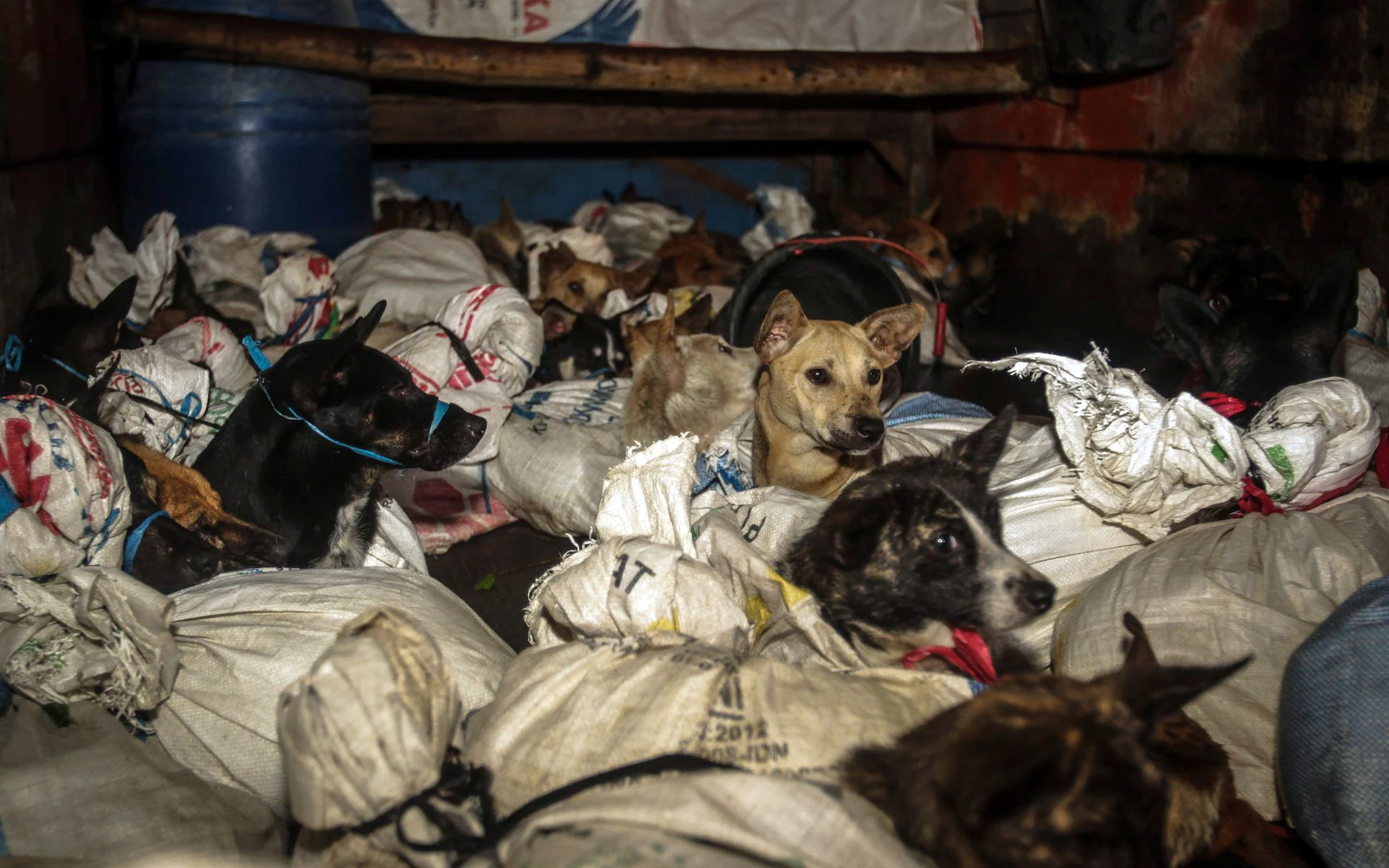
Every year, millions of dogs and cats are transported across Asia to satisfy the demand for dog meat in markets and restaurants. Many of these animals are stolen pets and illegally trafficked dogs and cats. During long, grueling journeys across the country, sweltering in heat and dehydration, the dogs are crammed into cages and bags so tightly they can barely move, their mouths gagged so tightly they can barely breathe. They are sent on long “journeys to hell” to markets, slaughterhouses, and restaurants. Dogs and cats watch as their fellow dogs are brutally slaughtered before their eyes, burned with blowtorches, and beaten over the head with sticks while they wait their turn.
An estimated 30 million dogs and cats are sold and slaughtered for the meat trade in Asia each year.
“What we saw there completely shocked us…
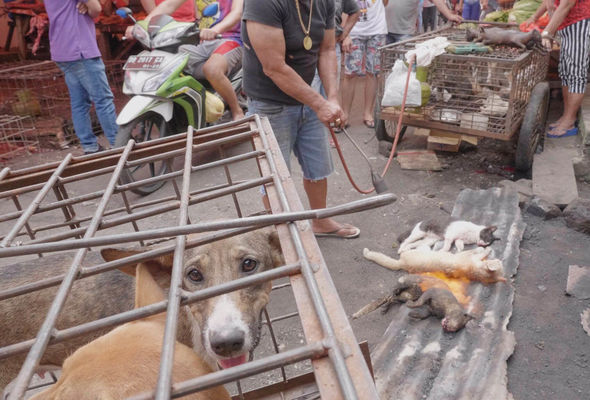
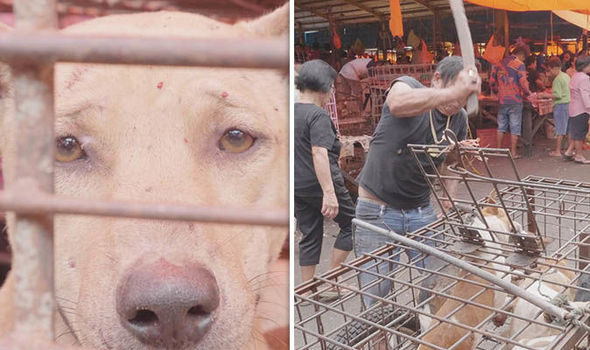
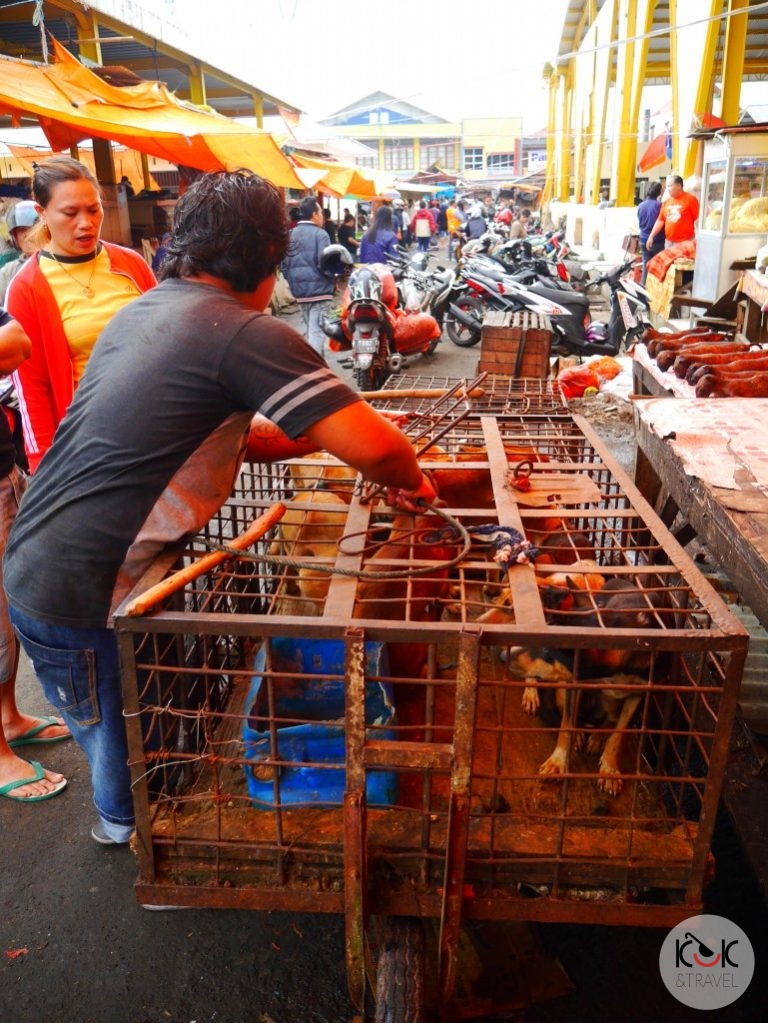
These live animal markets, known as “extreme markets,” are places of extreme animal cruelty. Tens of thousands of animals, including thousands of dogs and cats, are sold and slaughtered every week.The animals we saw at the markets were frightened, often sick and injured after grueling journeys to the market and rough treatment by traders. They sat huddled in cages, watching others being slaughtered… trembling with fear, waiting their turn. “The sight of absolute horror in their eyes, the sound of the club as they were killed, their screams of pain, and the smell of burning fur and flesh are unimaginable and unforgettable,” says Lola Webber, Dog Meat-Free Indonesia Coalition Coordinator.
All the material you will read and see below is completely reliable, collected by our editors from dozens of foreign media sources, as well as from the official websites of organizations that have been fighting for many years to abolish the cruel (literally: slaughter) business in Asia – the dog and cat meat trade.
This material, in its entirety, has also been translated into English. To read in another language, please select the desired language in the right column of the website.
WARNING! The photos and videos in this material contain extremely serious content! Viewing is STRICTLY NOT RECOMMENDED for people with heart problems, weak nervous systems, high blood pressure, children, and pregnant women!
But if you decide to watch and read this article, please read it to the end and watch all the photos and videos, no matter how desperately difficult it is for you to process. Only after seeing them will you be able to fully understand and feel the horror of sadistic animal abuse occurring and continuing to escalate in Asia. And only then can you decide to provide even the smallest amount of assistance to stop this brutal hell.
- Also, at the end of the article, we will provide all the contact information for animal rights organizations currently fighting this bloody business, so we can spread this information as widely as possible around the world and try to help them.
- We will provide links to donation pages for the volunteers who annually buy unfortunate animals from dog and cat meat traders, forcibly take them away, or spend huge sums of money filing lawsuits to shut down this illegal business in Asia.
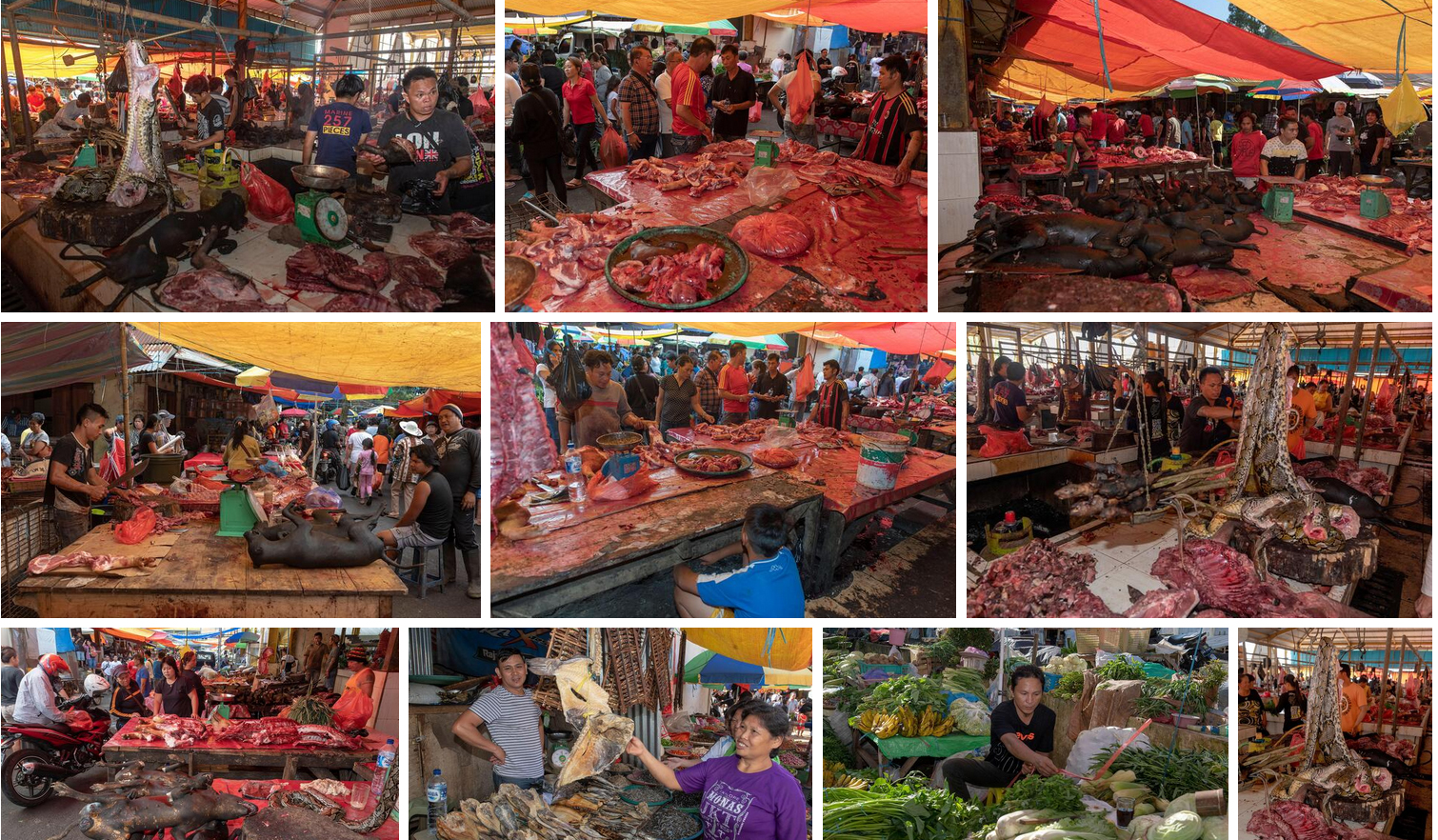
So, the cruel, sadistic blood business in Asia. Mass slaughter and animal trafficking in “extreme markets” in most provinces across various Asian countries.
First, it’s worth mentioning that local authorities and tour operators advertise these markets to tourists as must-sees. EncouragementSuch markets trivialize the very serious nature of suffering and cruelty towards animals. Animal cruelty should never be promoted as a form of entertainment.
A mother with small puppies will also be brutally killed, but first, her small children will be beaten and burned alive before her eyes….
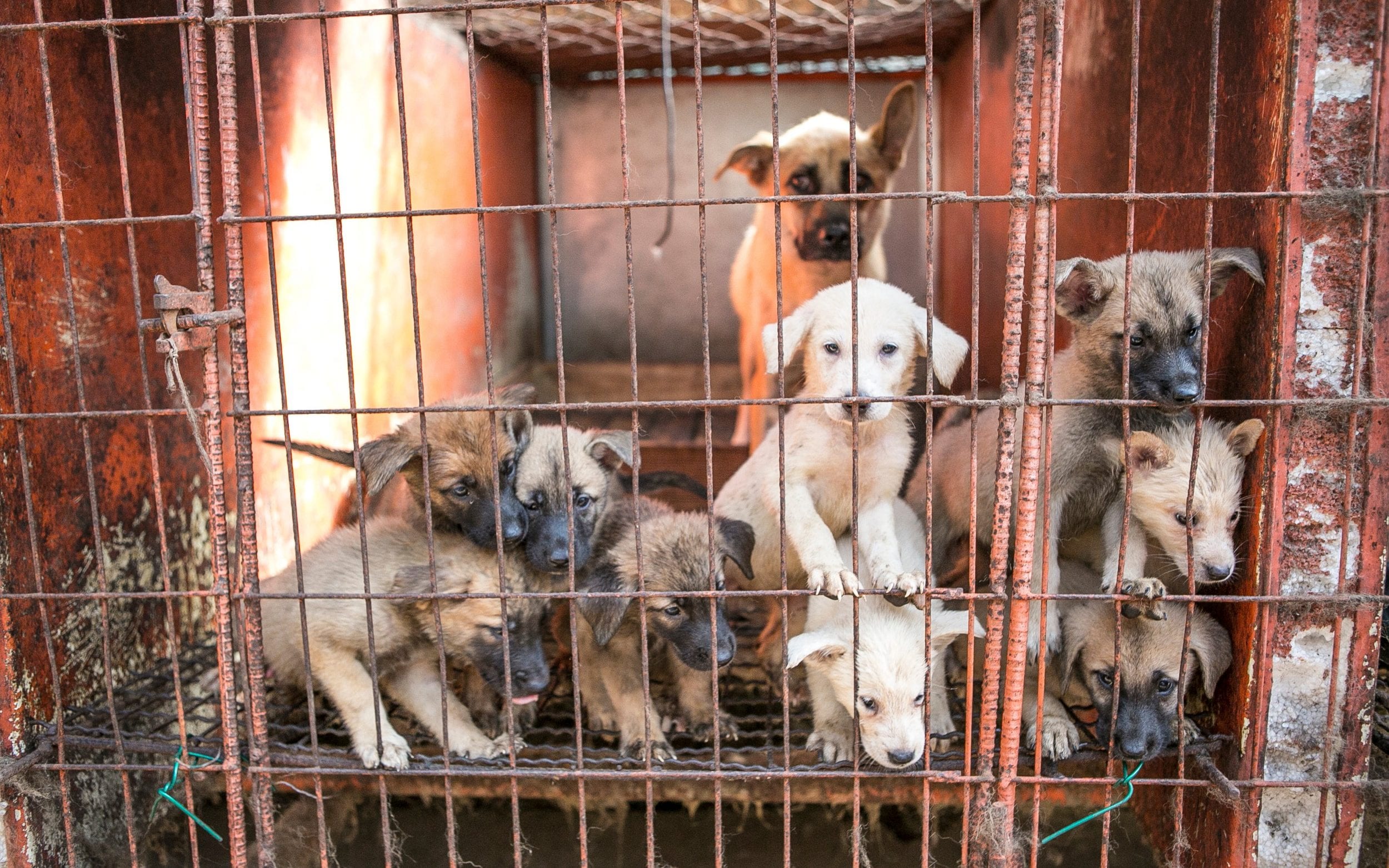
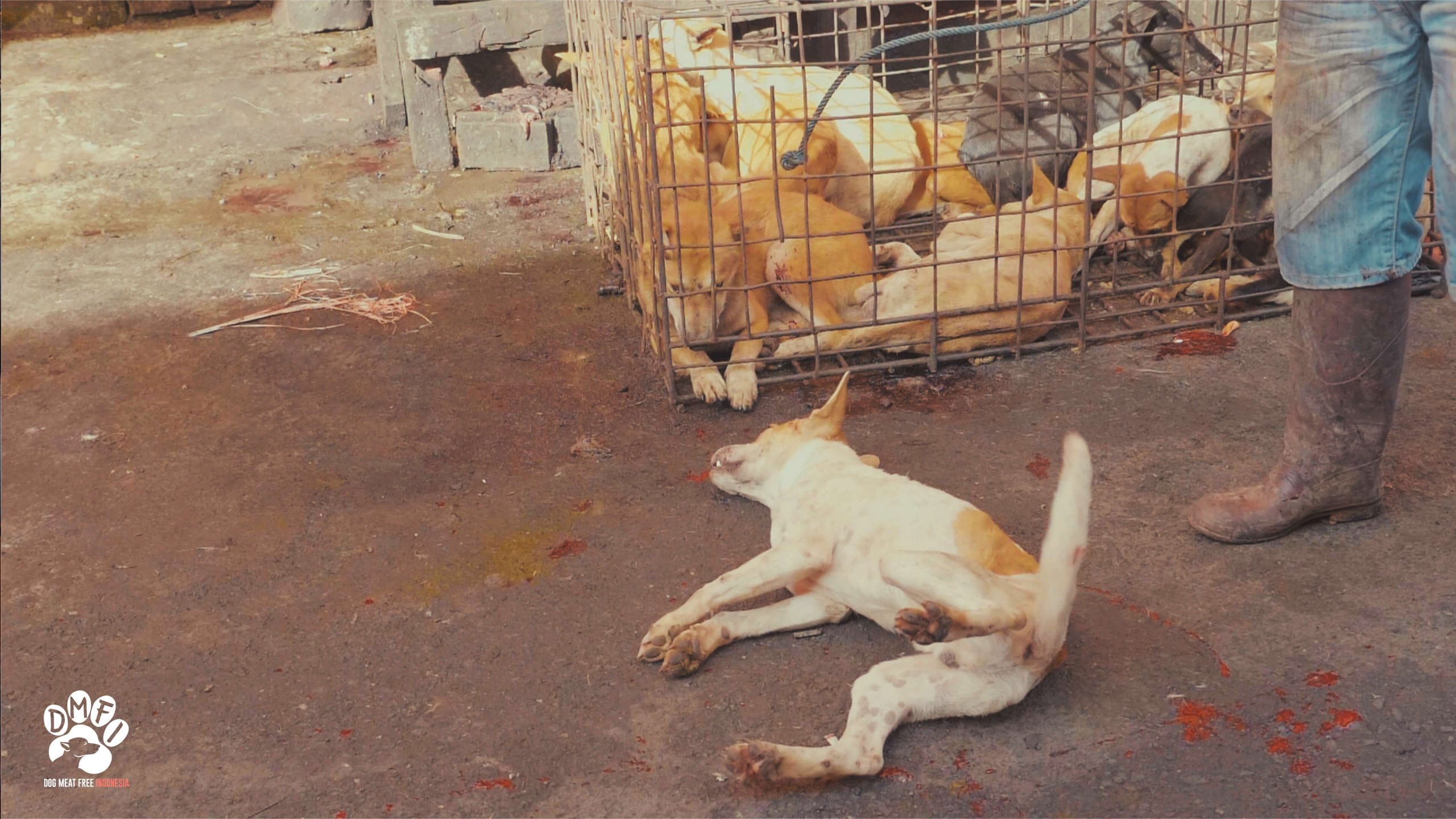
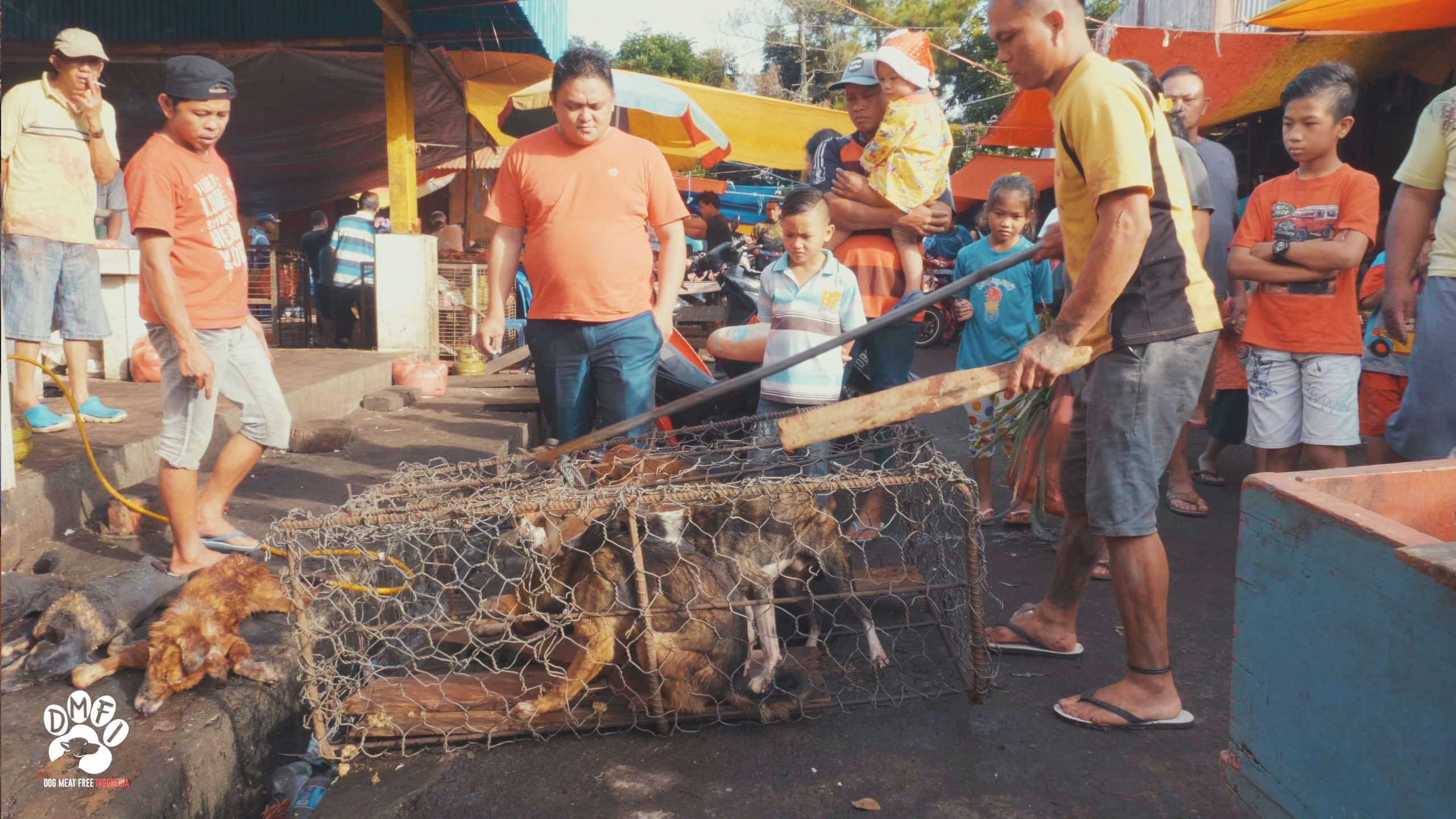
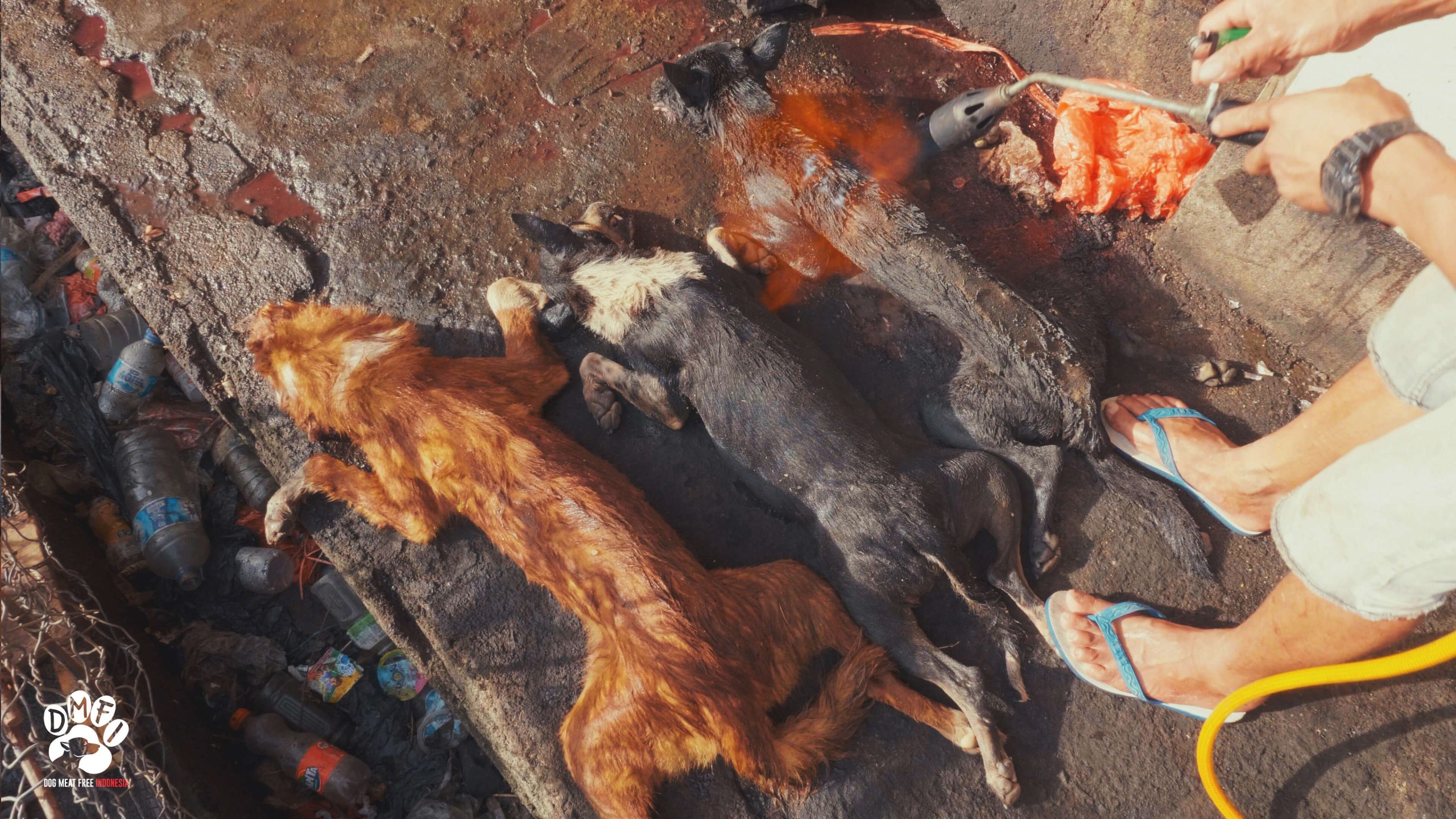
This trade is not only insanely cruel, but also poses a threat to public health and safety and is largely Illegal.
Research by animal rights organizations in Asian countries shows that up to 90% of dogs at live markets are stolen from yards or caught on the streets, many of them domestic dogs and cats.
For example, North Sulawesi province has one of the highest rates of human rabies deaths in Indonesia. The demand for dogs and cats at live animal markets facilitates the illegal movement of large numbers of animals with unknown disease status into densely populated areas, hindering efforts to protect people and their animals from the deadly rabies virus.
Sick and healthy dogs and cats are routinely slaughtered and sold for meat, using killing methods that are as unhygienic as they are cruel. The ground, covered in blood, flesh, brain fragments, and fly larvae, poses a serious and potentially fatal danger to both the public and consumers.
Pet Theft
Every day in cities across Southeast Asia, pets, stray dogs, and cats are brutally stolen by ruthless dog and cat meat traders seeking profit. Armed thieves patrol neighborhoods, stealing pets from yards or roaming the streets, threatening the lives of pet owners and brutally taking their pets. Cat and dog theft has sparked significant social unrest in countries like Indonesia and Vietnam, as people are fed up with the theft of their pets and, in some cases, resort to violence to stop pet theft in their communities.
Cats and dogs are kidnapped in a variety of ways. Thieves often ride motorcycles with cages attached to their bikes, snaring unsuspecting animals with wire snares and dragging them through the streets until they stop struggling. Thieves may also approach a dog and repeatedly hit it on the head until it is captured and placed in a cage. Poison is also commonly used—in Indonesia, cyanide-laced meatballs are thrown to unsuspecting dogs. In Vietnam, dogs are electrocuted with homemade stun guns or shot with “poison” darts laced with succinylcholine chloride. Cat thieves strategically place food traps to catch stray cats.
Pet owners often complain of being afraid to go outside and that their lives are threatened by thieves. They report being unable to walk their dogs for fear of being kidnapped. In Indonesia, pet thieves are ruthless in their pursuit.They terrorize communities to steal pets for sale.
Many dogs and cats end up in markets and restaurants still wearing collars, a sign of their former life as pets.
Fur Removal and Carcass Preparation
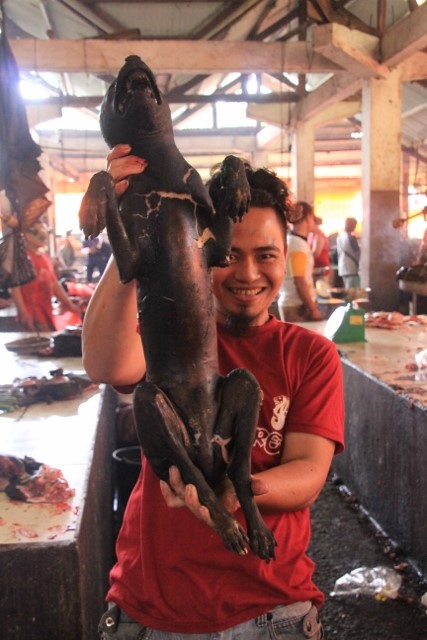
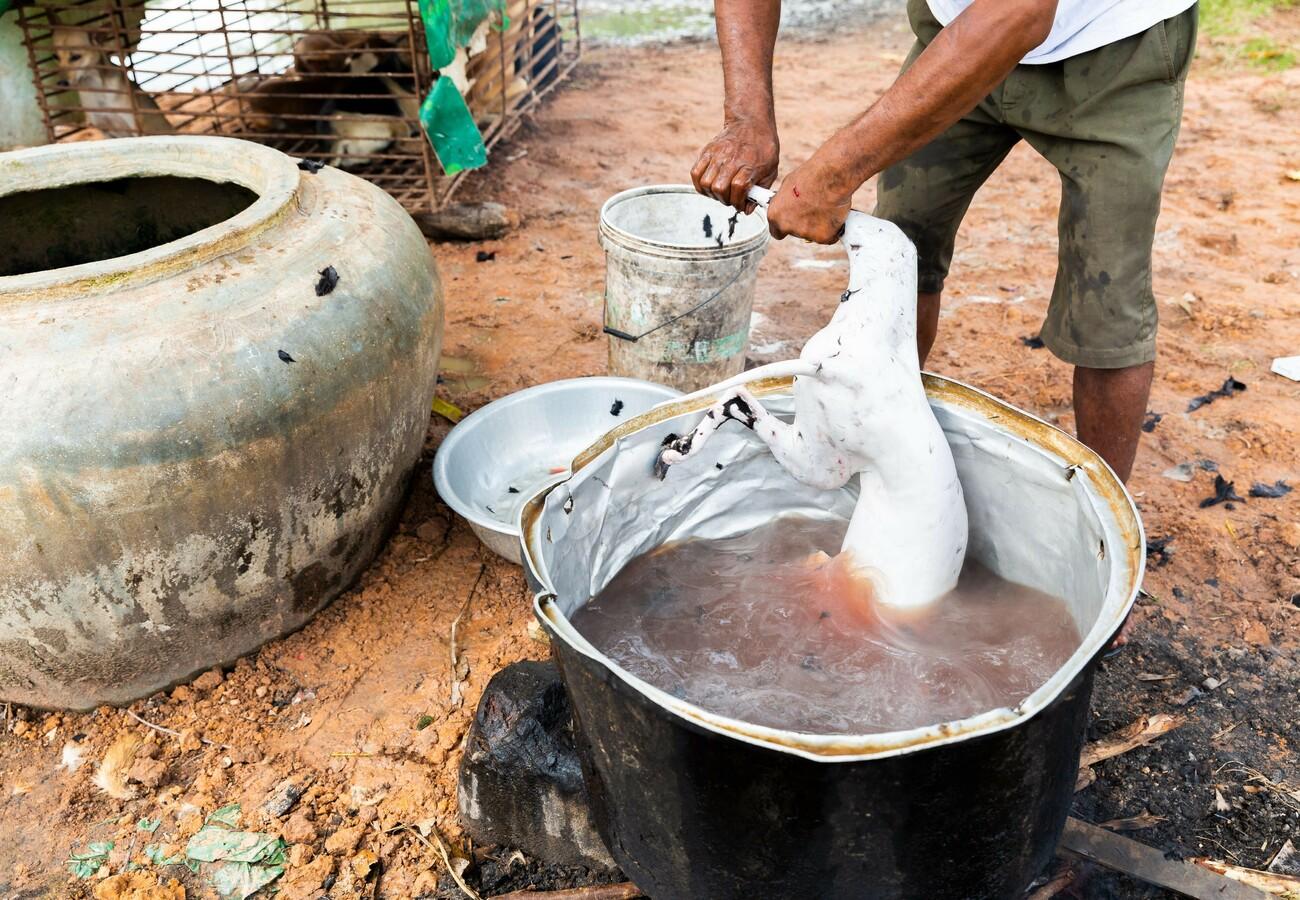
Before being sold to restaurants, the animal must be de-furred. This is done by plunging dogs and cats (some while still alive) in boiling water and removing the fur, either by hand or with a knife. Cats may be boiled or placed in a de-feathering machine. In other cases, a blowtorch is commonly used to burn off the body hair. After the fur is removed, the animals are prepared for consumption.
Dog and cat meat restaurants openly advertise on the streets of Indonesia, Vietnam, and Cambodia
Most serve only dog and/or cat meat. Many restaurants purchase pre-killed dogs from wholesalers, while others keep a small number of dogs and cats on-site and slaughter them on demand. The animals are kept in hellish conditions in overcrowded cages in the back of the restaurants, often waiting for days without food or water before slaughter. In Cambodia, dog meat is called sach pises (special meat), in Vietnam it is thịt chó, and in Indonesia it is RW.
Volunteers from one of the most active organizations fighting this business, Dog Meat Free Indonesia, have witnessed young children watching as dogs were beaten to death with sticks or burned with a blowtorch while still alive. Unfortunately, none of the children we observed showed any emotional reaction, suggesting they may have become desensitized to cruelty.
The markets also rely on the illegal capture and trade of wild animals, wiping out rare populations and causing enormous suffering.
Фестиваль собачьего мяса в Китае – высшая степень жестокости
While some may defend these customs as local “customs,” we do not believe that customs should ever justify cruelty to animals. Most people in Indonesia don’t eat dogs and cats and would be appalled by the cruelty of these markets, but the reality is that, regardless of their origin, live animal markets undermine national and public interests and security, and facilitate the illegal harvesting and trade of animals, which poses serious threats to human health and animal welfare.
The suffering of animals in these markets is heartbreaking, and it must be stopped!
Some may say, “But so many people in the world hunt and kill wild animals, and not always humanely, and you make a tragedy out of dogs and cats.” The answer is simple: wild animals are genetically programmed to fear humans, and they will never confront a hunter—their killer—but will run, hide, or defend themselves. A dog or cat is an animal domesticated for centuries and completely oriented toward humans.
Dogs are gentle and devoted creatures with the intelligence of a 3-4 year old child, and a gaze and facial expression that remind us of a human child, only on four legs. These animals are willing to endure all suffering from humans, even accepting death as “their due,” i.e., “I am incredibly hurt and terrified by what humans do to me, but if they do it to me, then it is necessary, and I, a dog, must accept it.”
Cats are cute, fluffy pets that sleep on your headboard or warm your feet. They purr in your ear and lick your face at night, knead you with their paws, and rub against your legs or arms when they sense you’re unwell or sad.
Both dogs and cats are strictly domesticated and tamed to humans. They’re not afraid of people; they’ll come to you if you beckon them. And when these animals end up in these slaughterhouse markets, even as they die in terrible agony, they can’t understand why humans are so cruel to them, condemning them to death and betraying them.
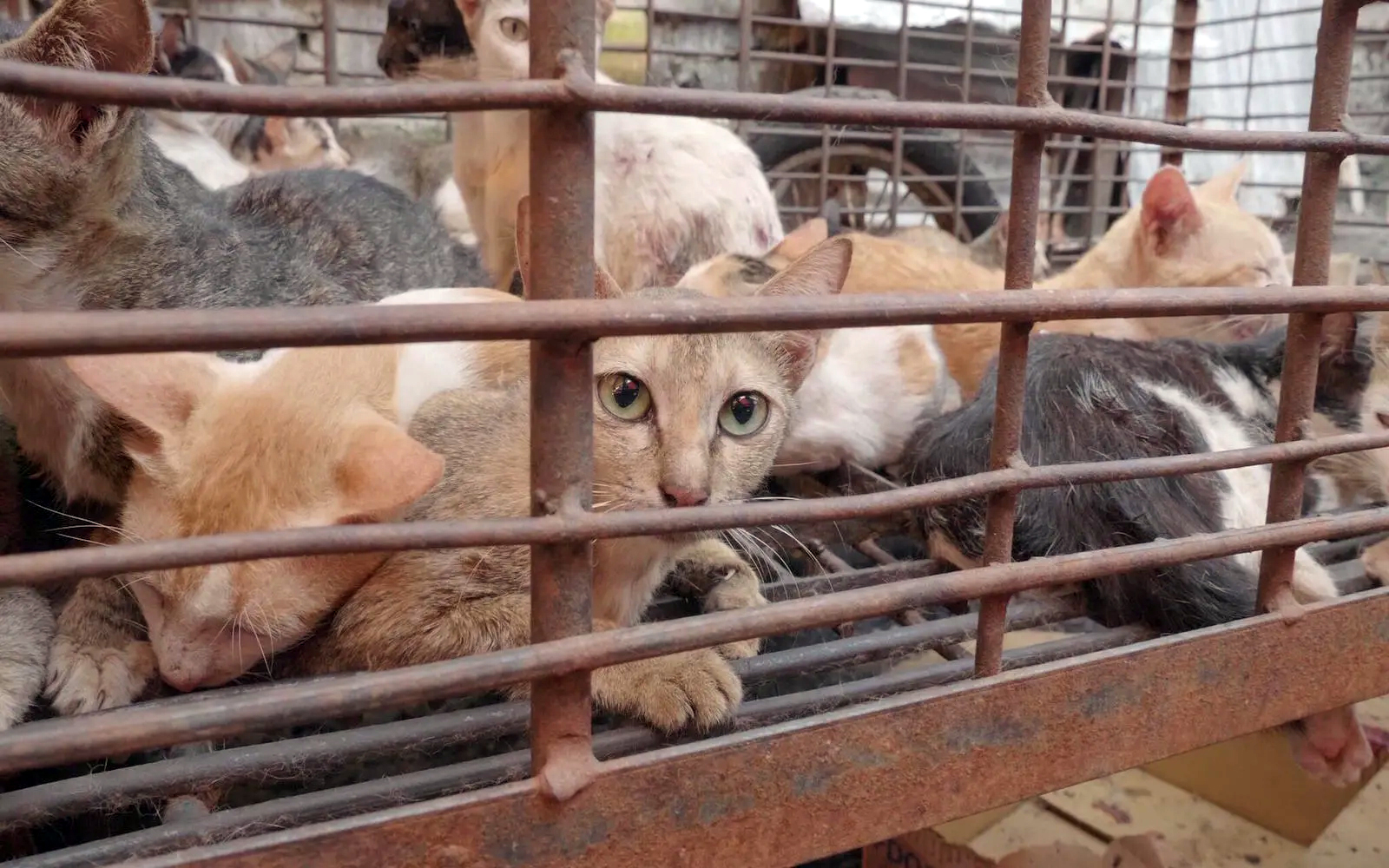
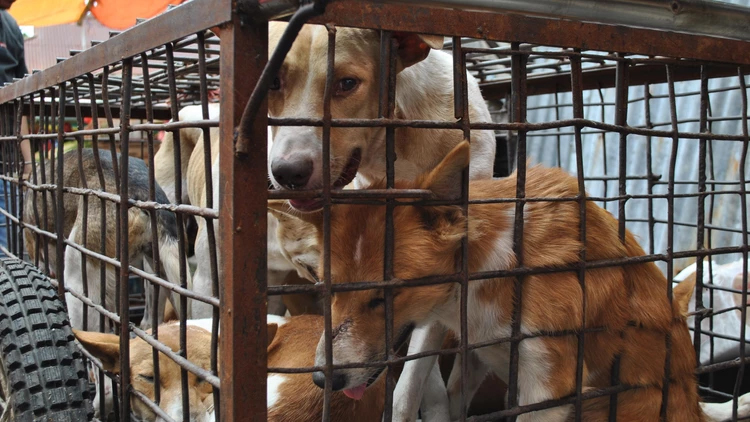
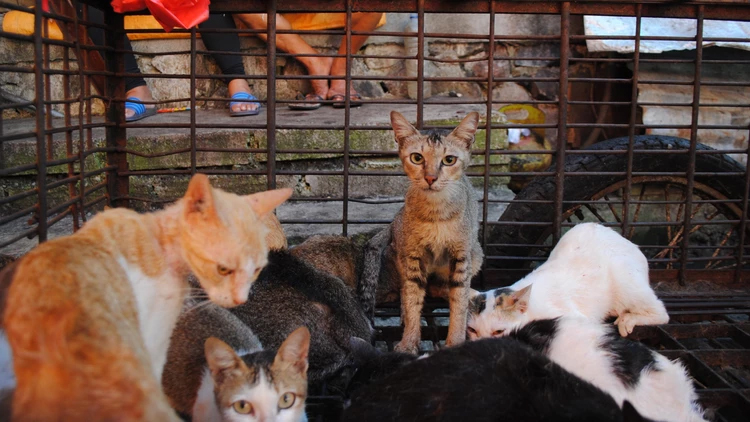
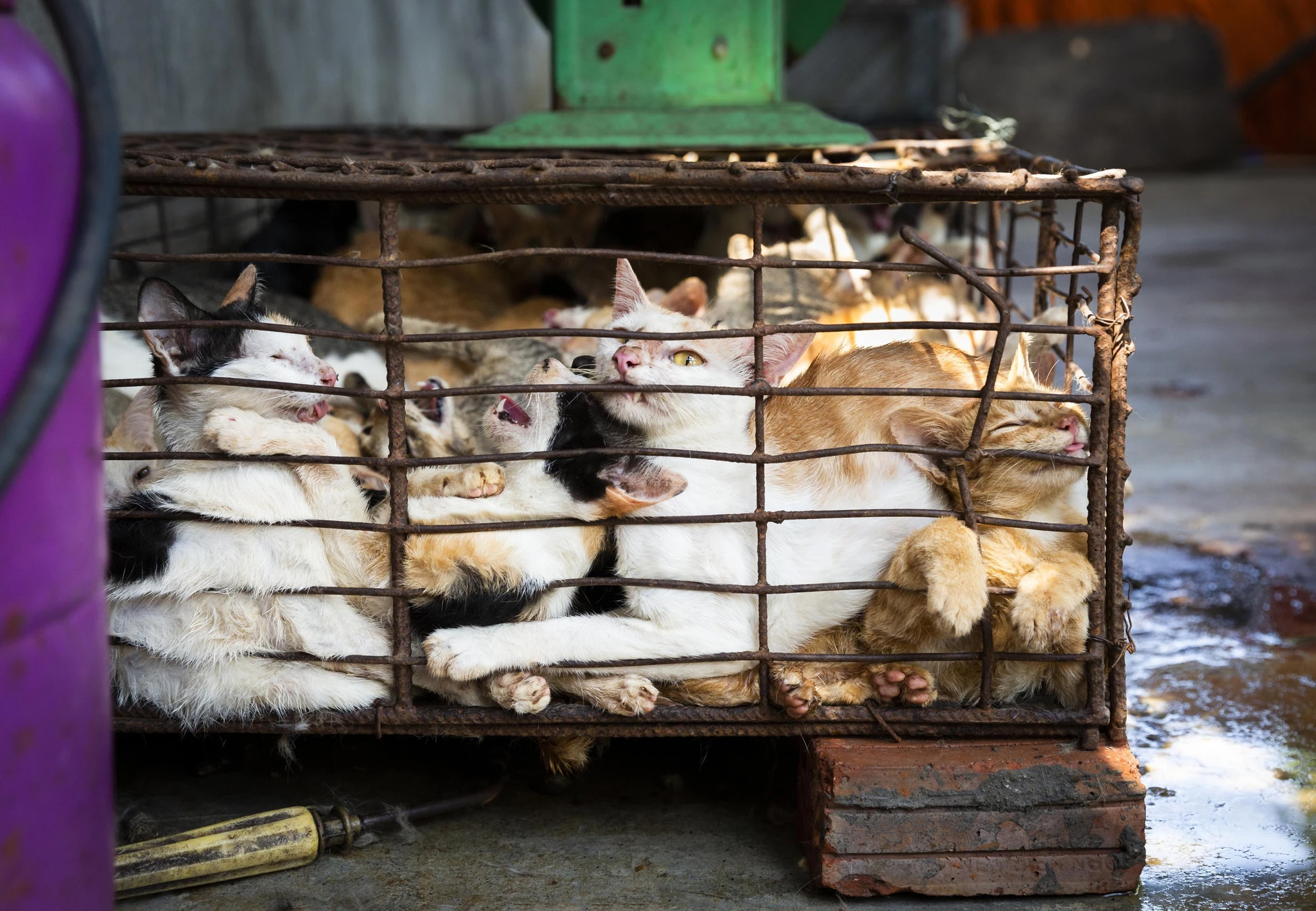
Cats and dogs being taken to be brutally killed in front of their fellow humans. These looks…When you can’t forget – they are full of despair, sadness, and horror in anticipation of their painful death:
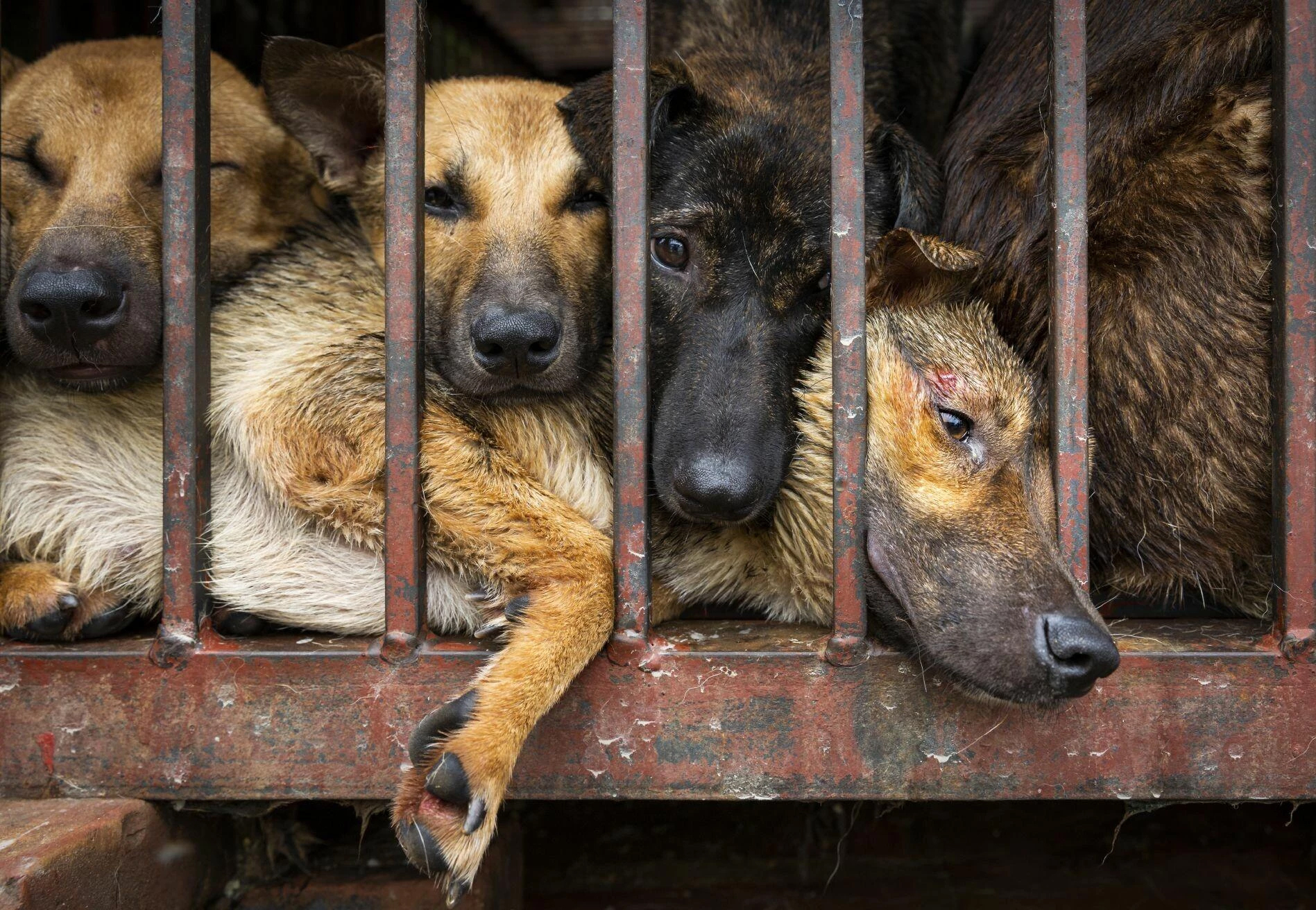
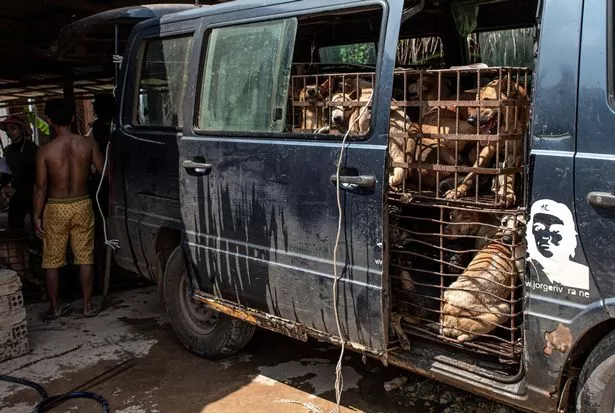
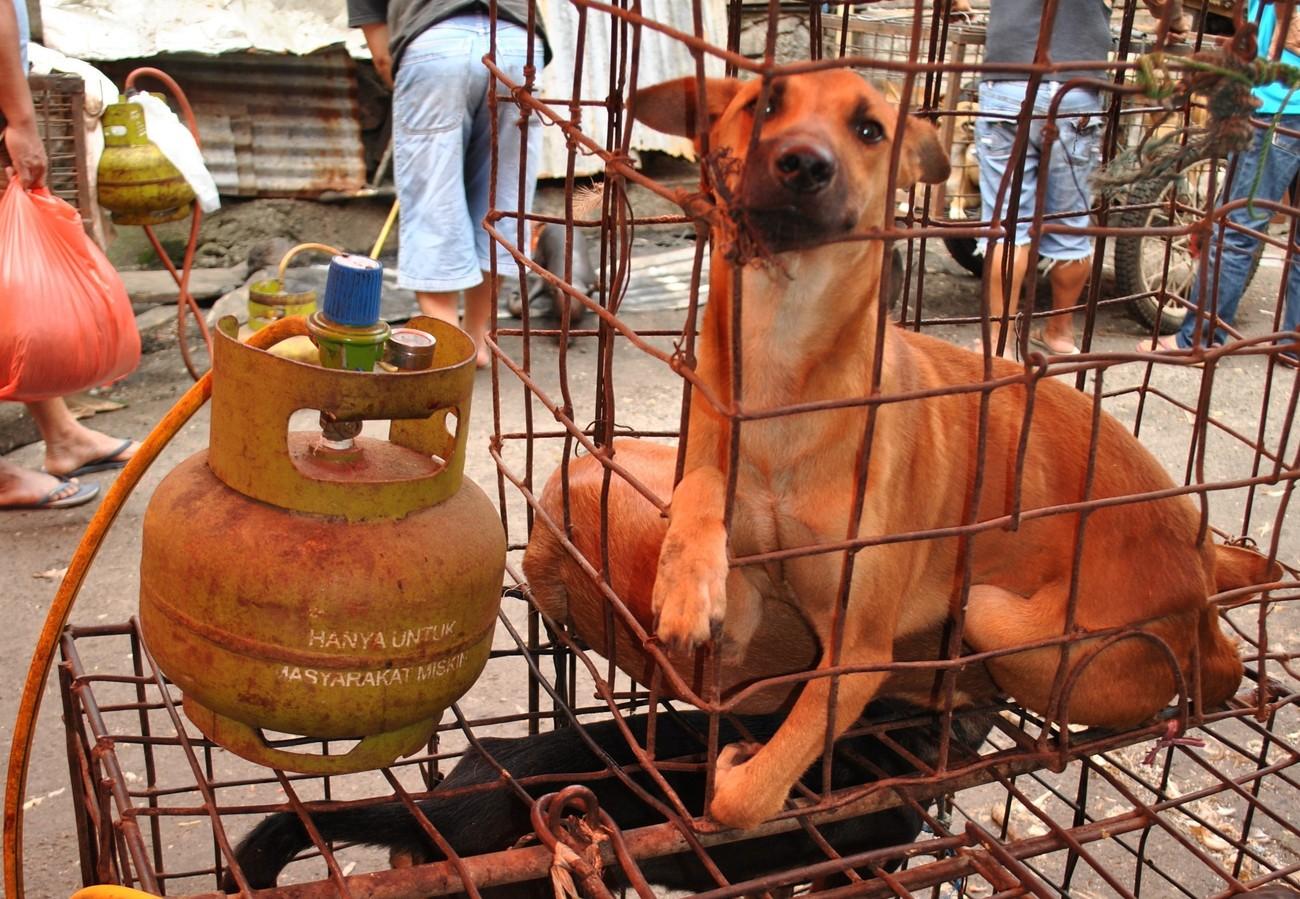
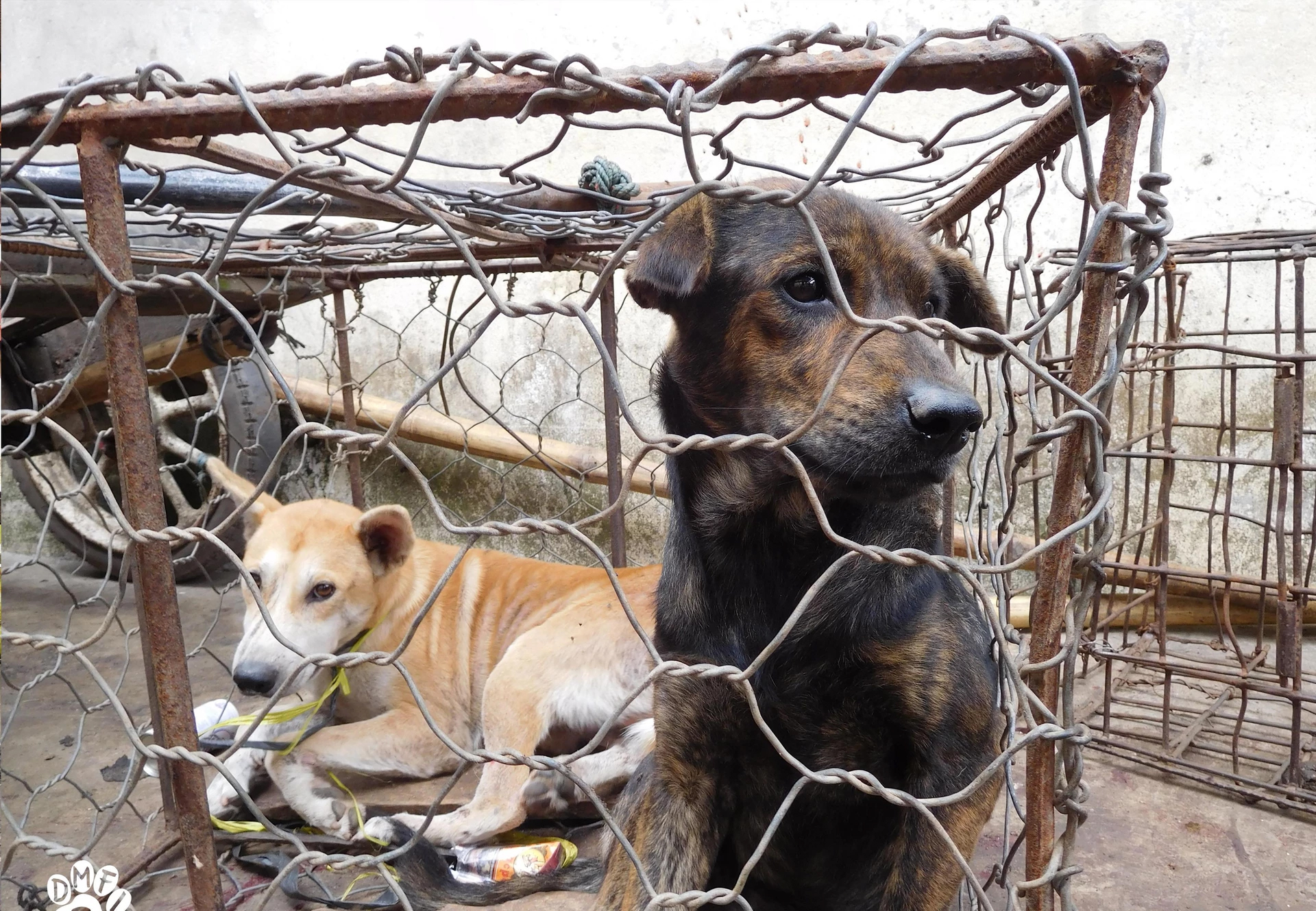
In August 2018, animal rights activists rejoiced when the Indonesian government announced its intention to ban the country’s notoriously cruel dog and cat meat trade at a meeting of the National Animal Welfare Coordination in Jakarta. Unfortunately, a month later, Indonesia reneged on its promise, and the dog and cat meat trade continued.
Countless dogs and cats continue to be subjected to unimaginable cruelty at the “extreme” market in Tomohon, a city in the Indonesian province of North Sulawesi. This market is considered one of the most notorious in Asia for its cruelty to animals and the number of tourists it attracts.
The “Tomohon Extreme Animal Market” in Indonesia is touted as a local attraction to foreign tourists. And no less disgusting is the fact that thousands of tourists from all over the world come here with pleasure, sometimes even smiling, to photograph and video the unimaginable suffering and torment of animals.
DMFI volunteer Lola Webber described the horrific scene in her latest press release: “Every dog and cat we saw at the Tomohon Extreme Market had been burned with a blowtorch, even though they were clearly still alive. It was the most horrific cruelty we’ve ever seen in our campaign to end this abhorrent trade, and it was all committed in front of young children.”
She continued: “By the end of our filming, we were all splattered with blood and brain matter from the animal abuse, showing how easily customers and tourists can contract diseases like rabies, and in fact, two of our crew were very ill after visiting the market.”
Фестиваль собачьего мяса в Китае – высшая степень жестокости
Now please watch some very difficult videos filmed by animal rights volunteers or ordinary tourists at various dog and cat meat markets in Indonesia

Tomohon Market Broll August 2018

Tomohon Market 2023

04-10-2016 – Tomohon Market Indonesia. The dog market
Extreme Market In Tomohon, Sulawesi Indonesia

Second Cambodian dog slaughterhouse closure FOUR PAWS www.four-paws.org
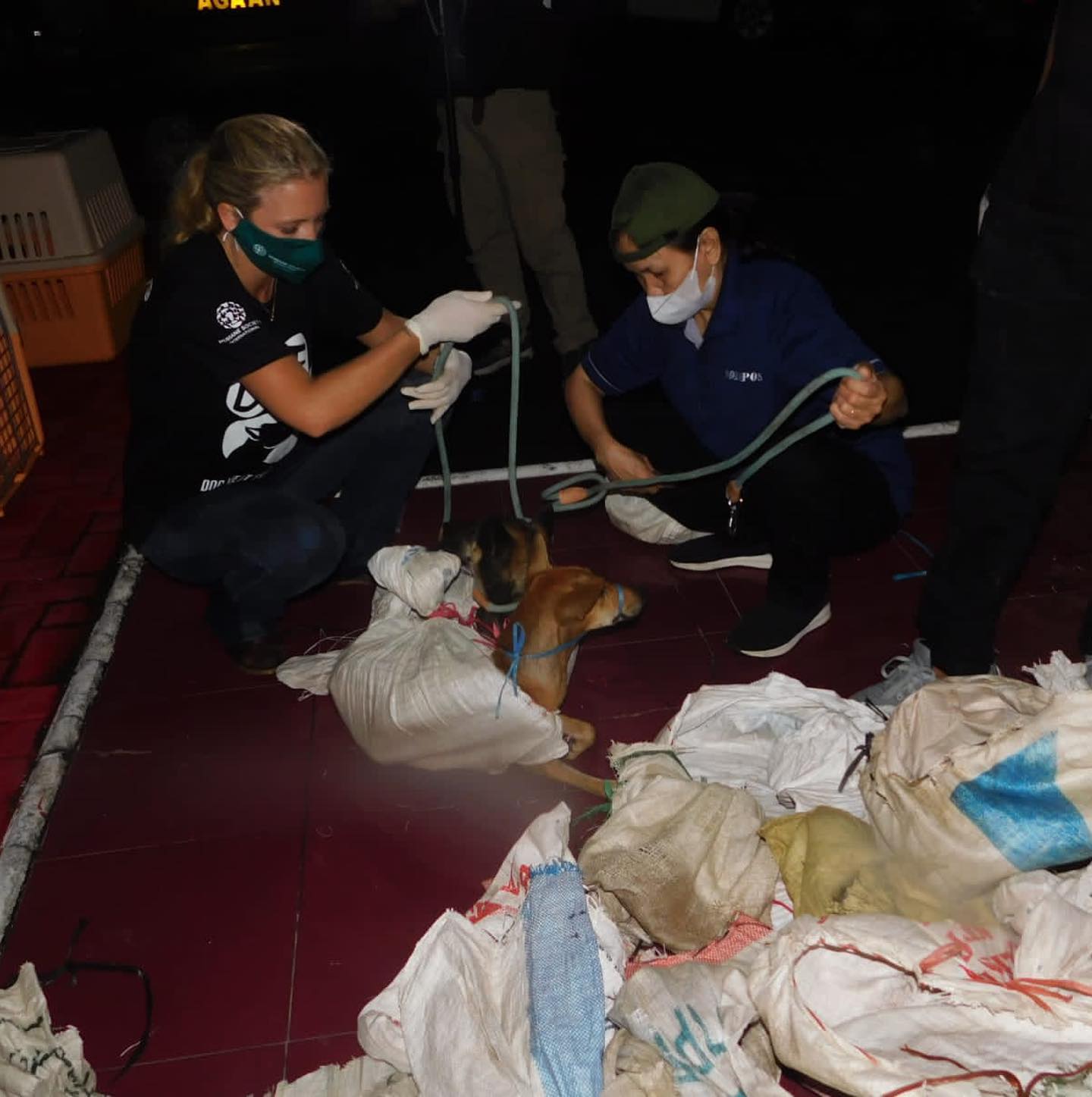
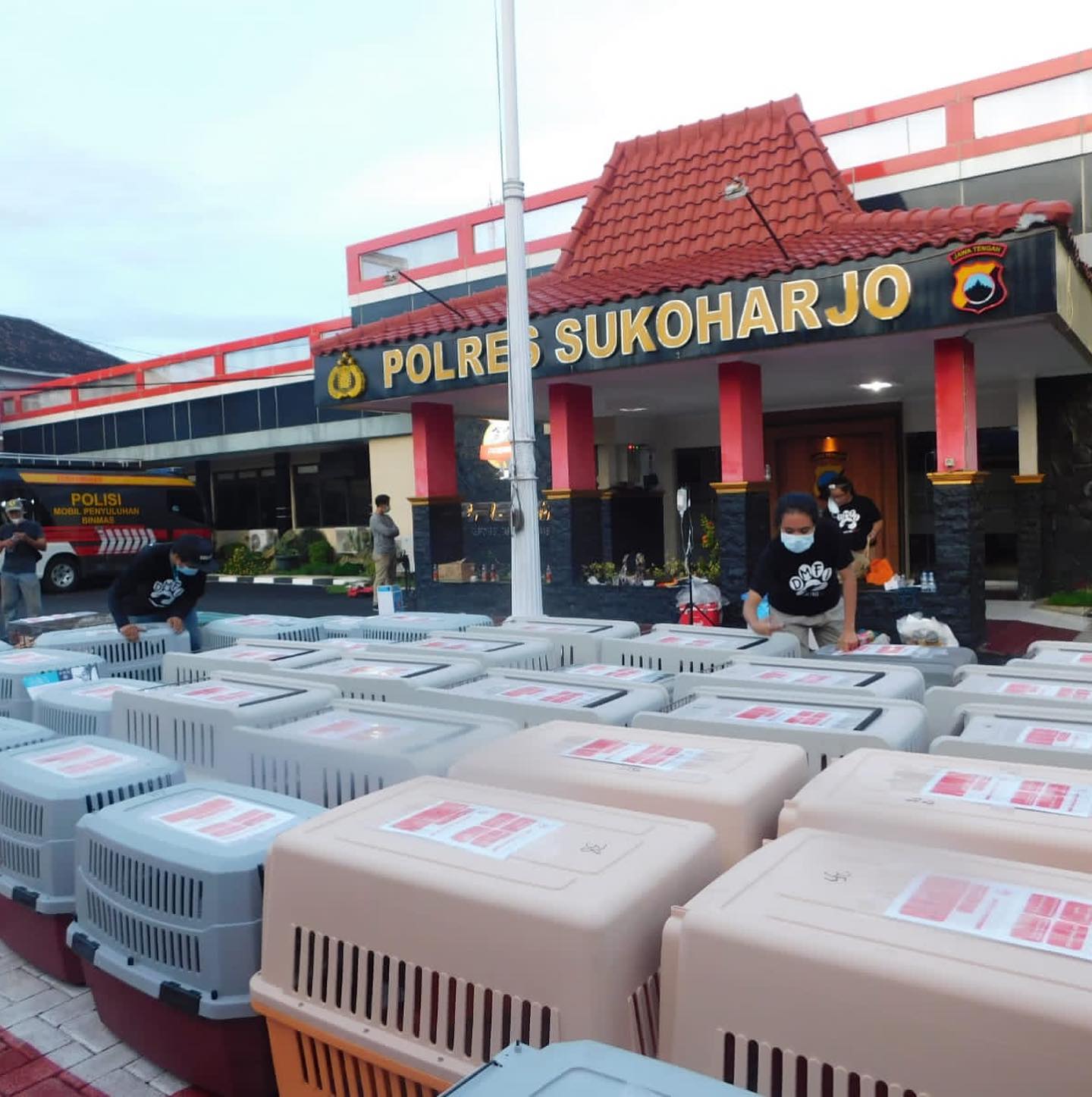
Indonesian police, together with animal rights activists, detained a well-known dog meat trader and saved 53 dogs

Vietnam, the brutal slaughter of cats for meat:
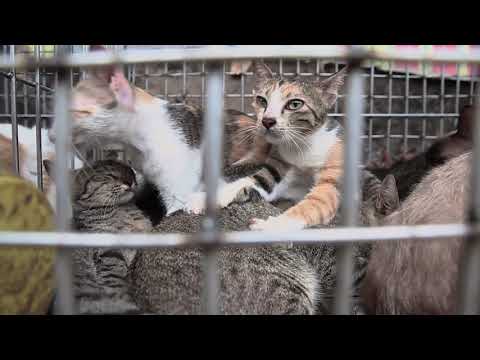
Vietnam (rescuing animals from slaughterhouses):

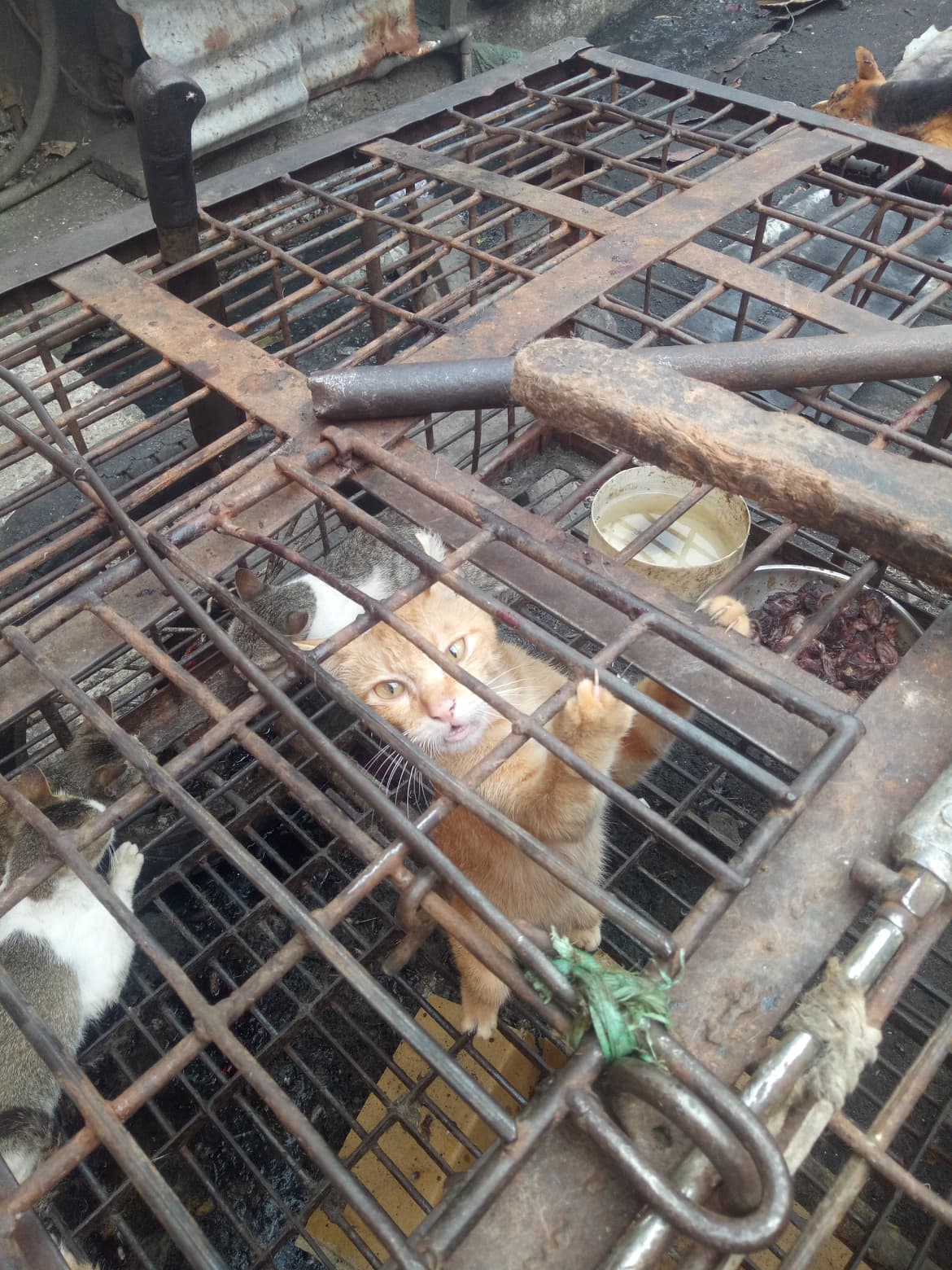
China. Thousands of small and large restaurants and shops selling cat meat across the country. Stray cats are caught on the streets, lured into cage traps, and then boiled alive. The doomed animals sit in cramped cages and await their horrific and painful death for days. The video shows rescued cats and Cats from cruel slaughterhouses for meat.

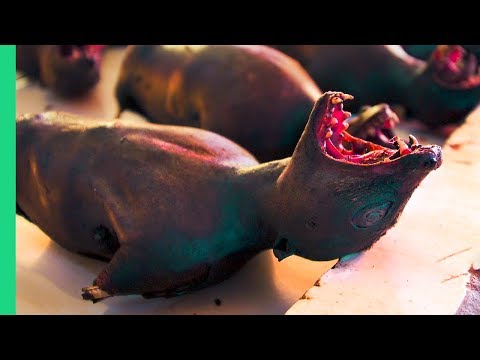

Dog Meat Festival in China – the Highest Level of Cruelty
Photos from DMFI from the Langowan Market, which also sells dog and cat meat.
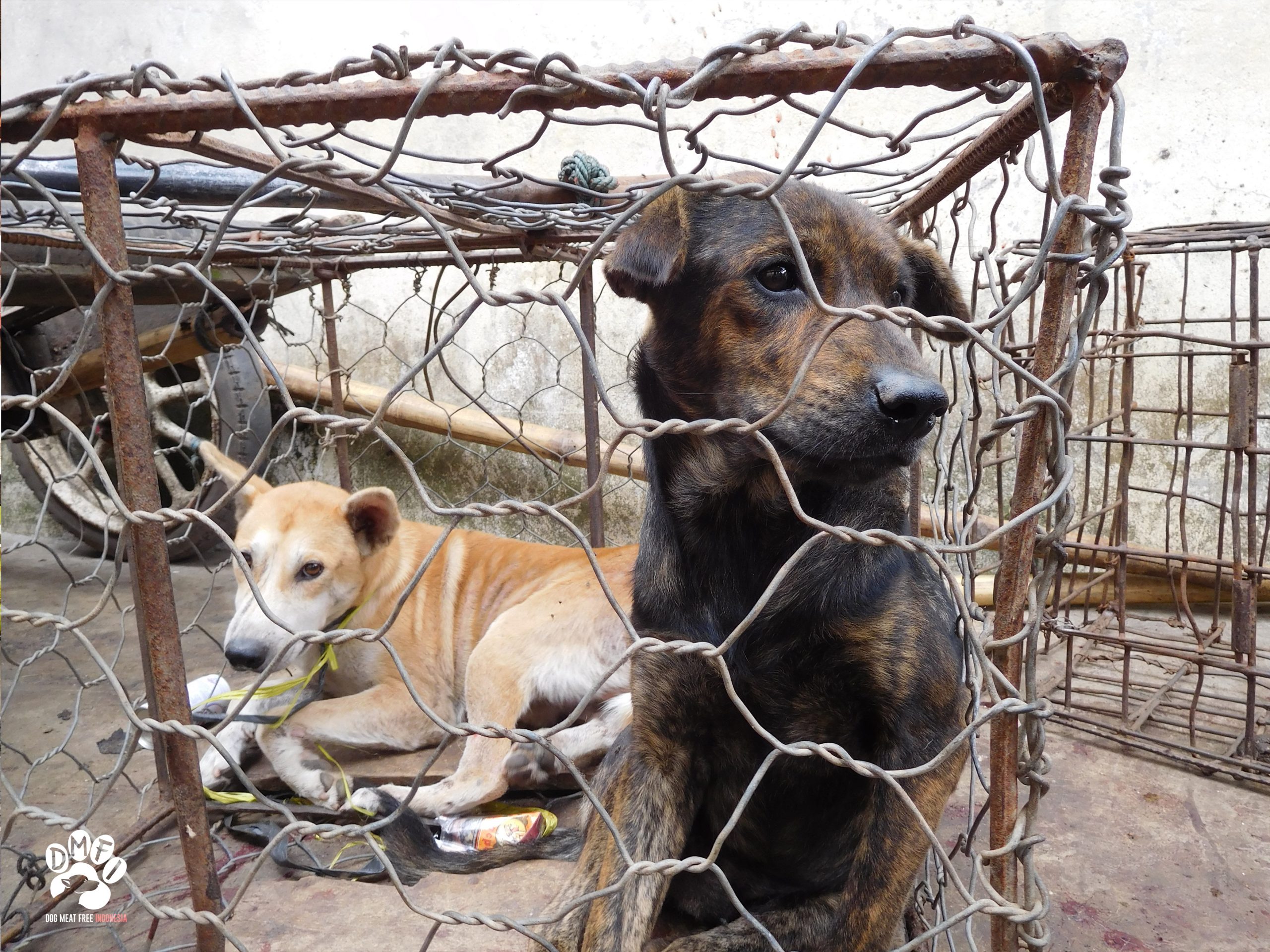
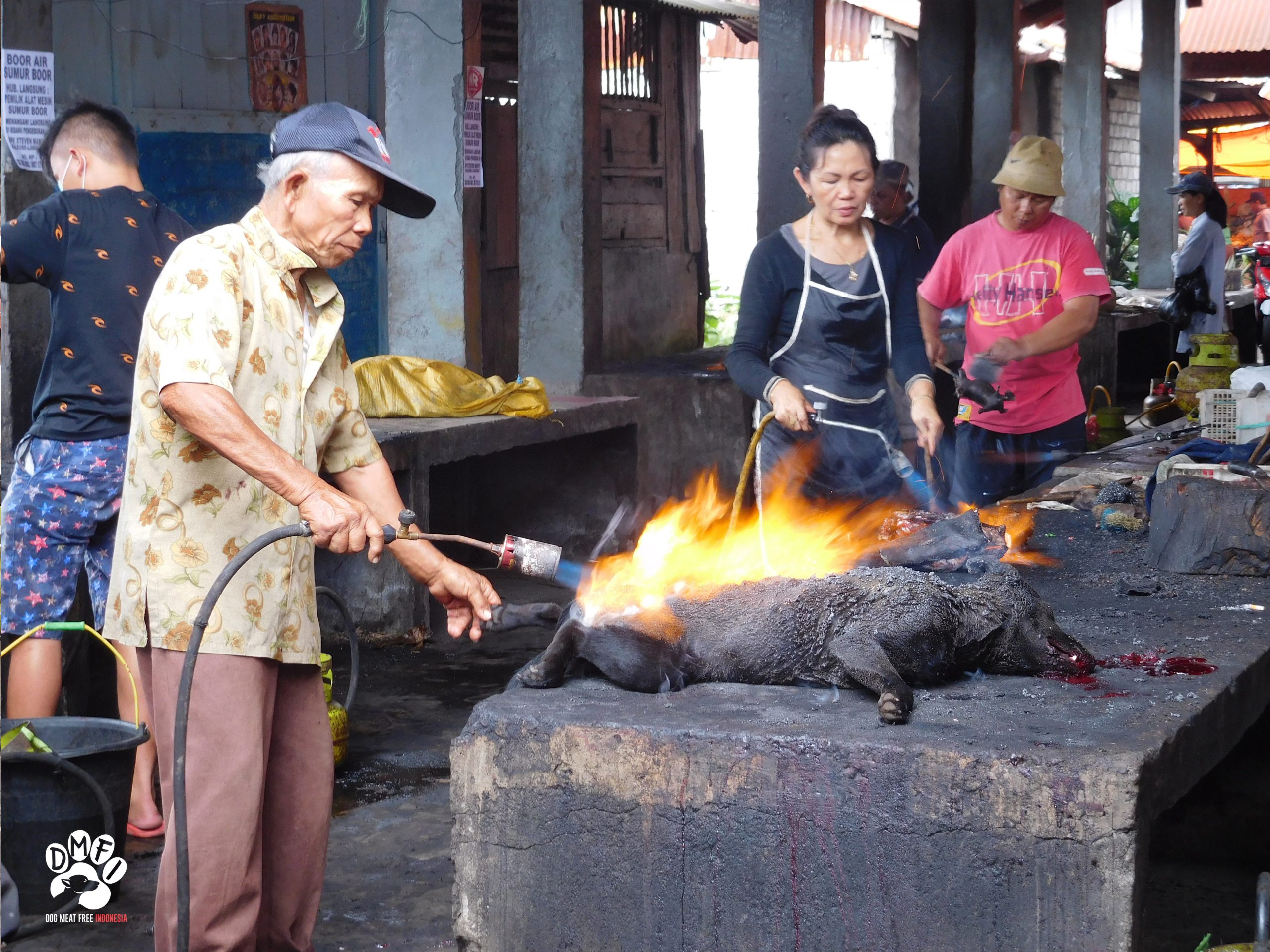
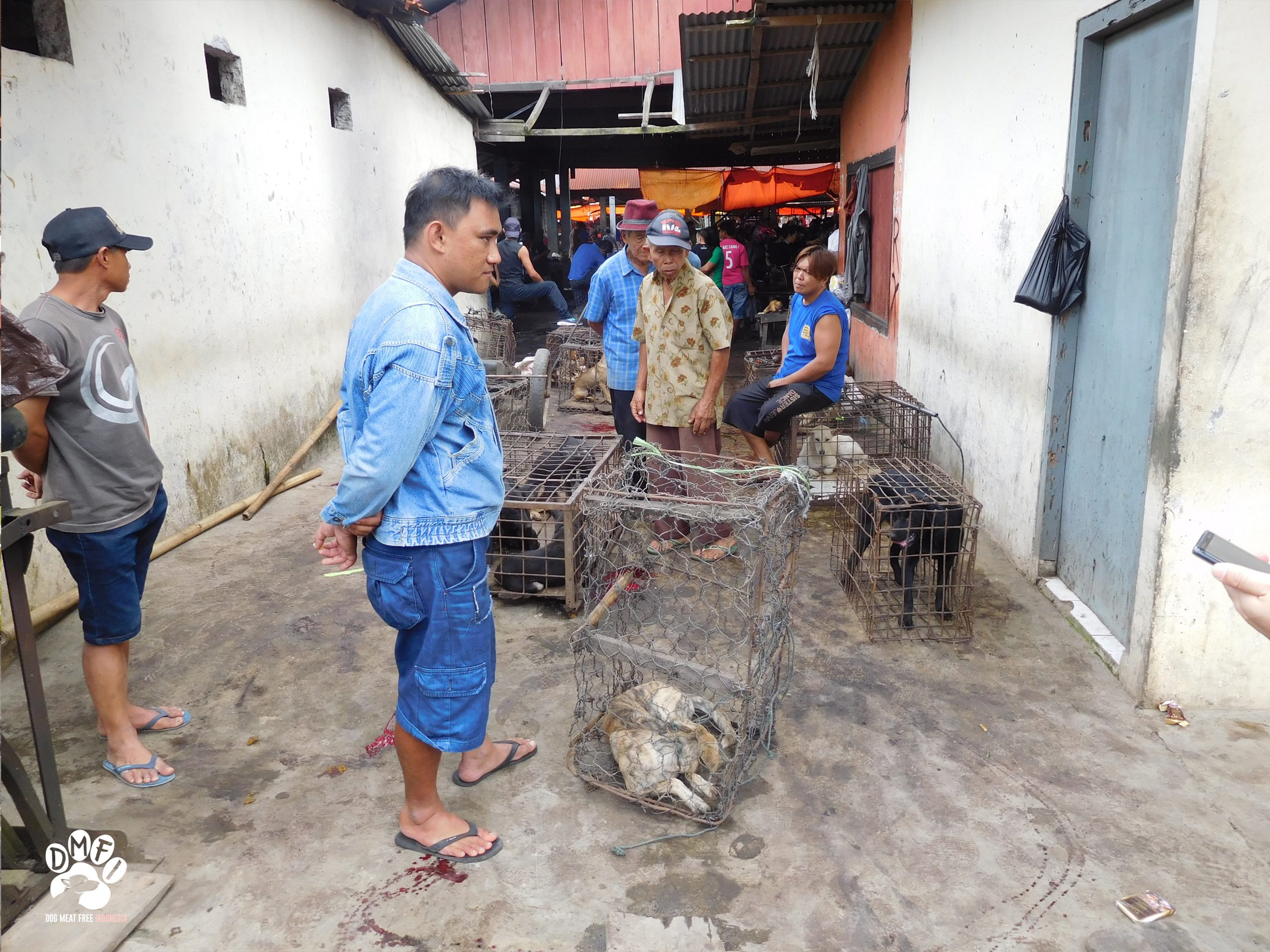
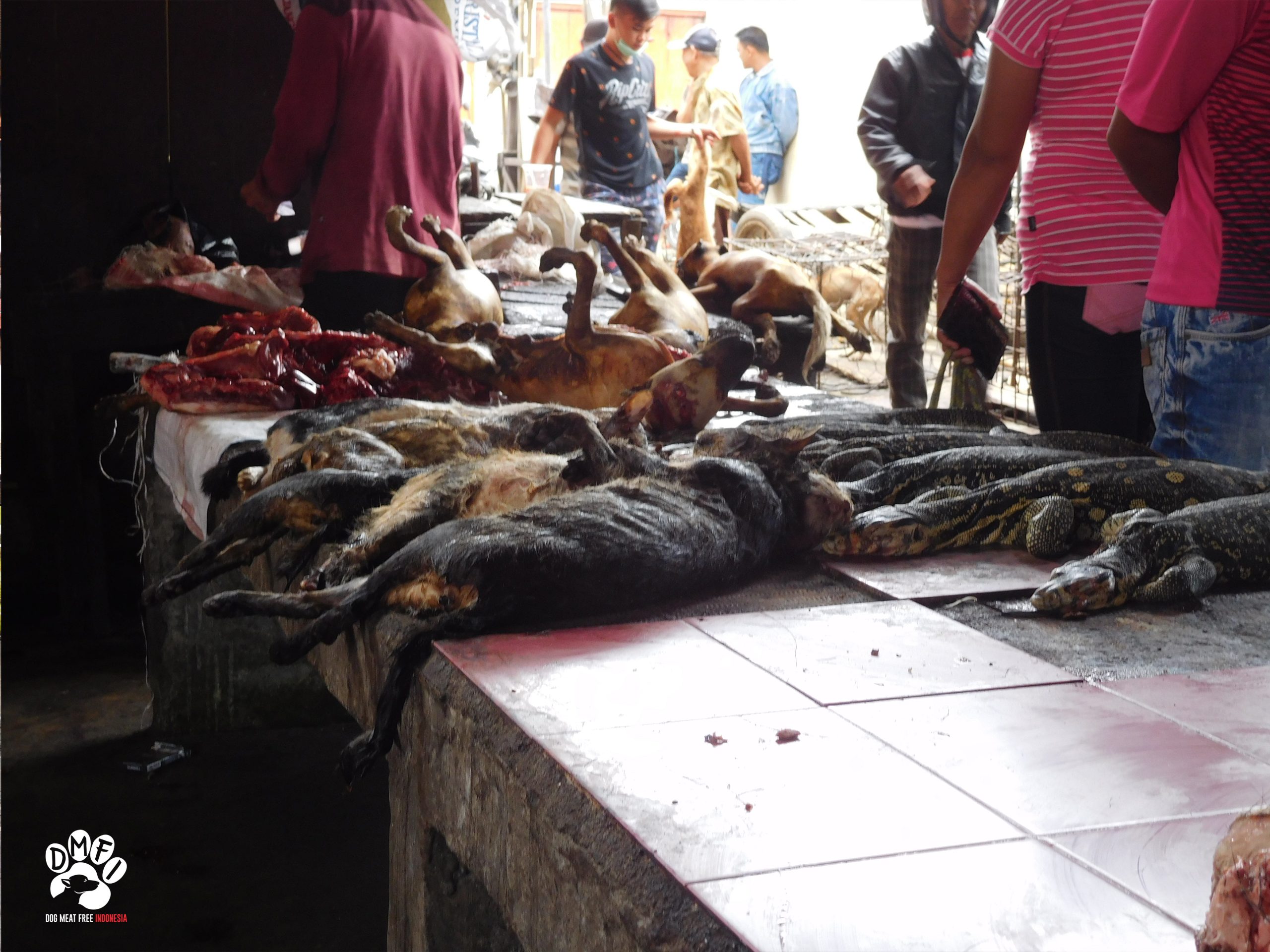
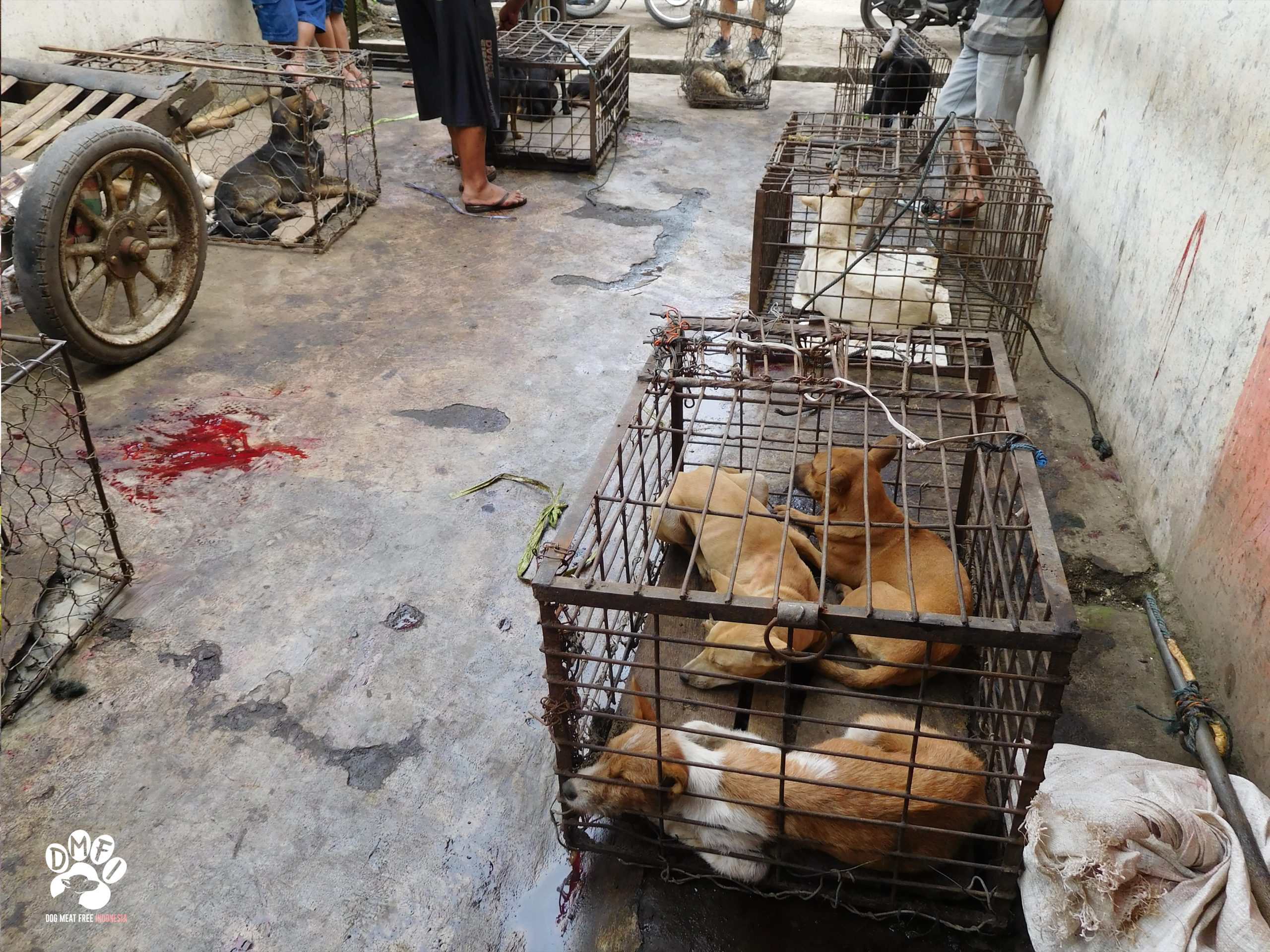
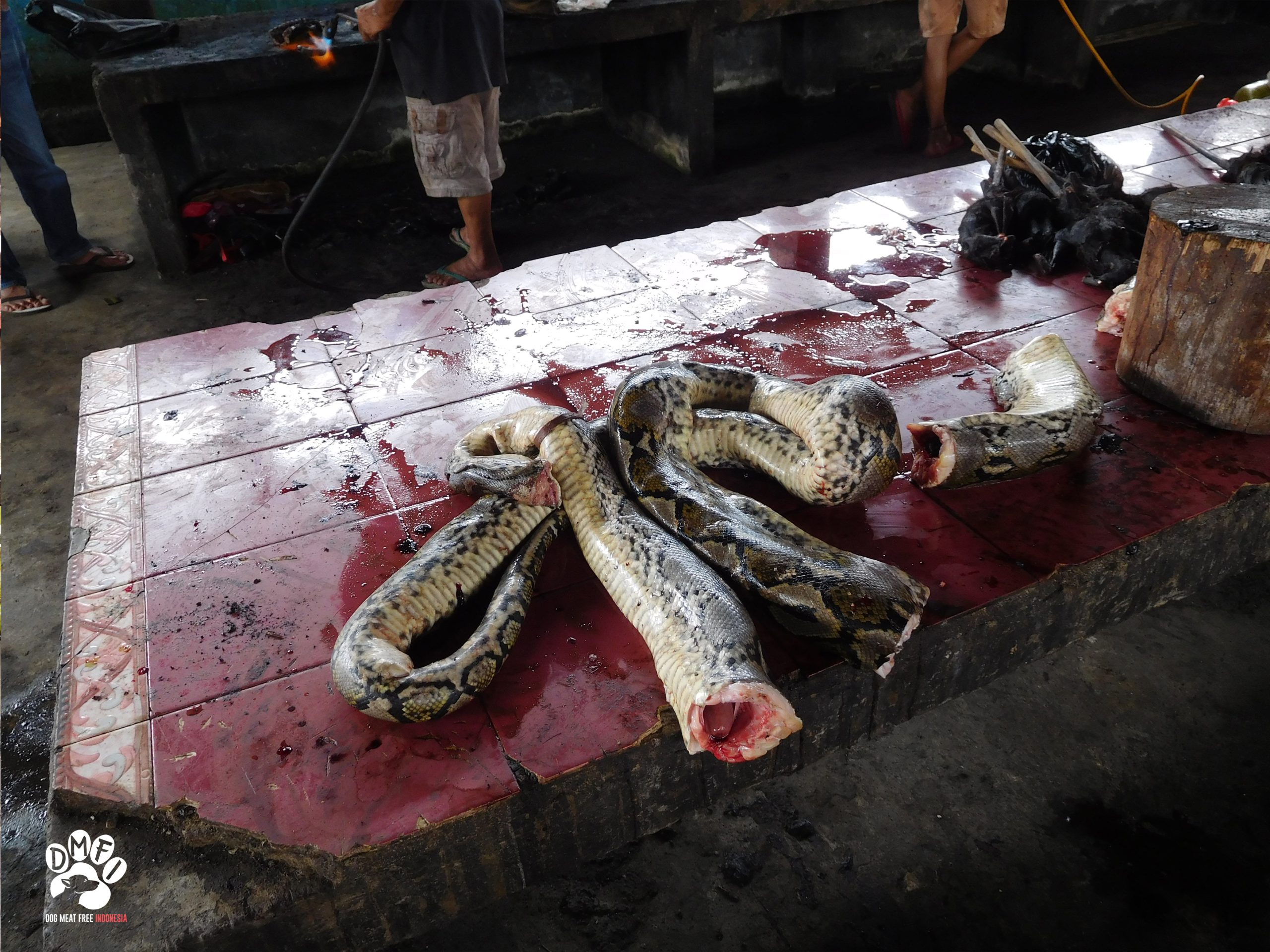
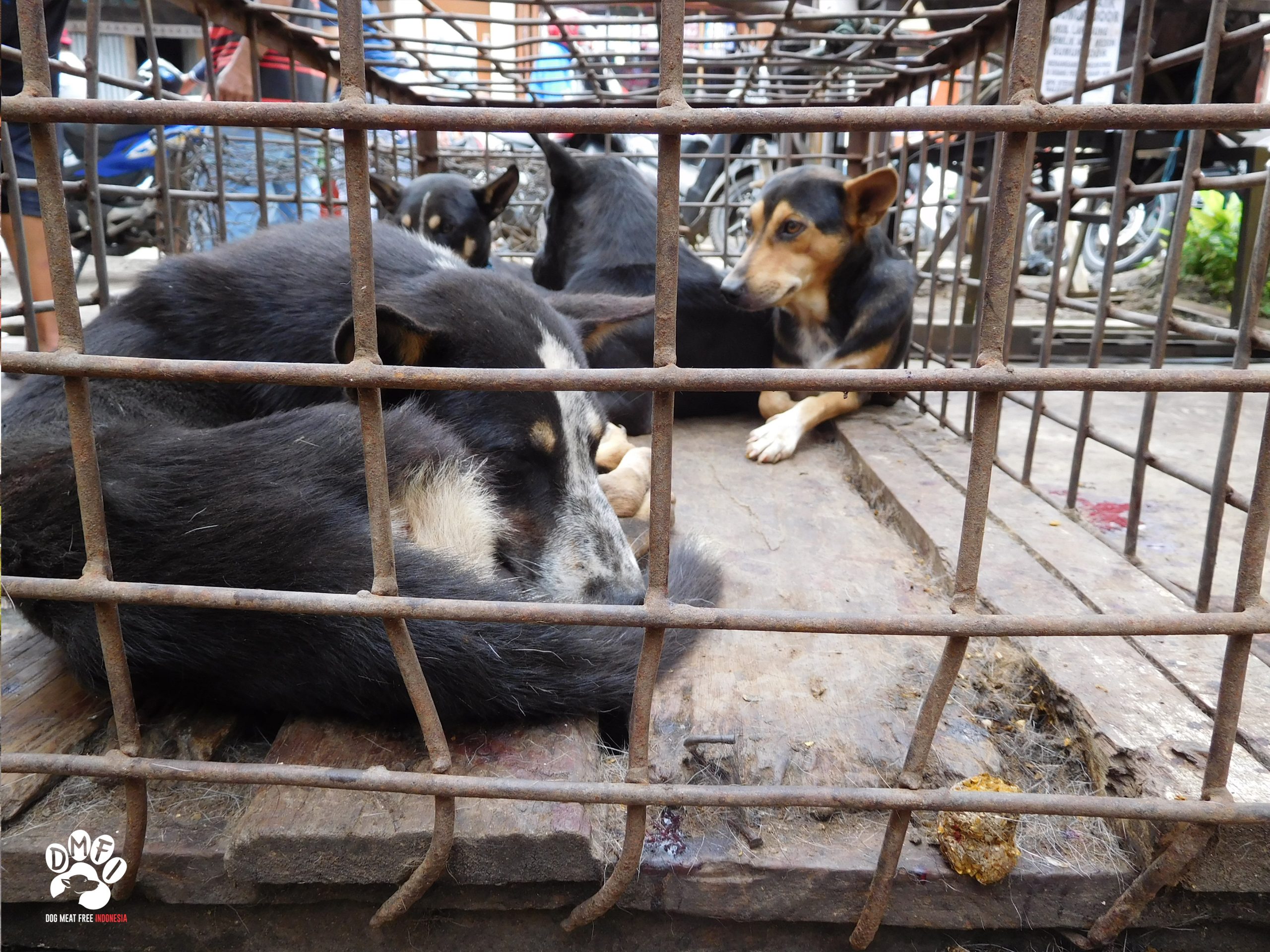
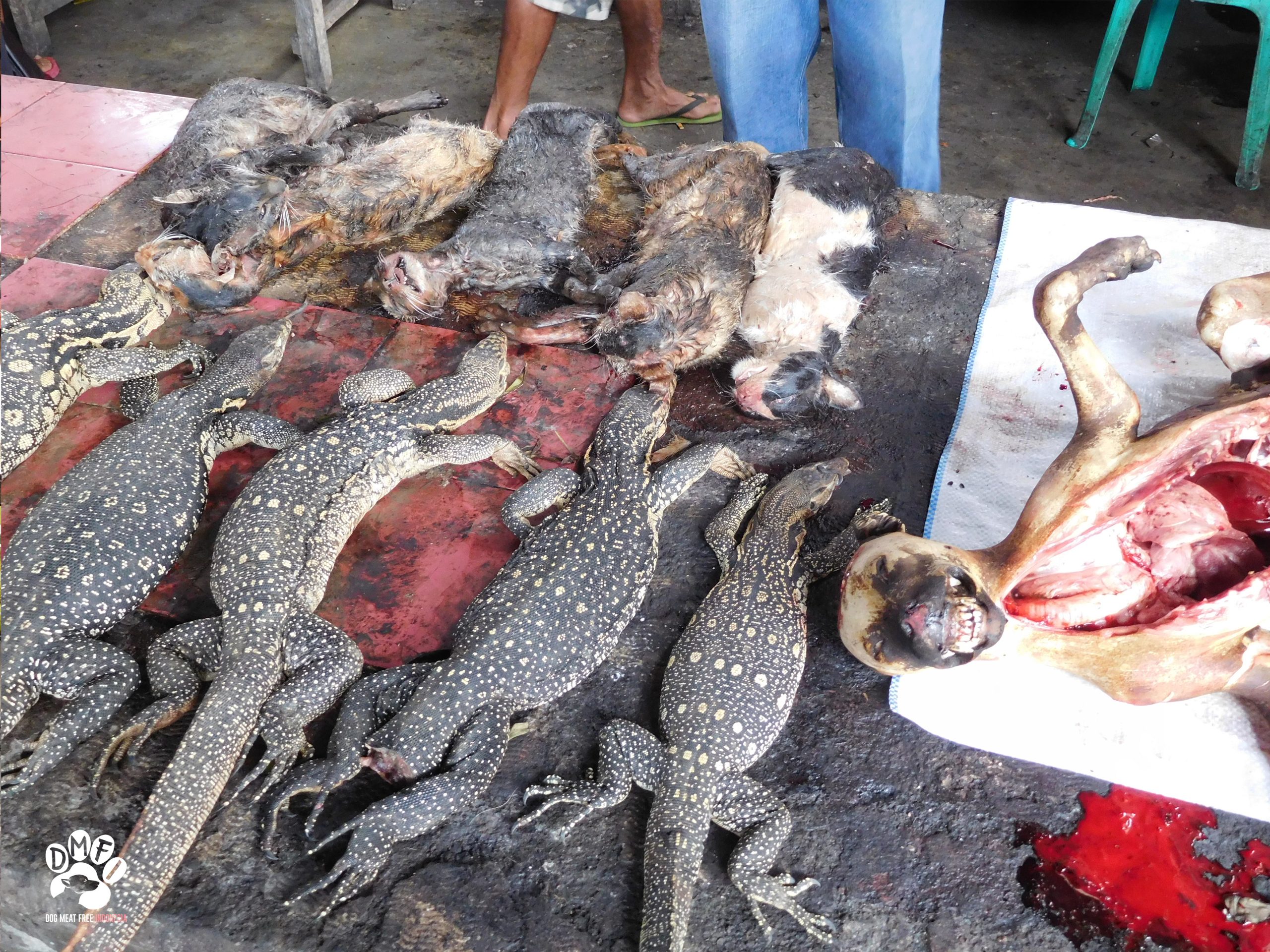
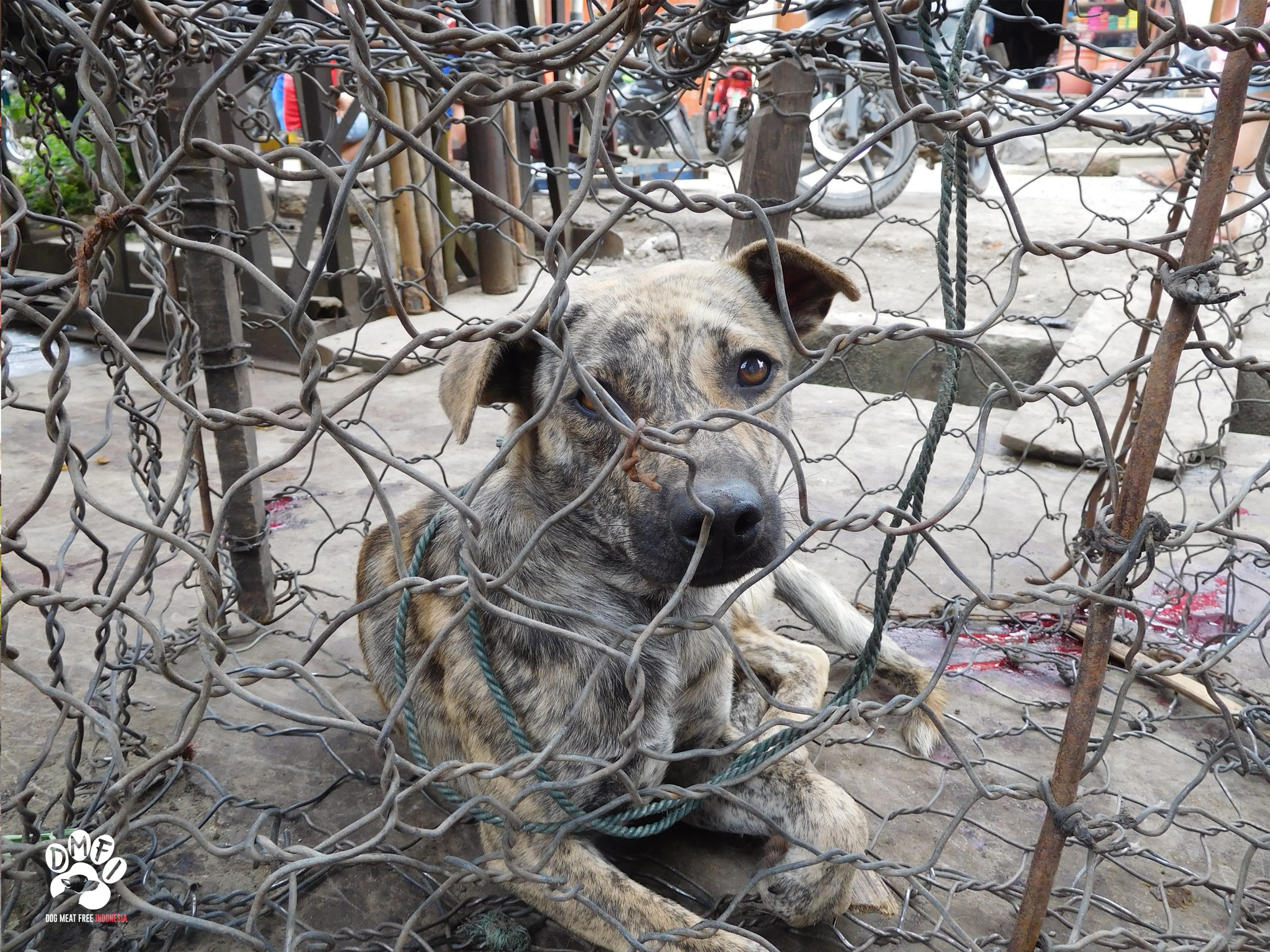
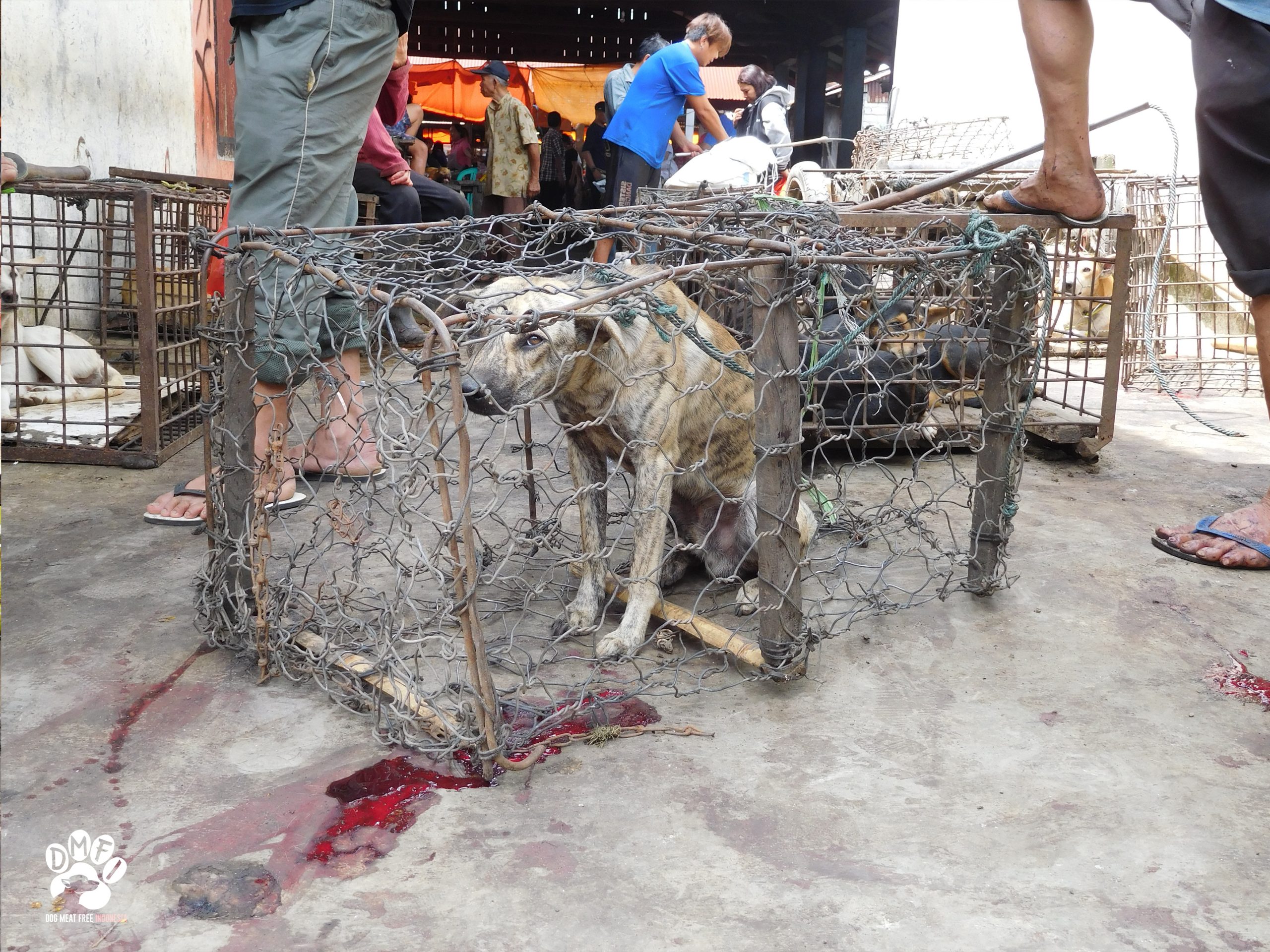
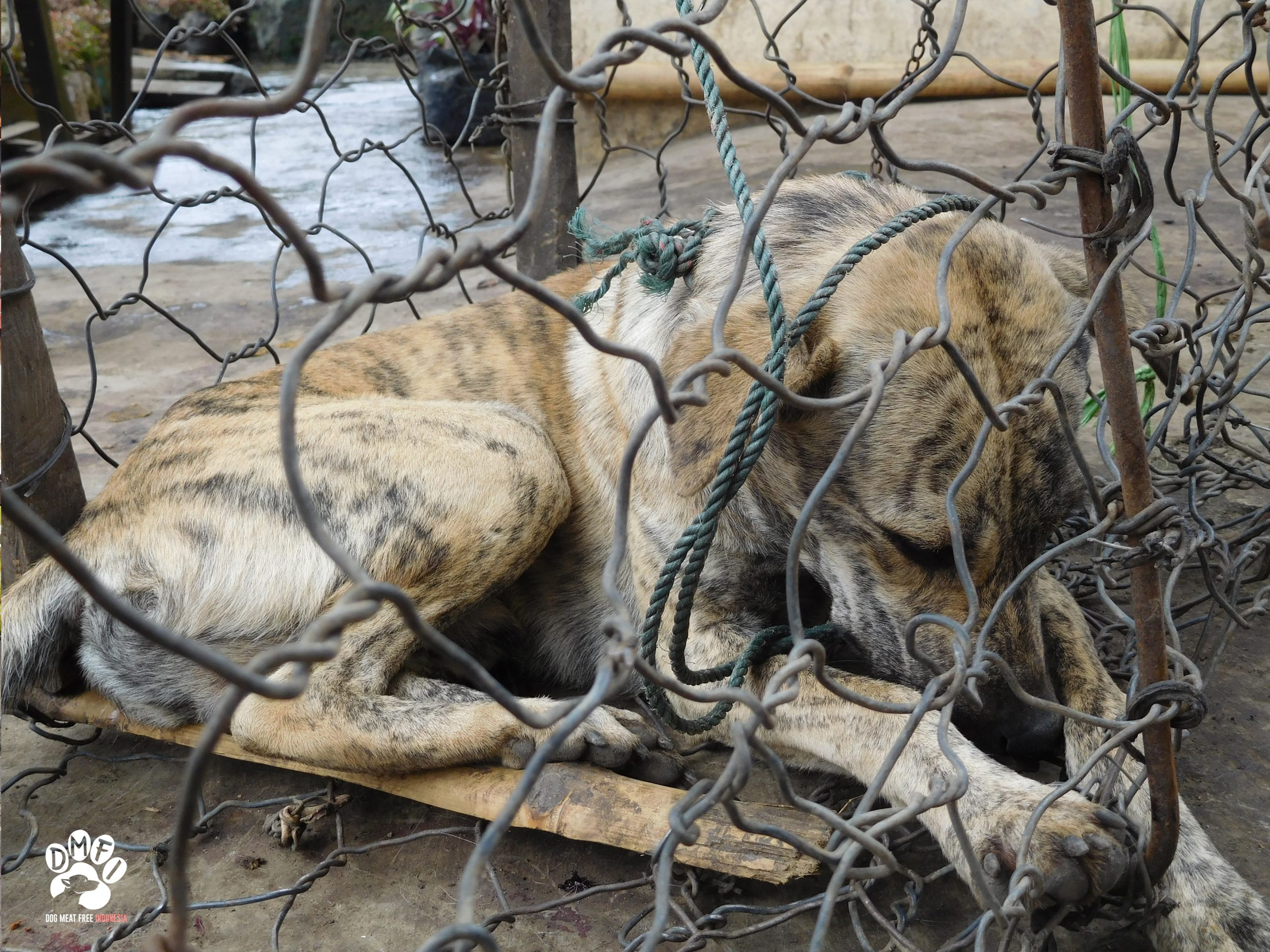
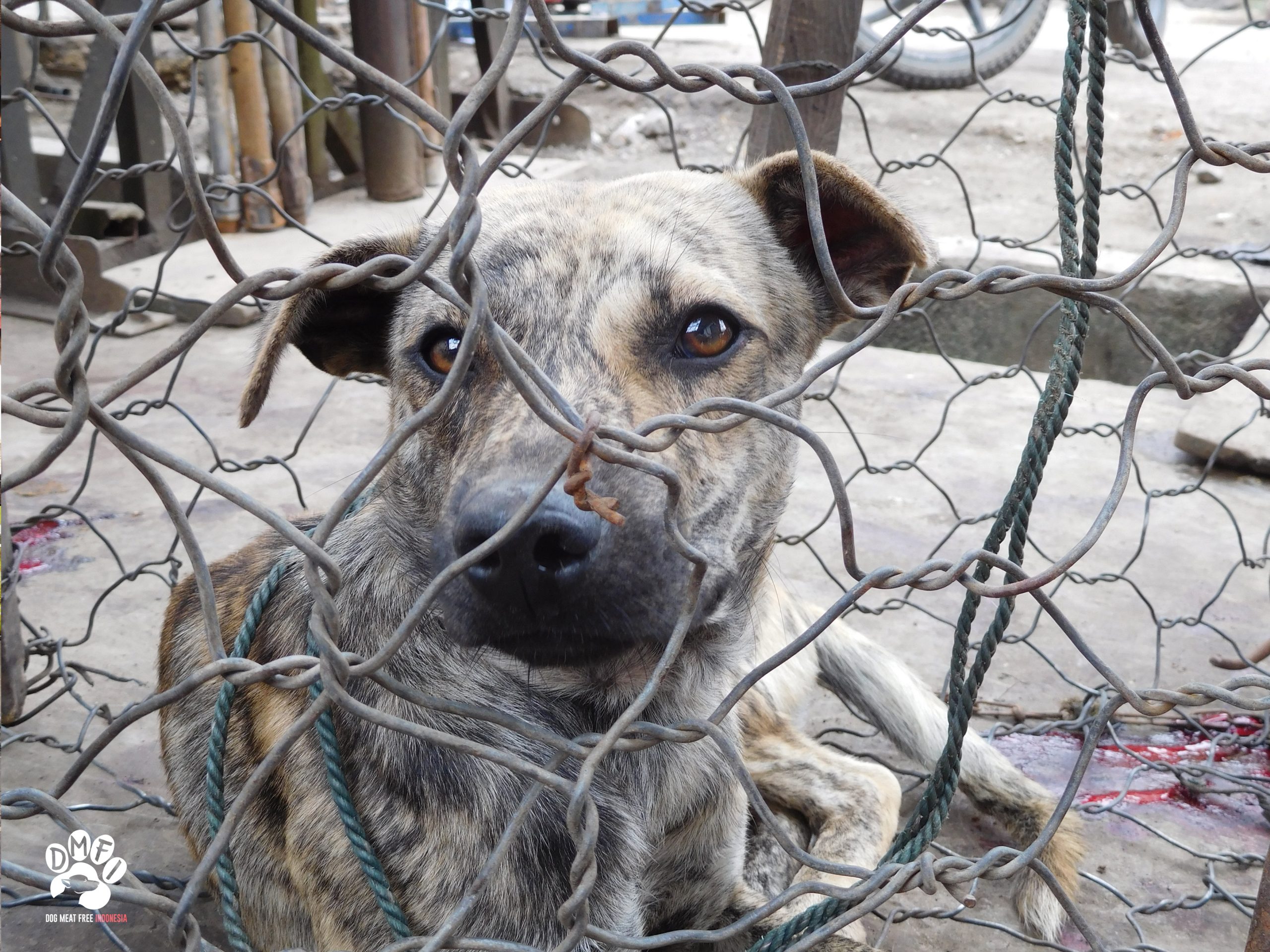
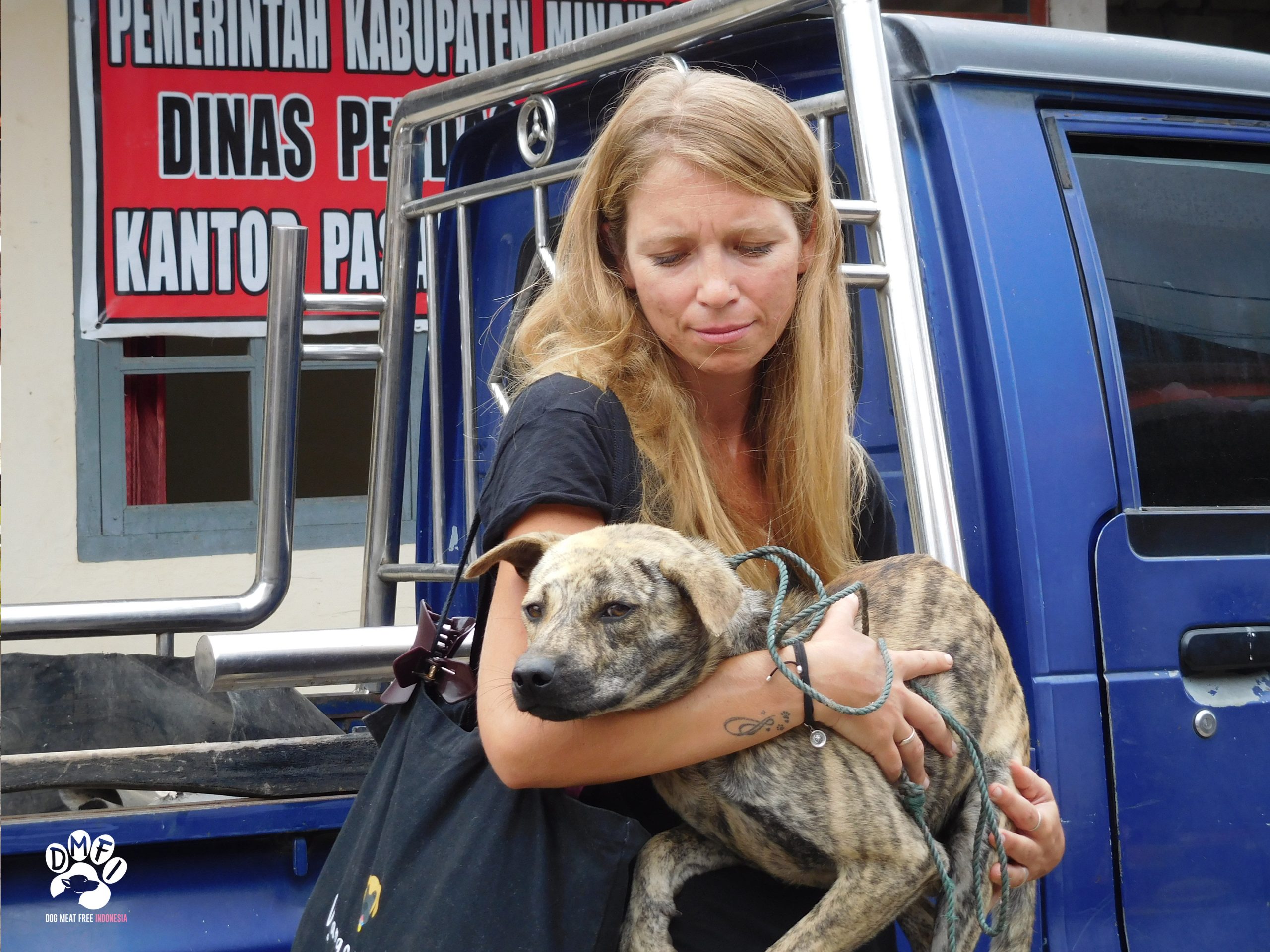
Photo materials from DMFI from the Tomohon market selling dog and cat meat:
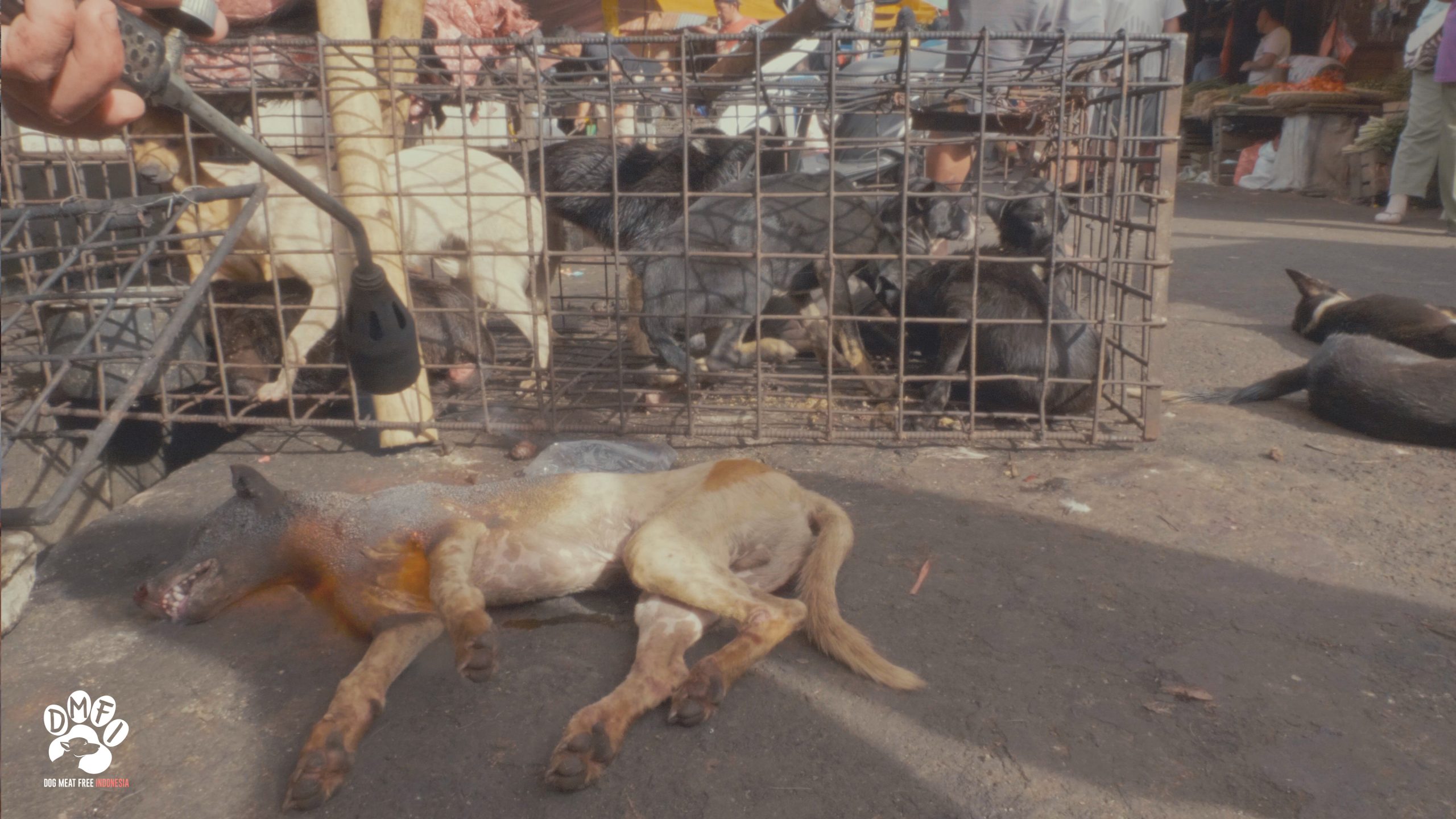
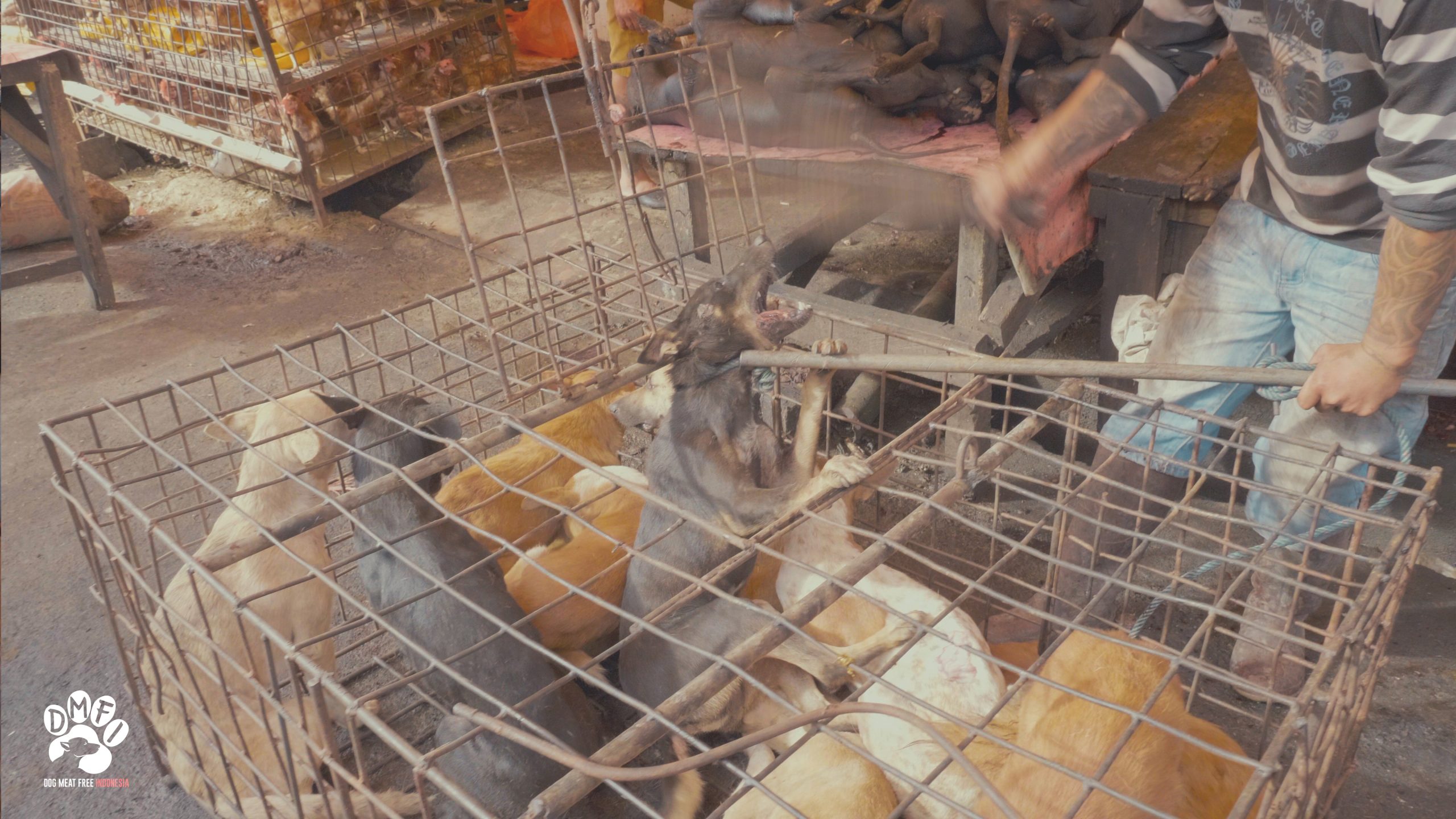
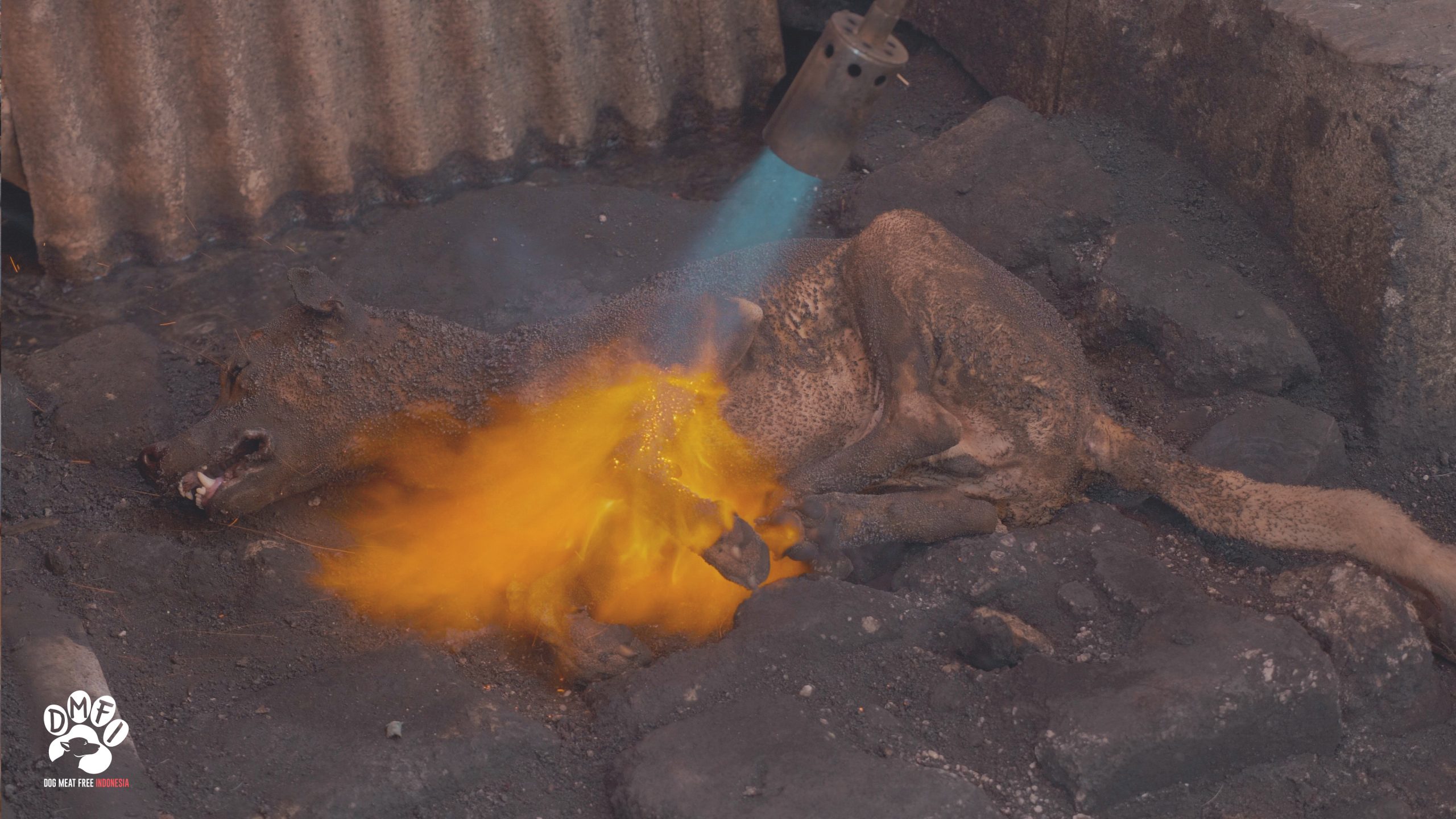
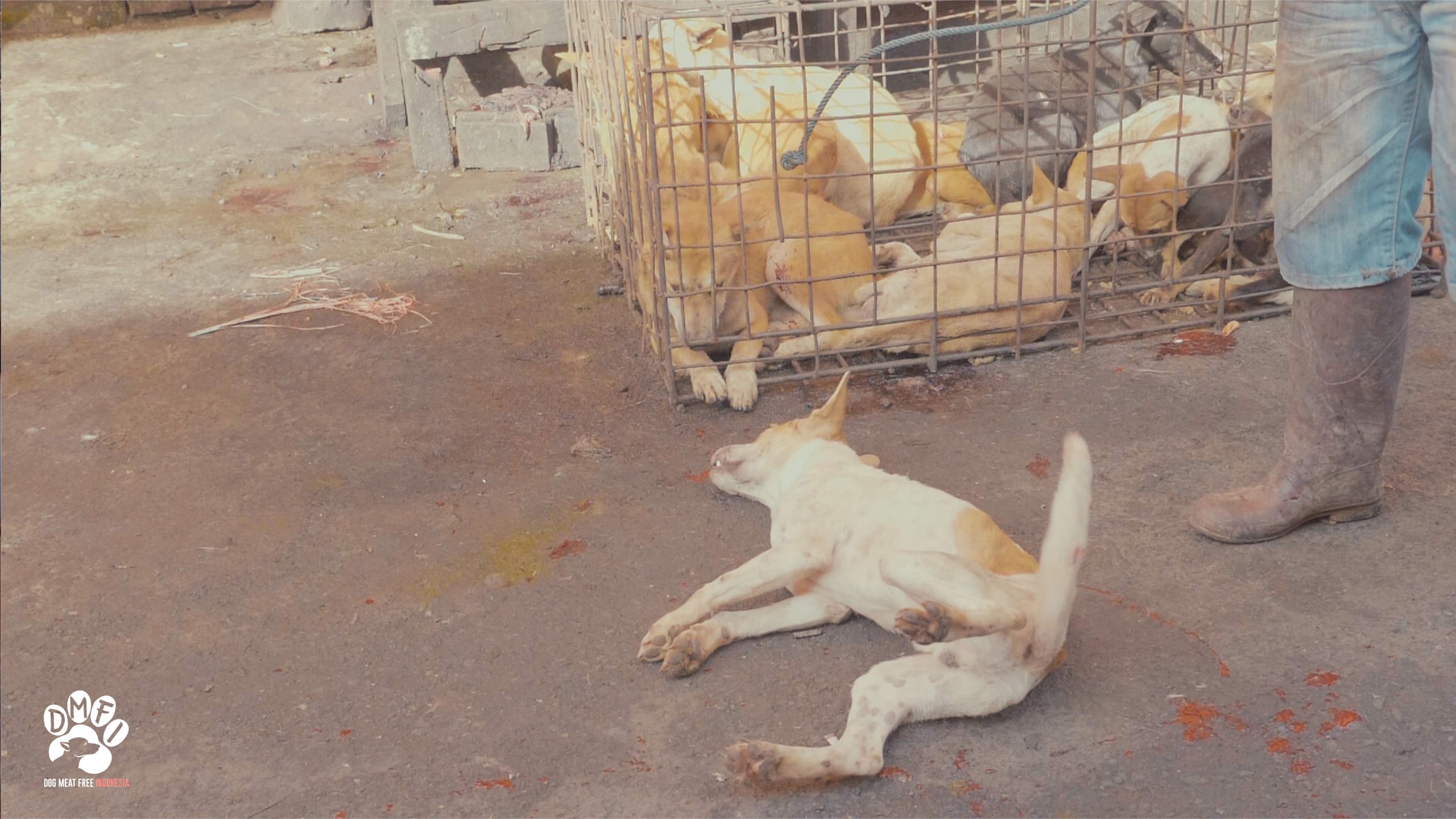
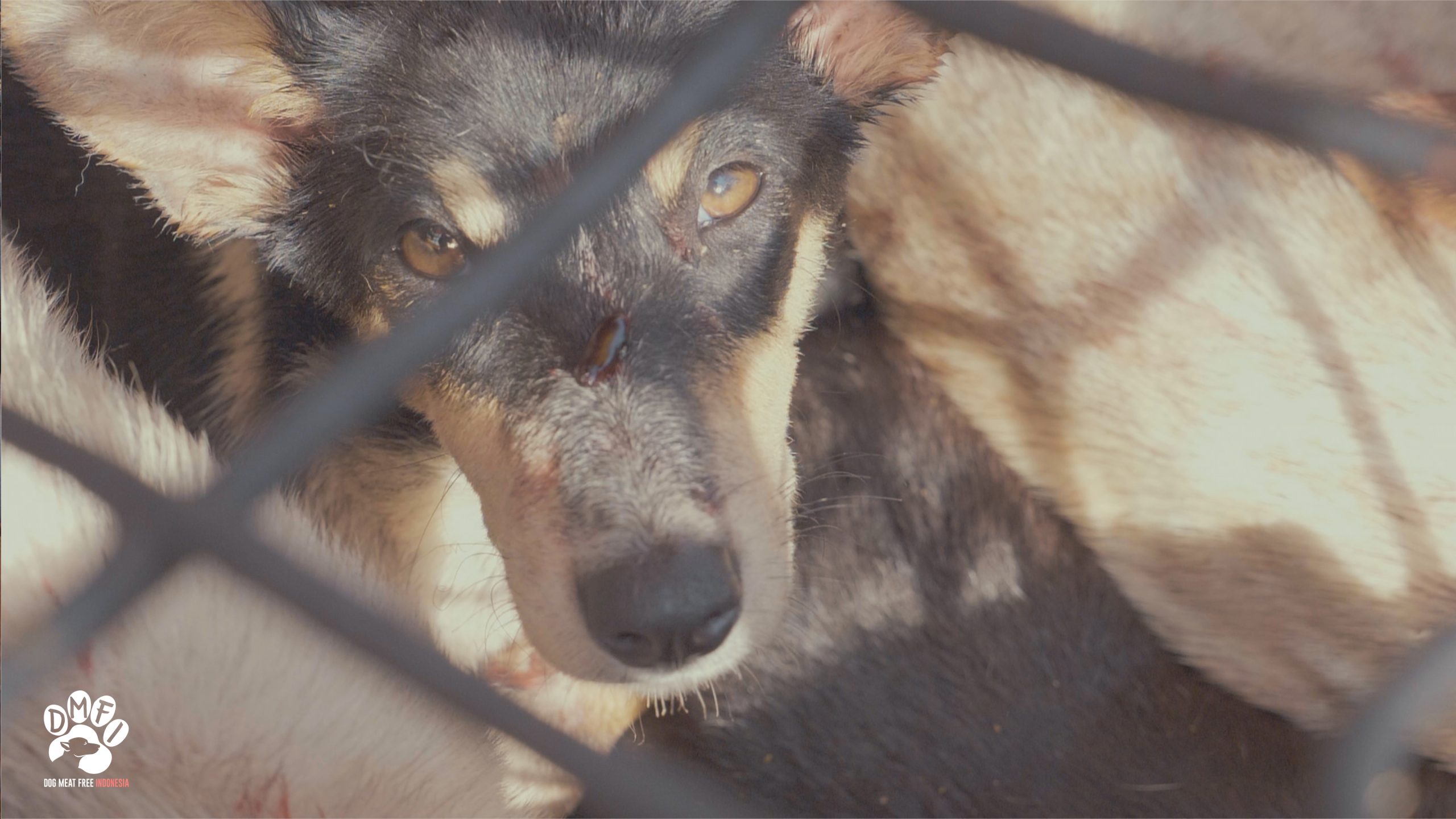
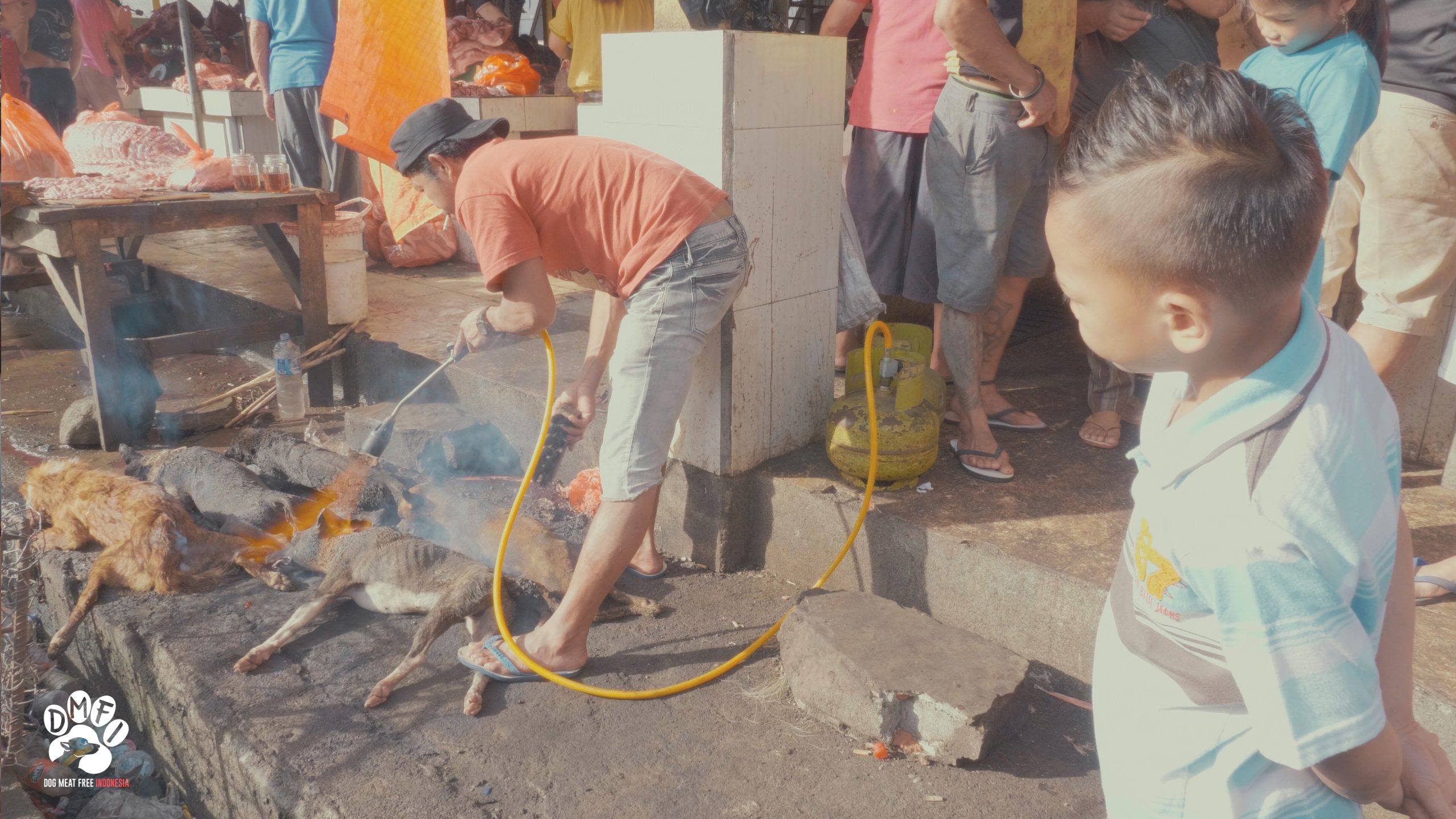
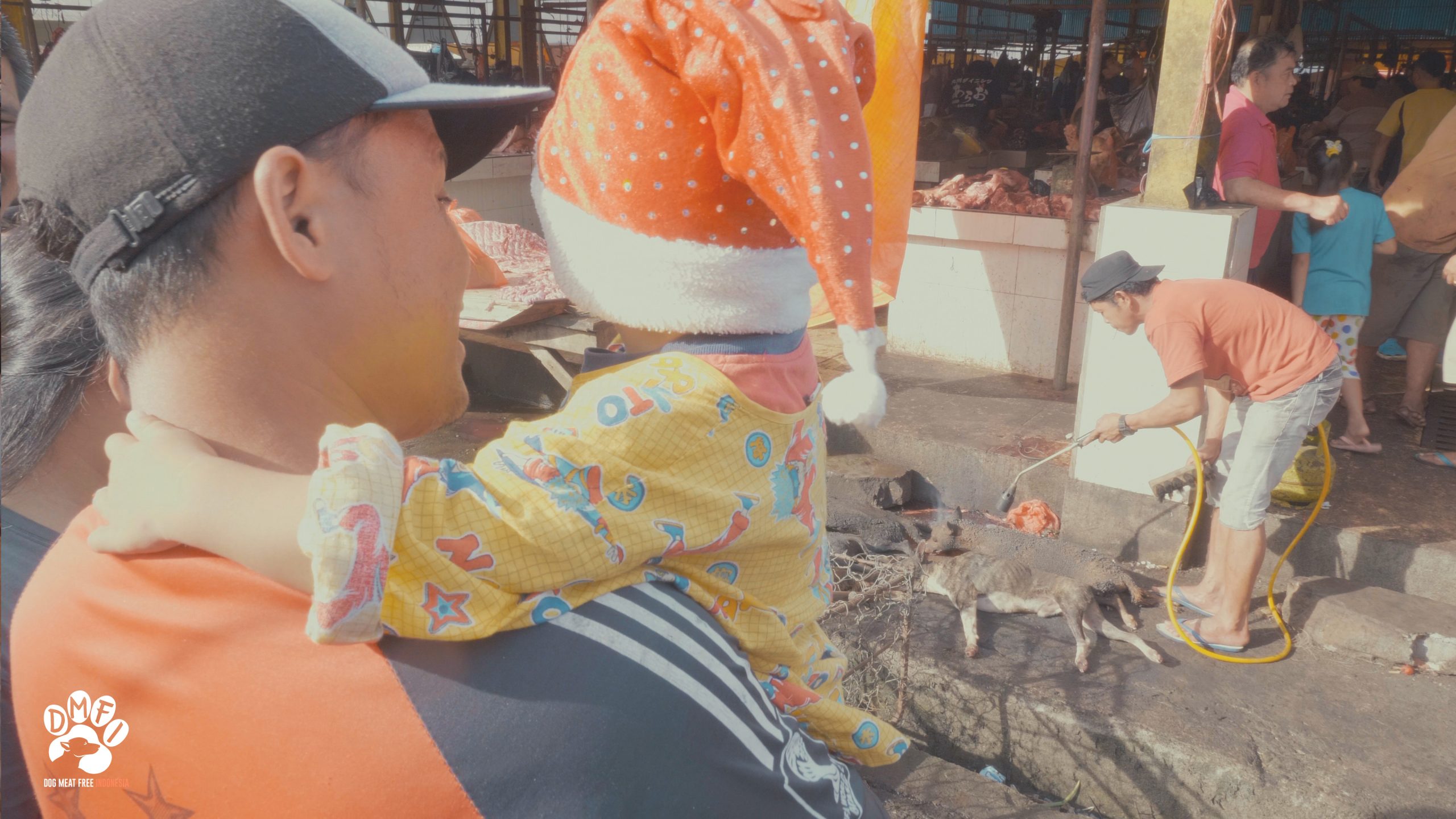
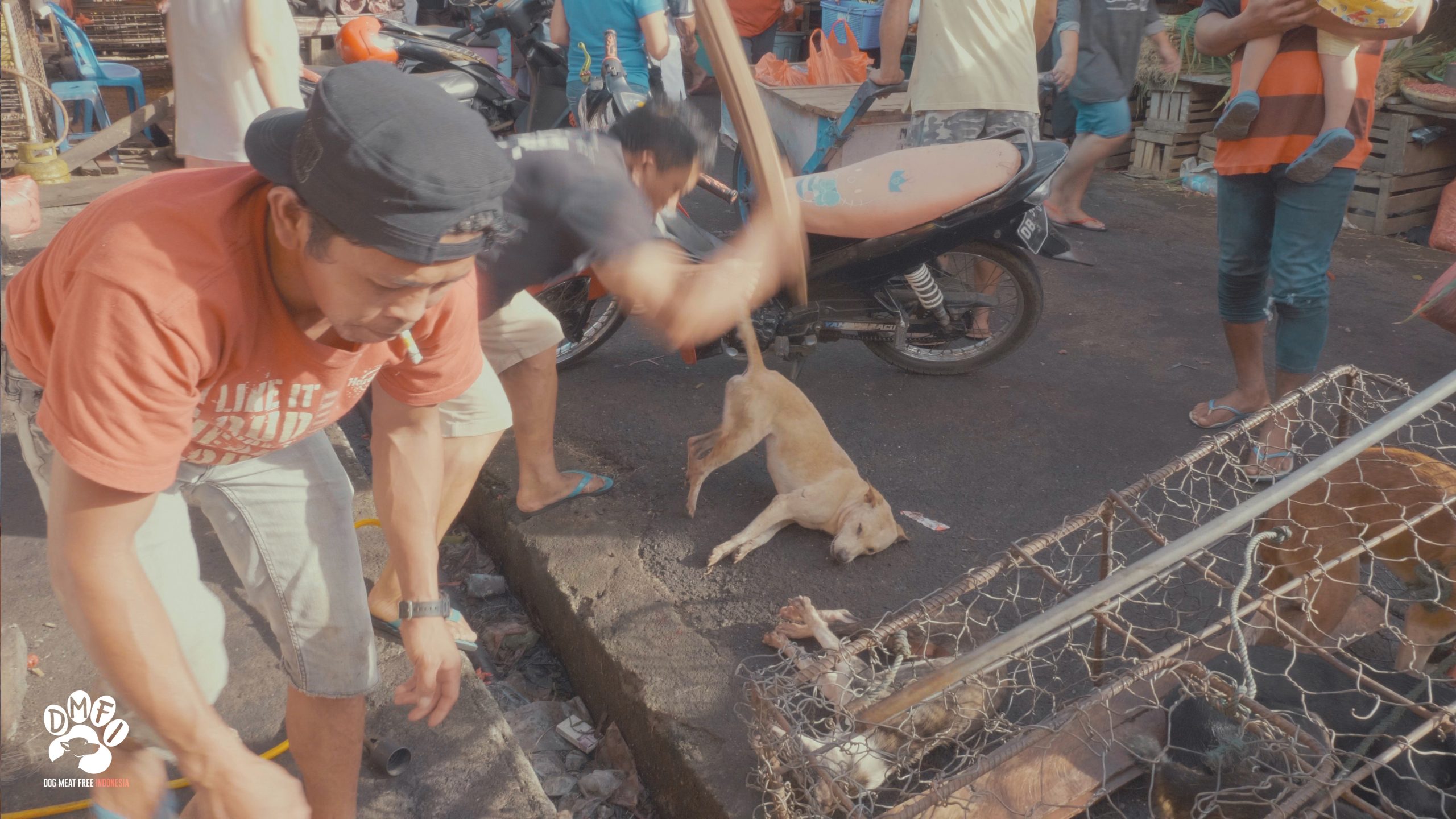
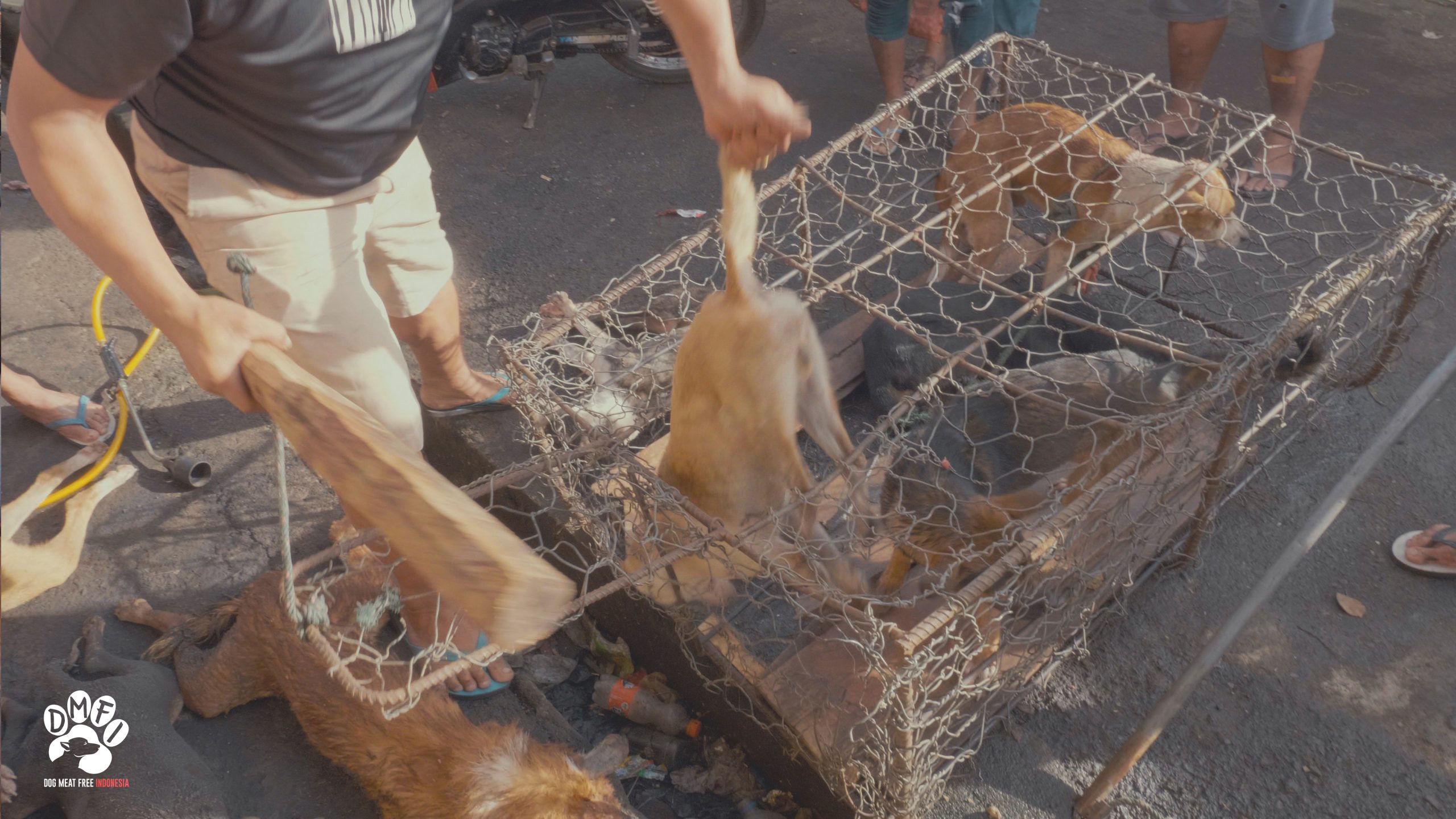
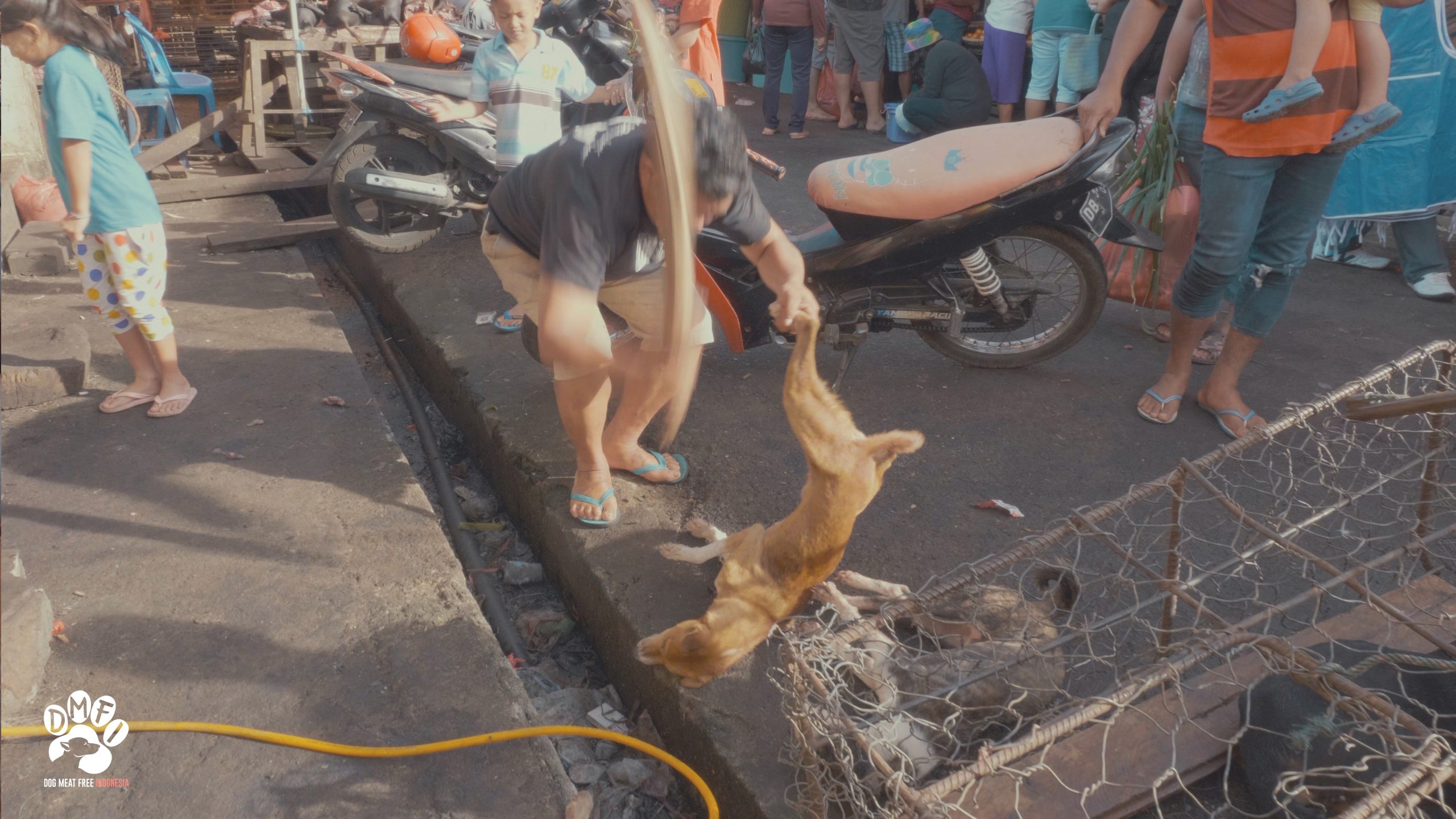
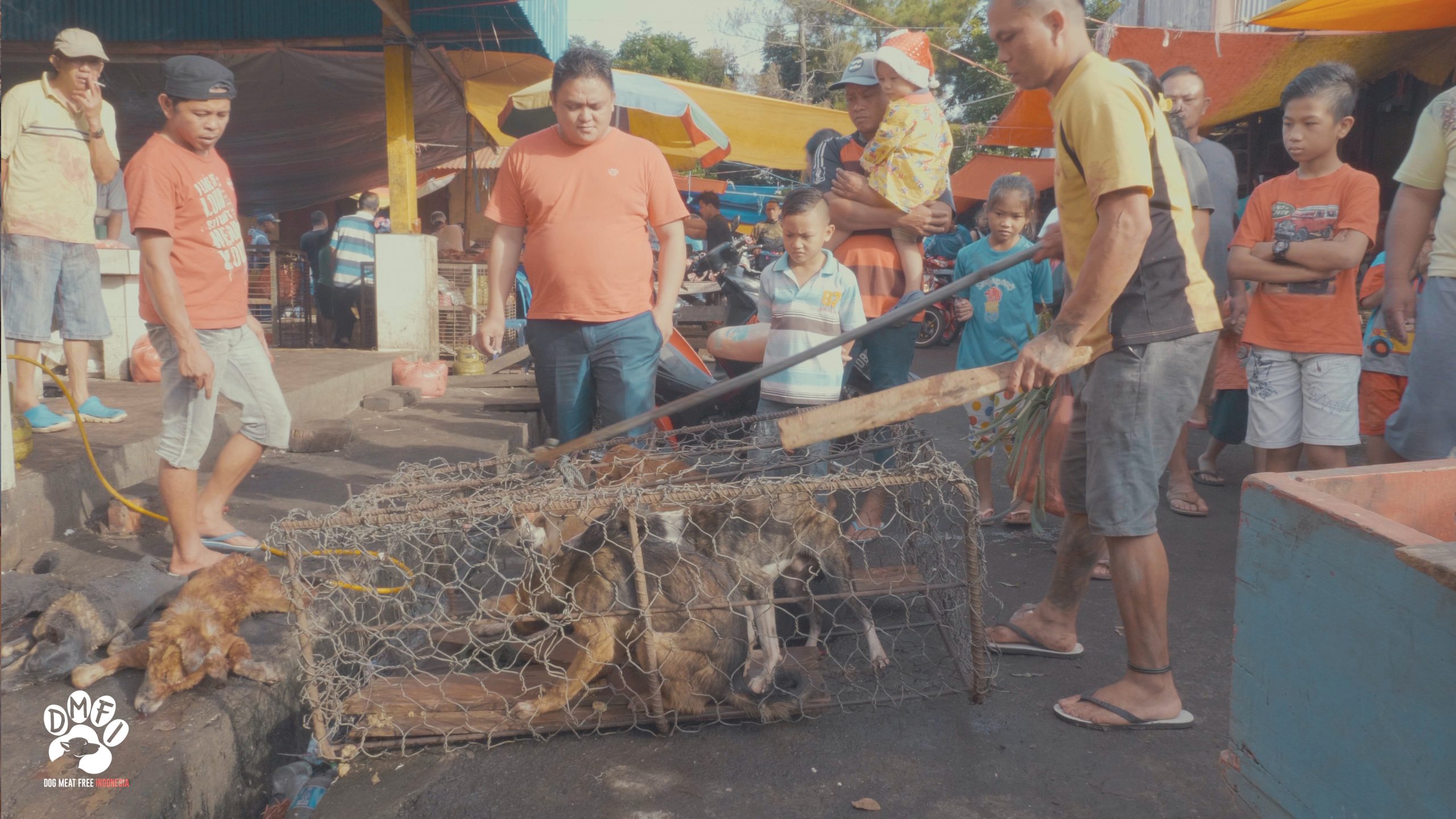
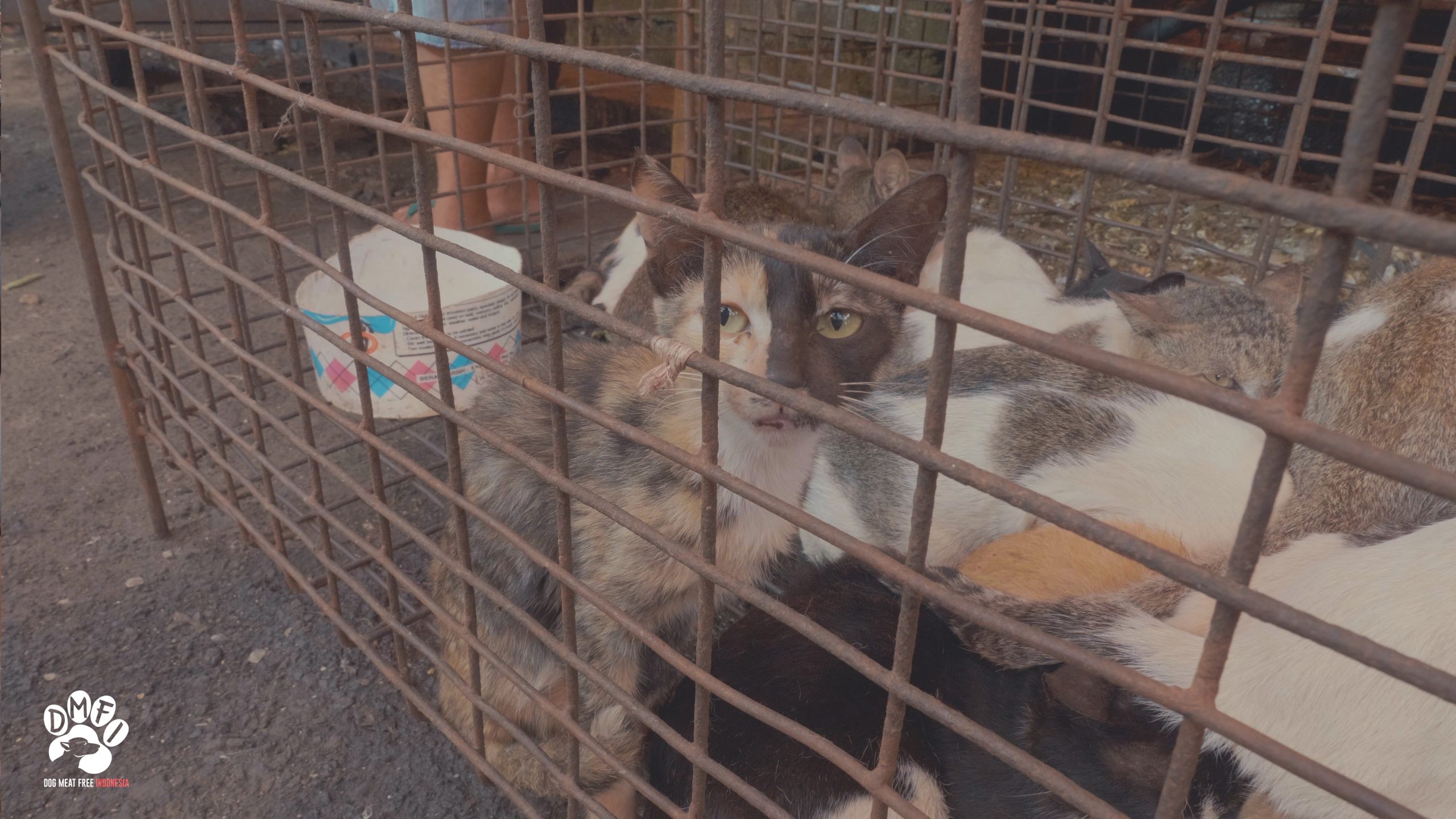
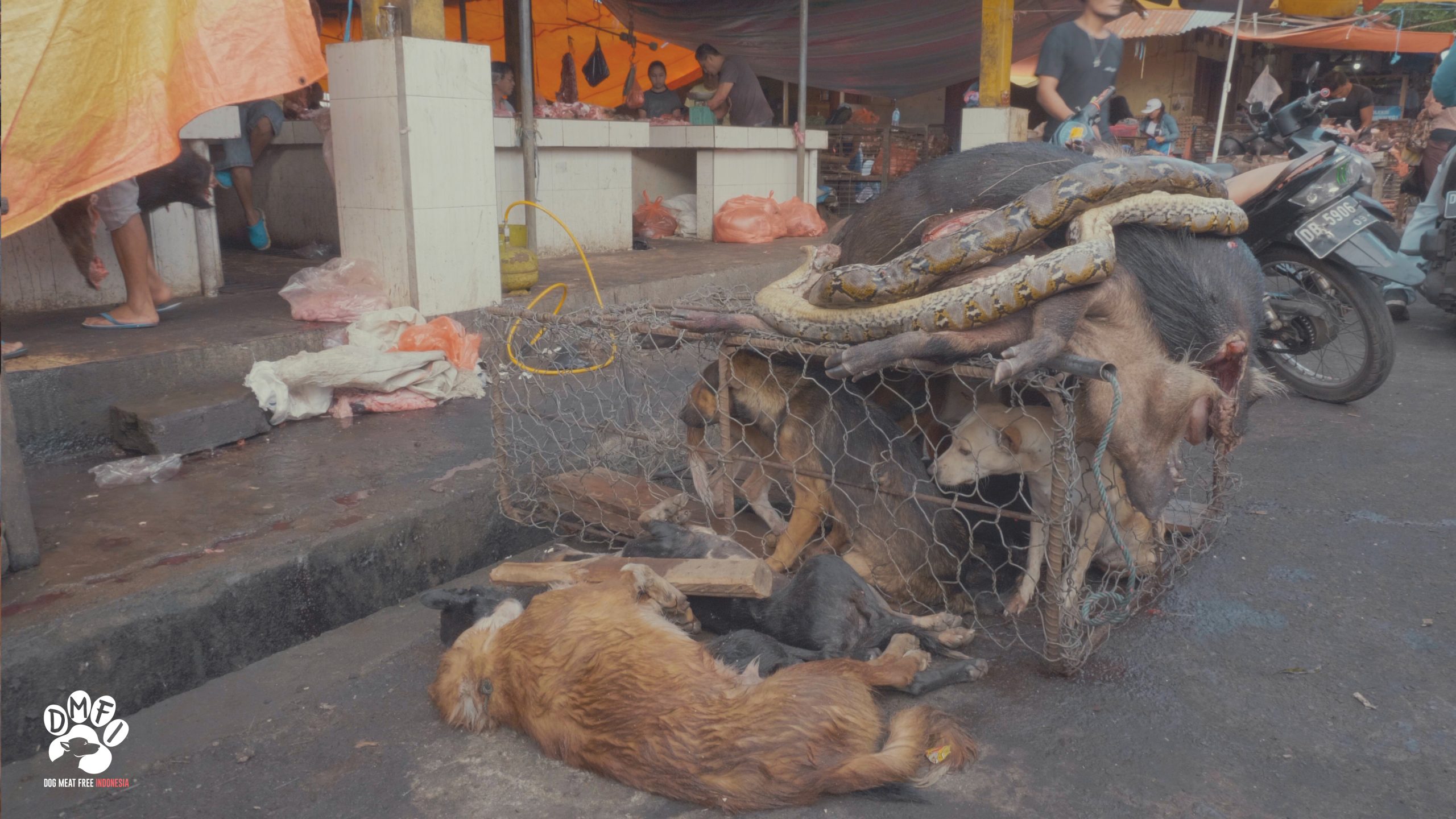
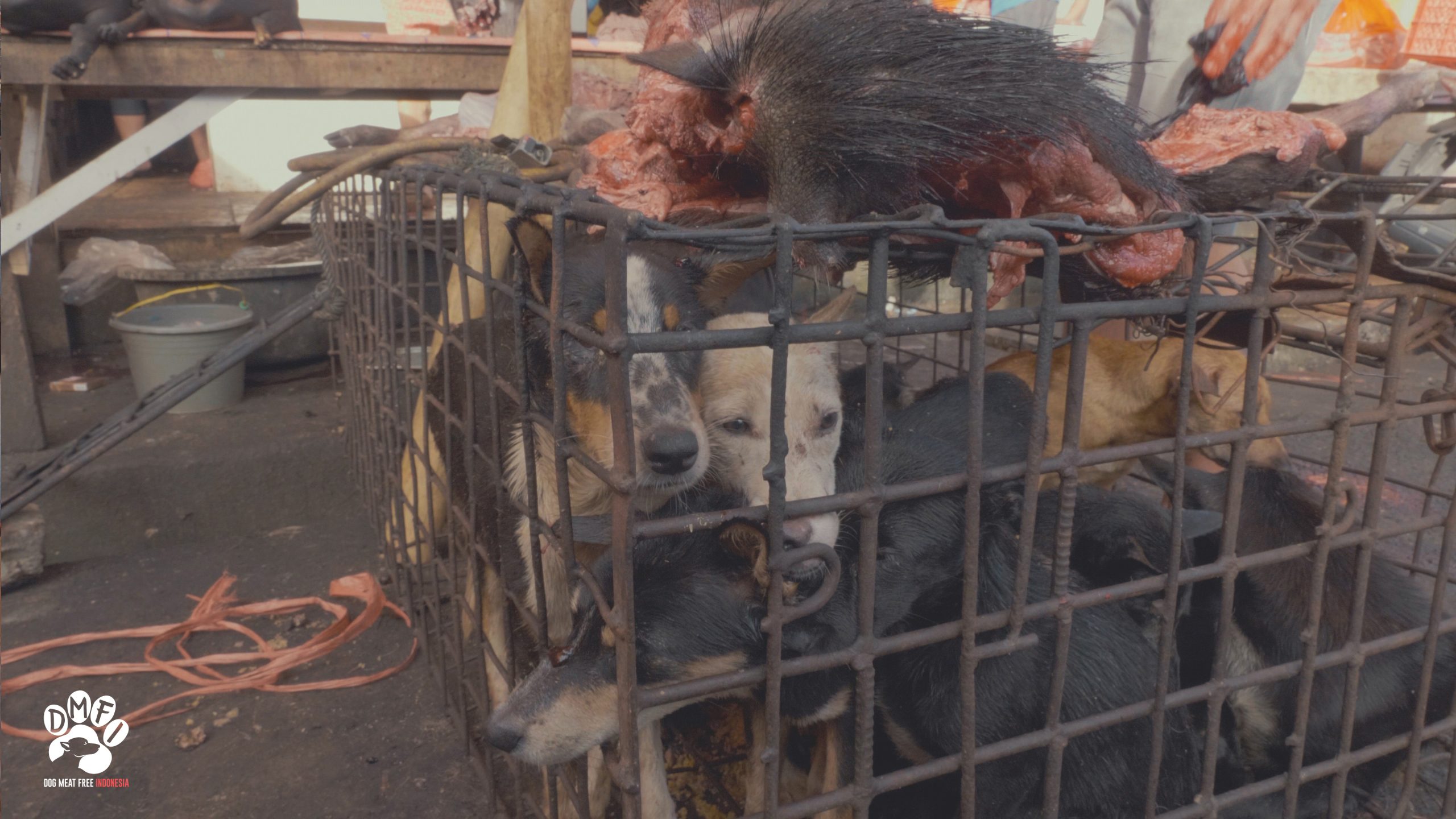
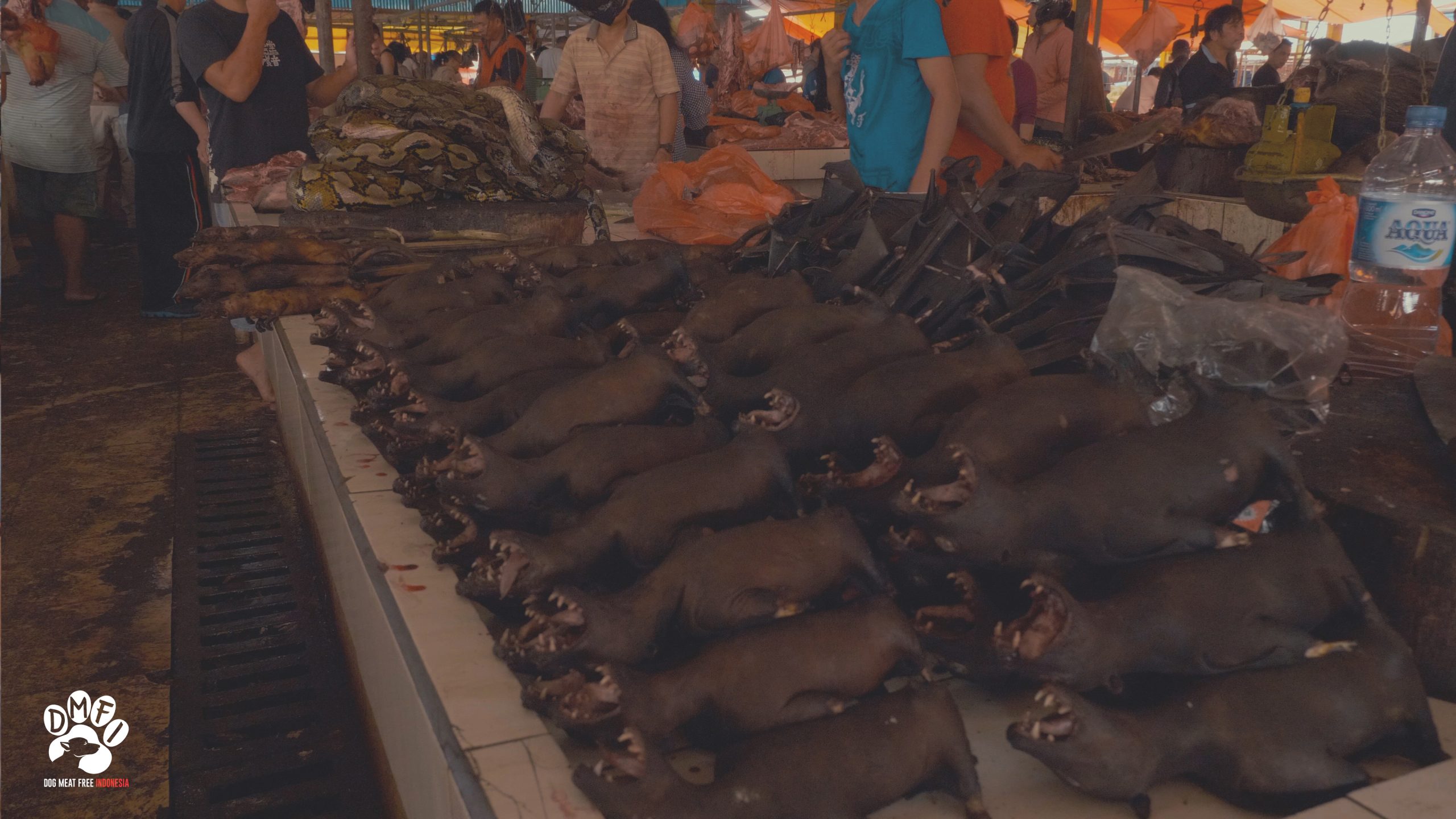
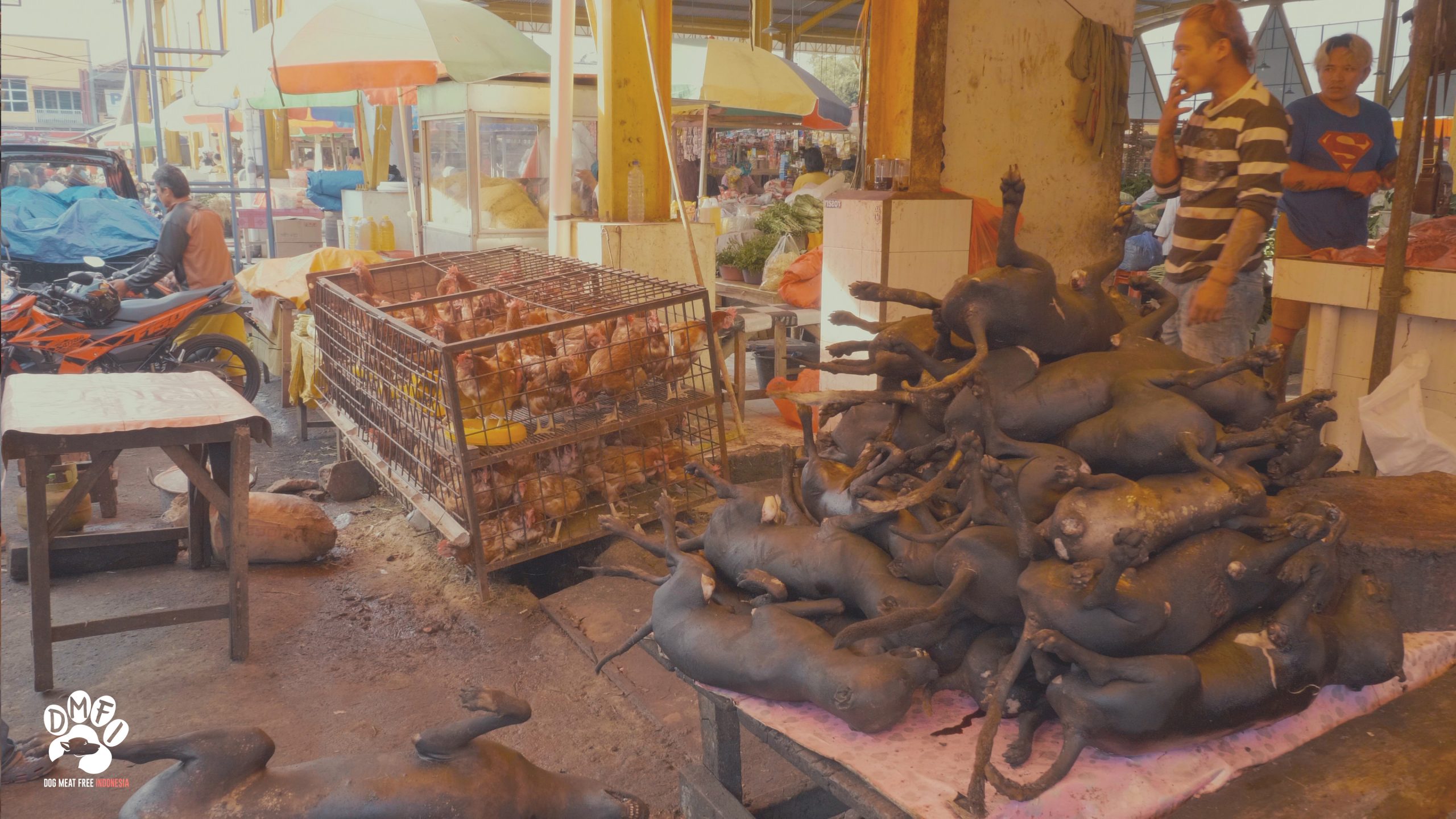
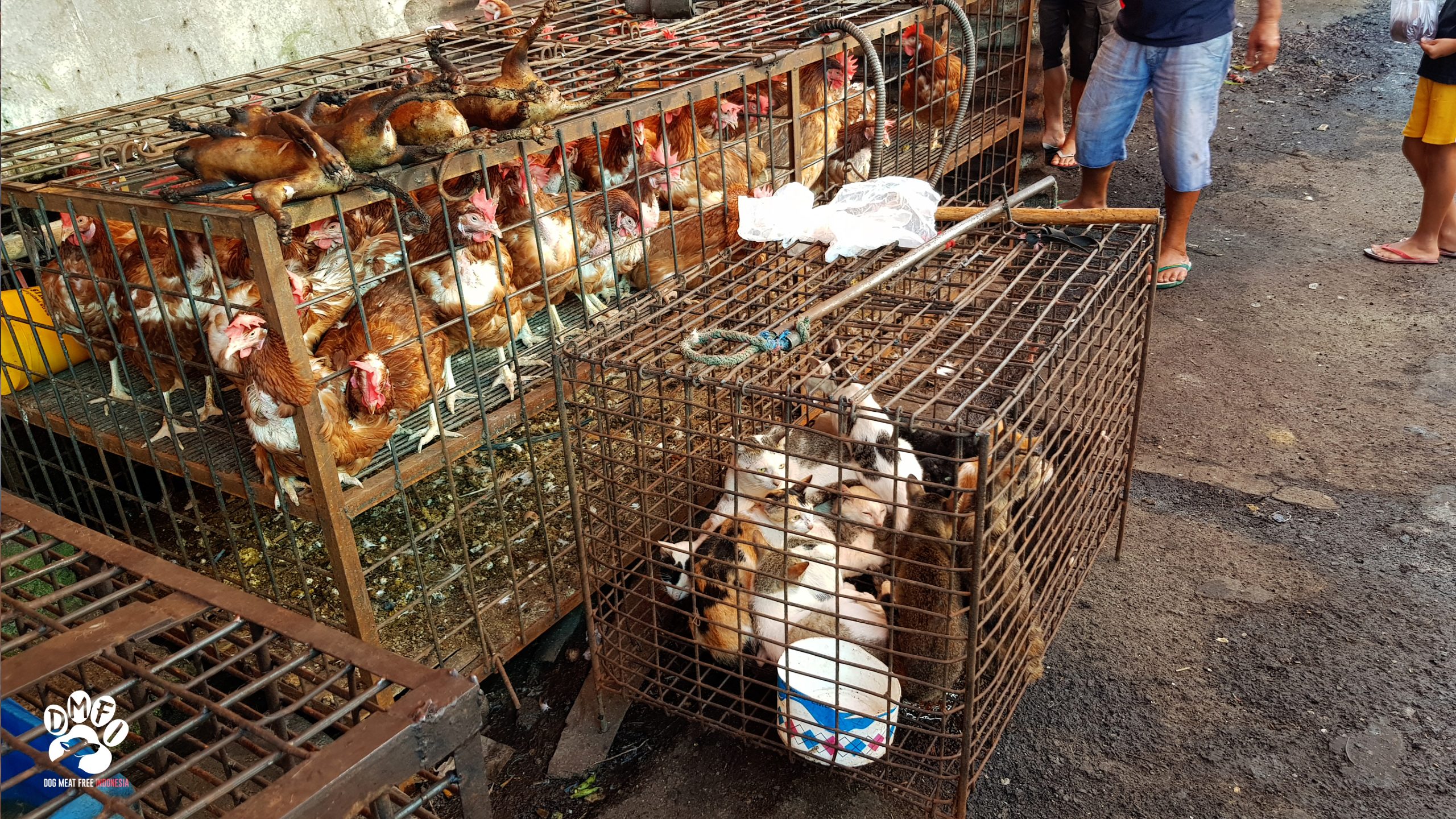
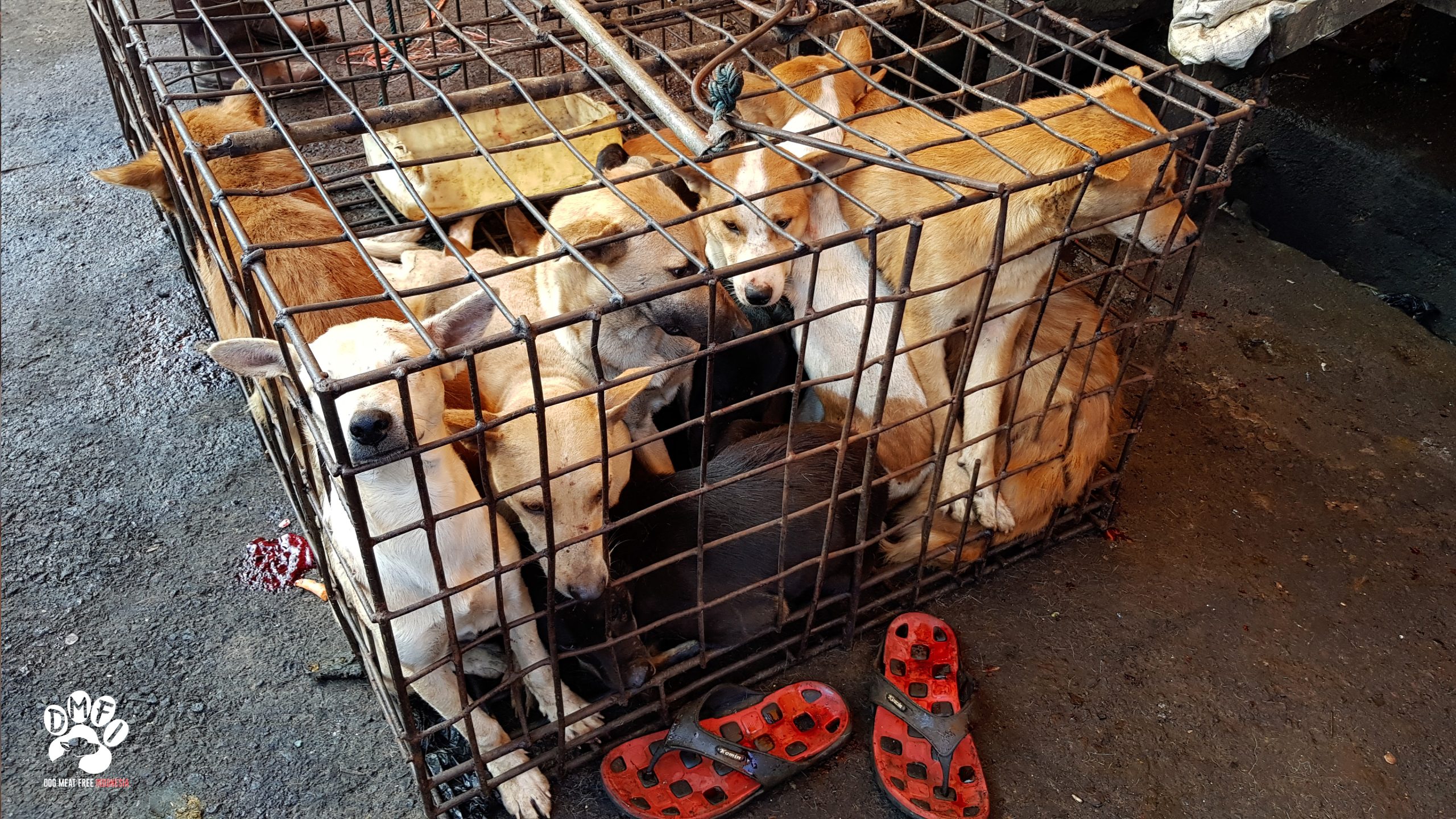
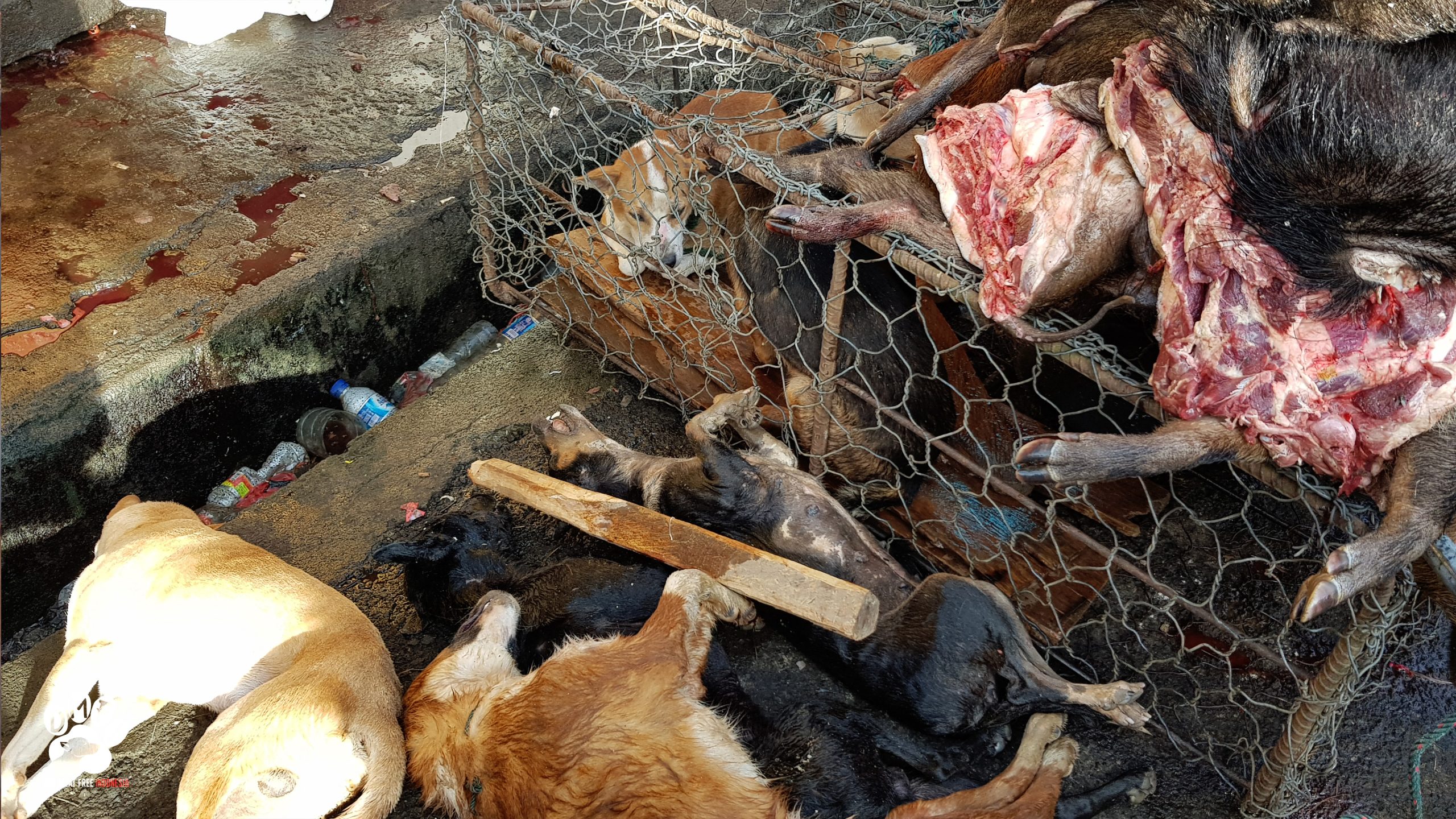
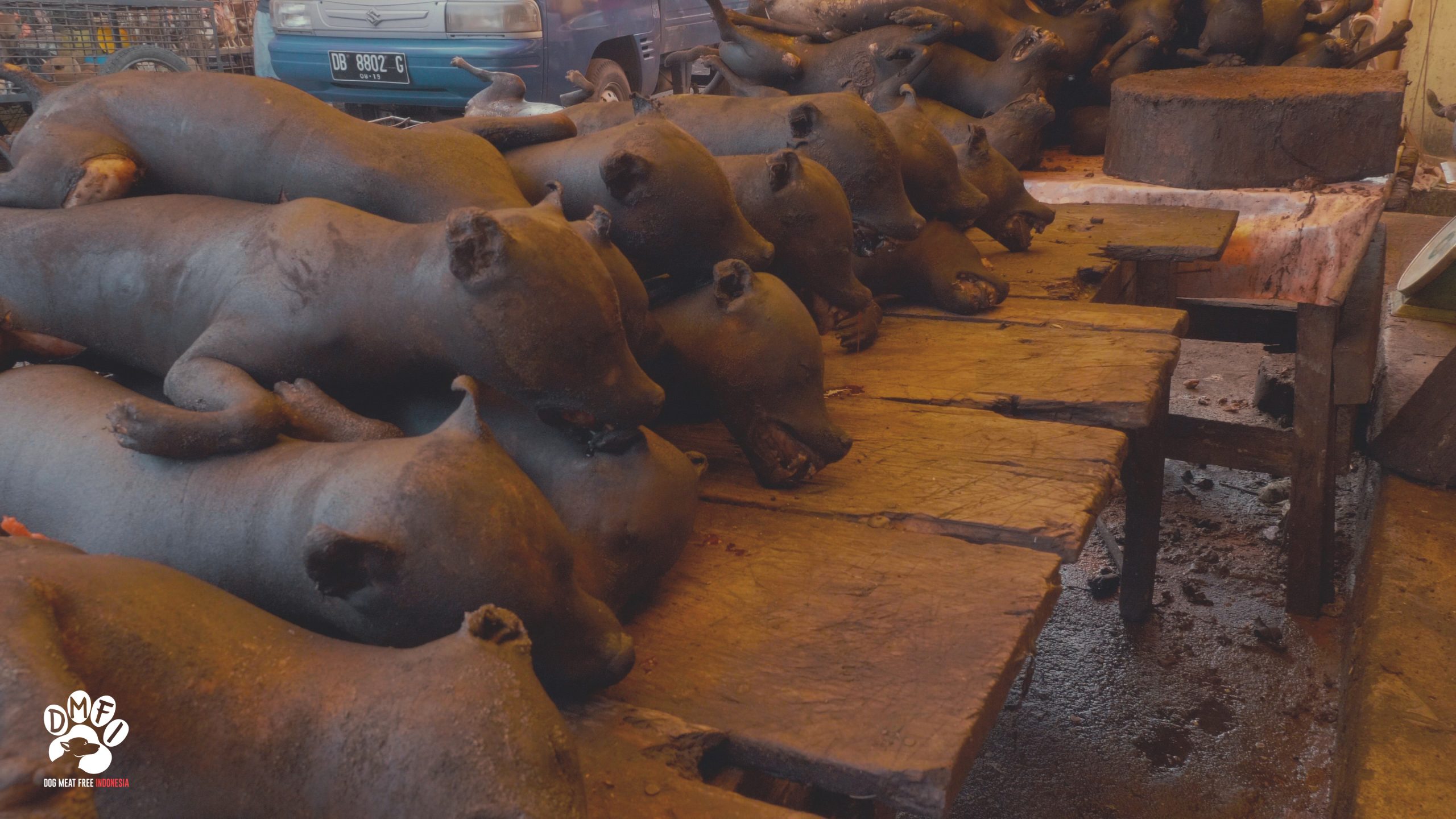
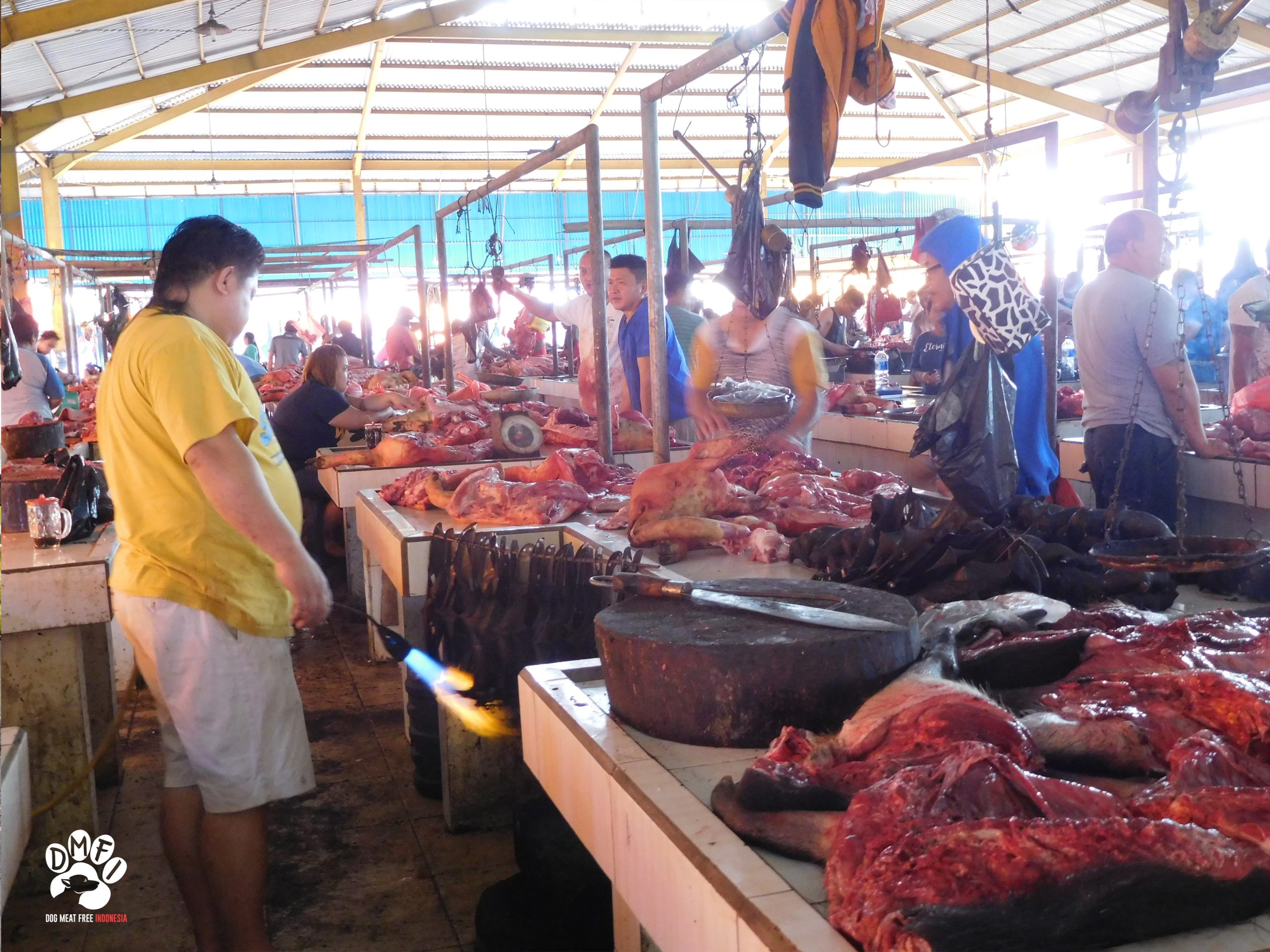
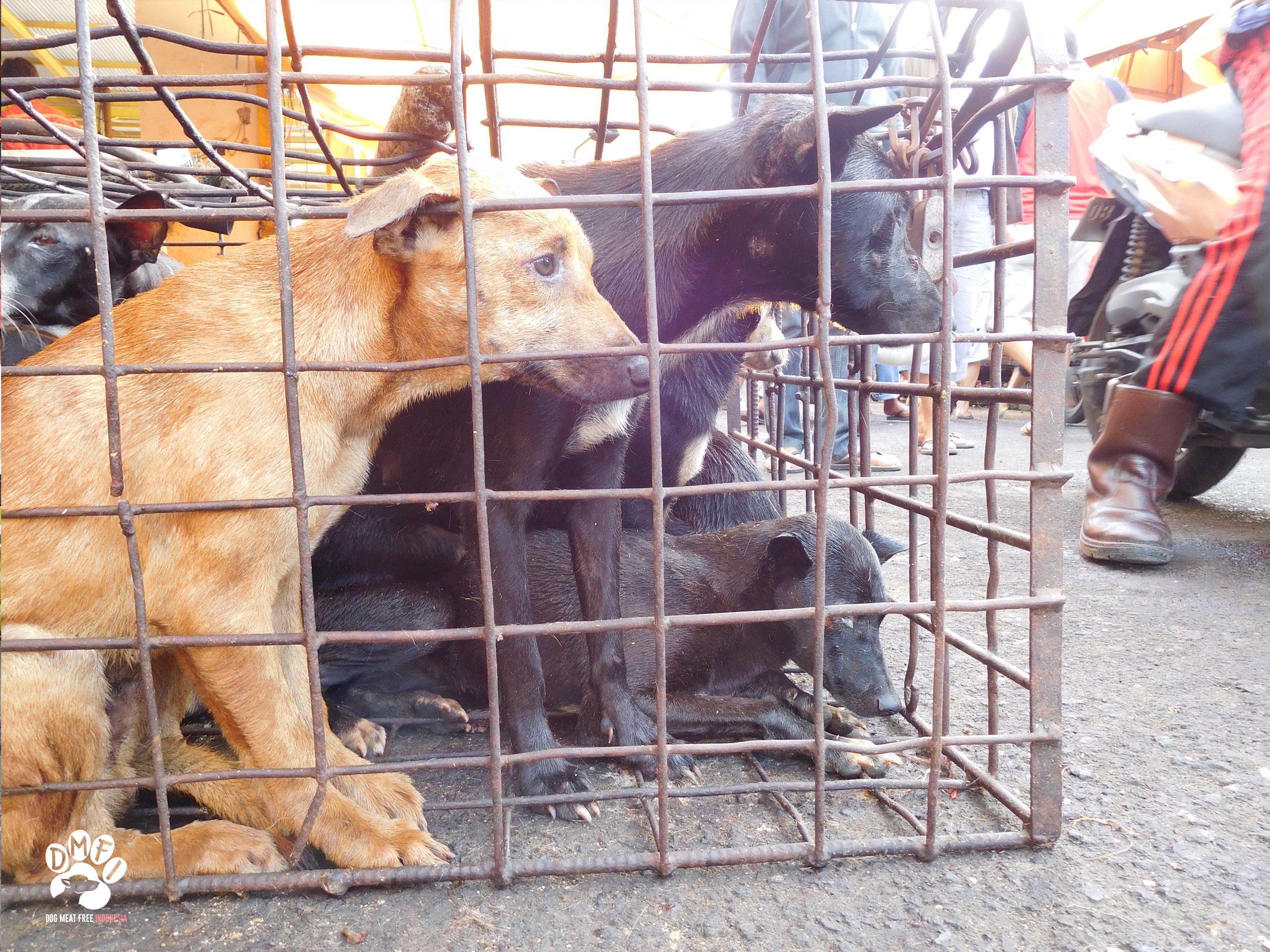
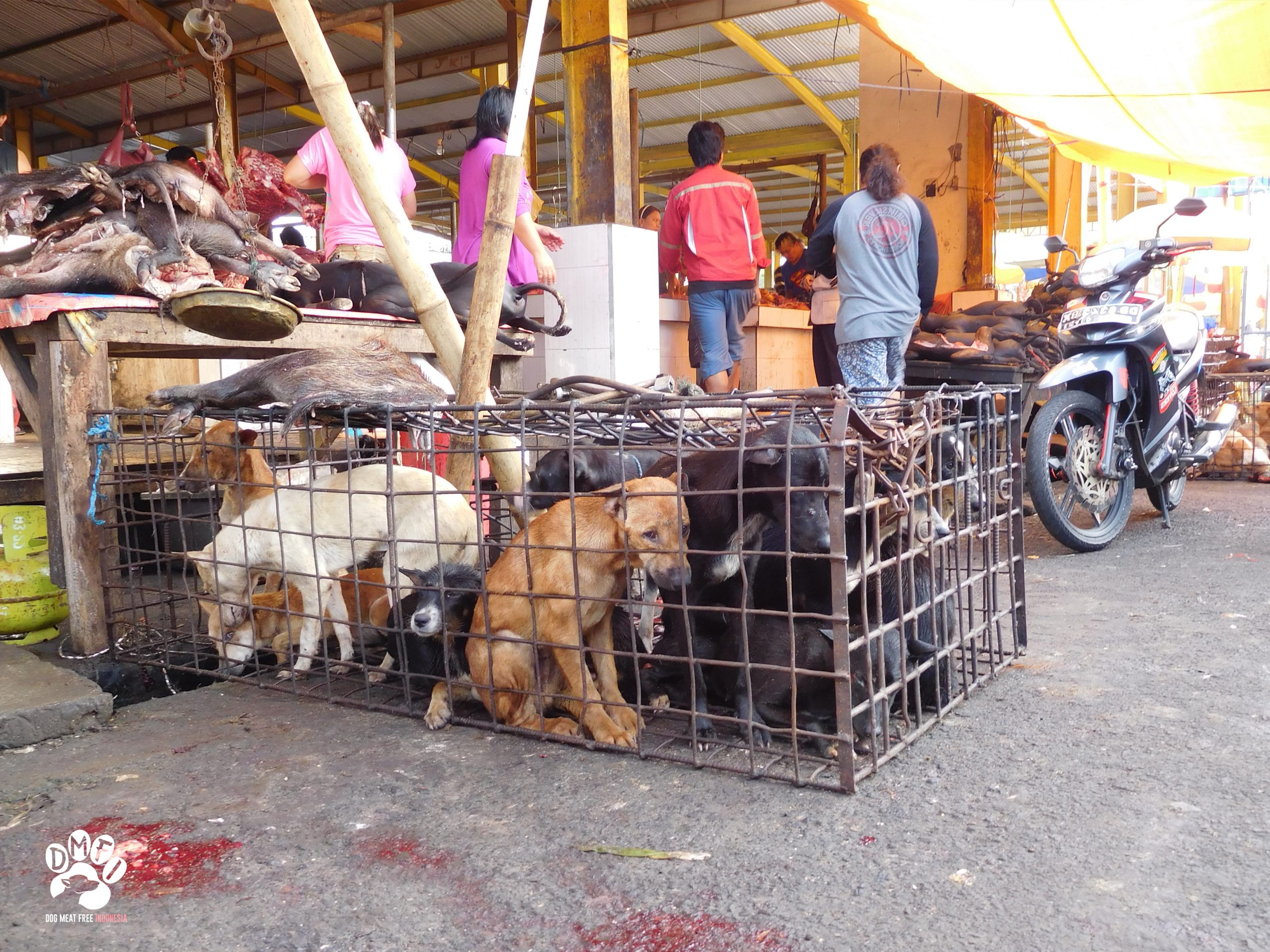
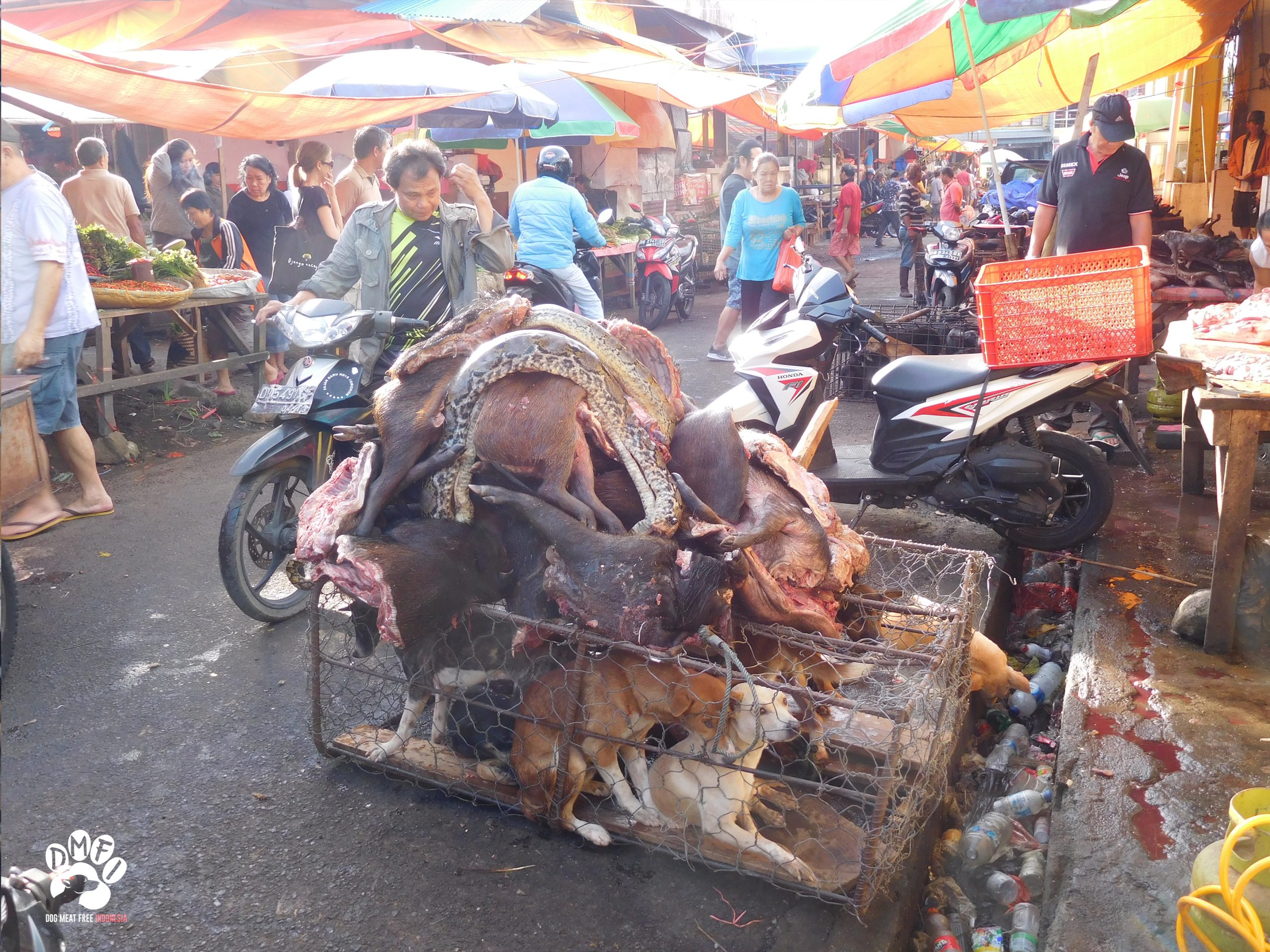
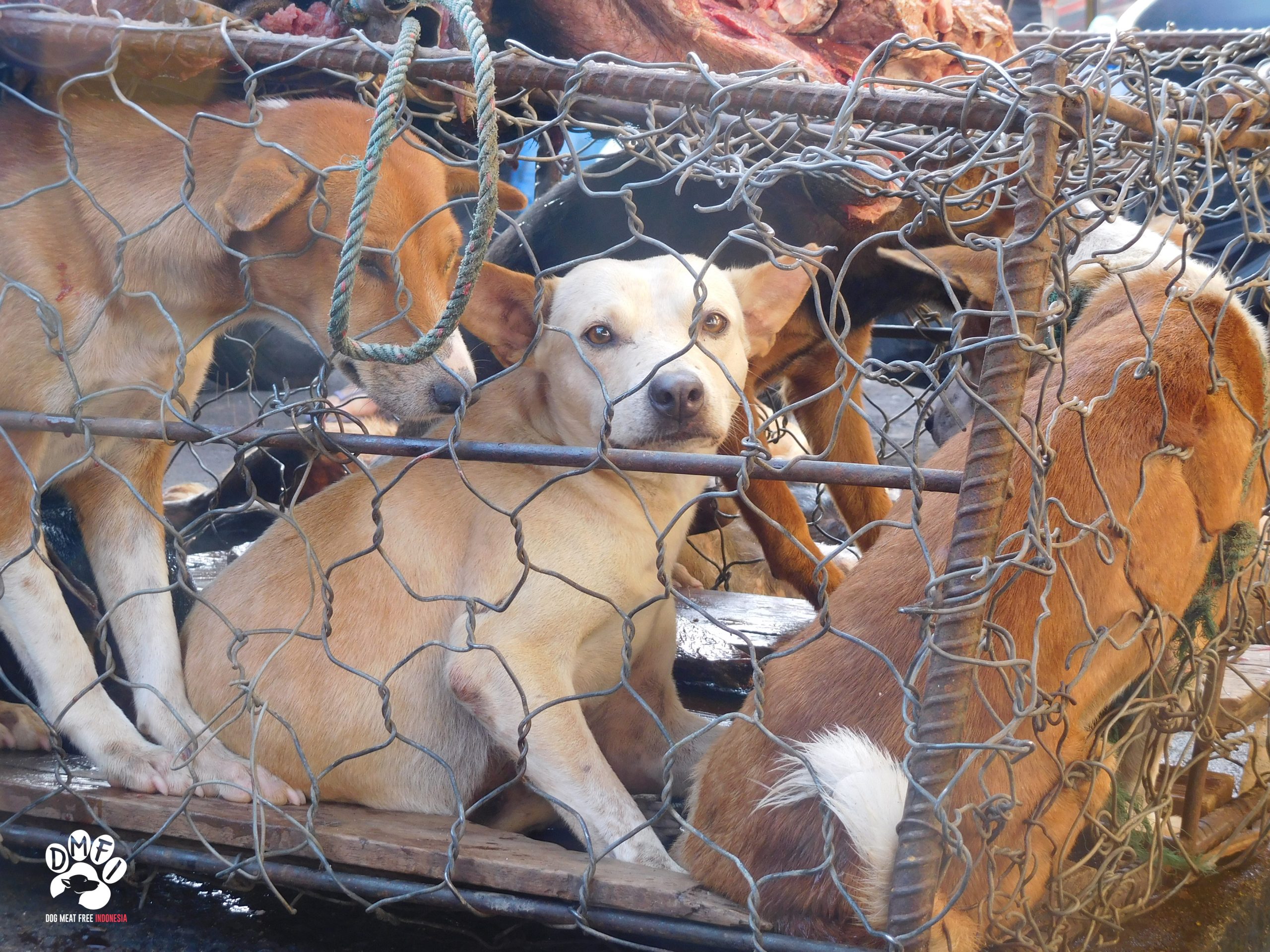
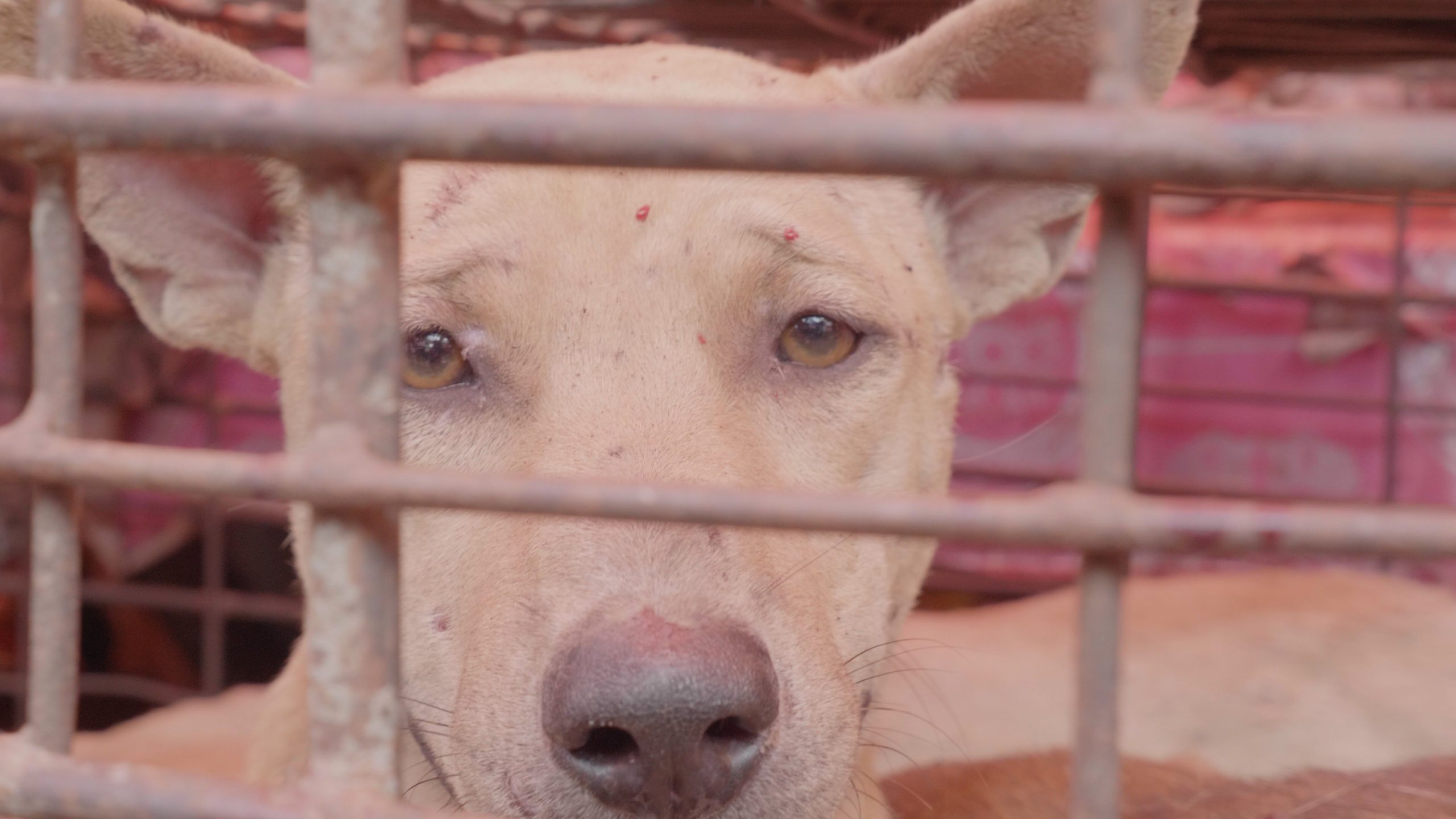
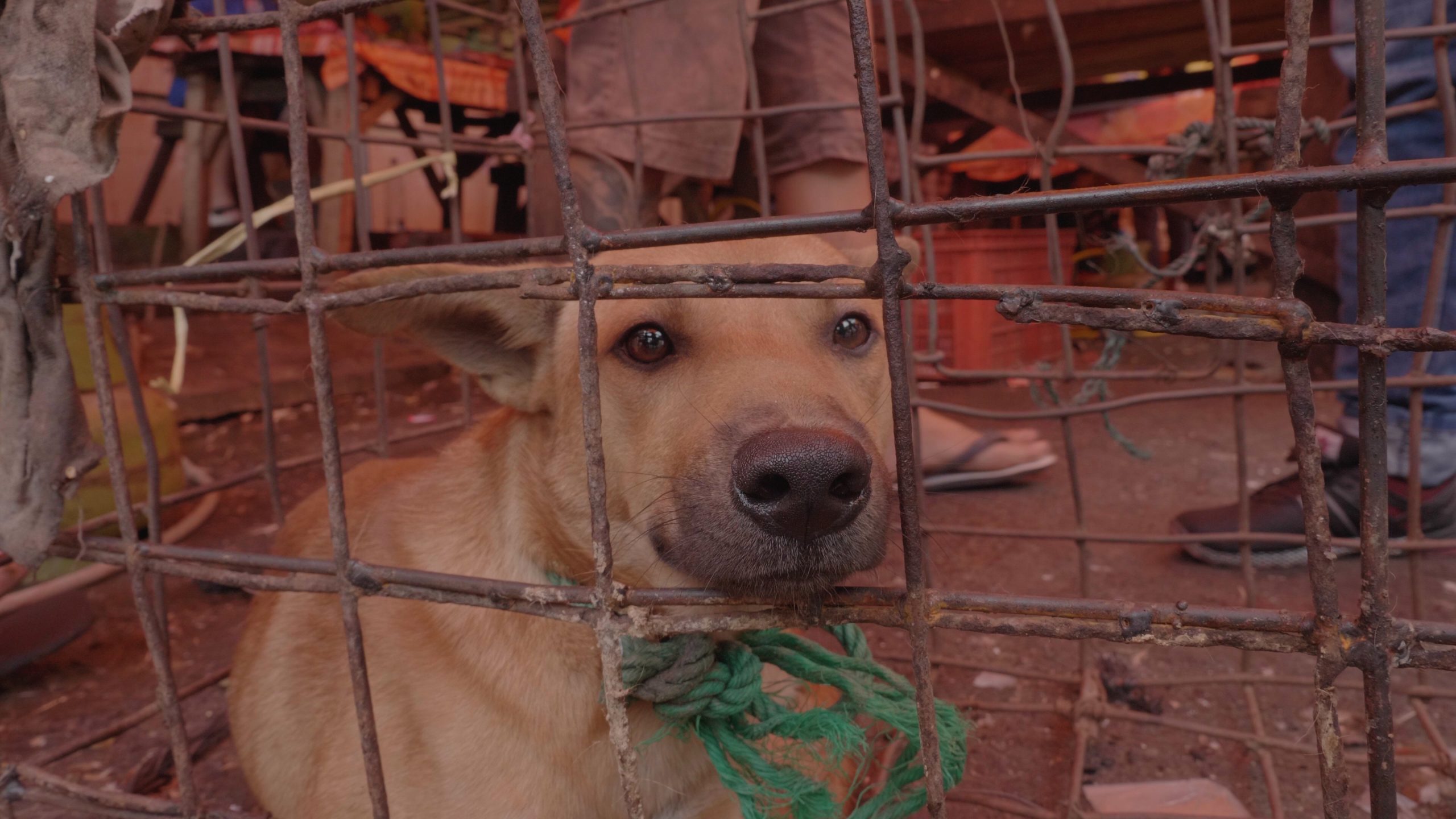
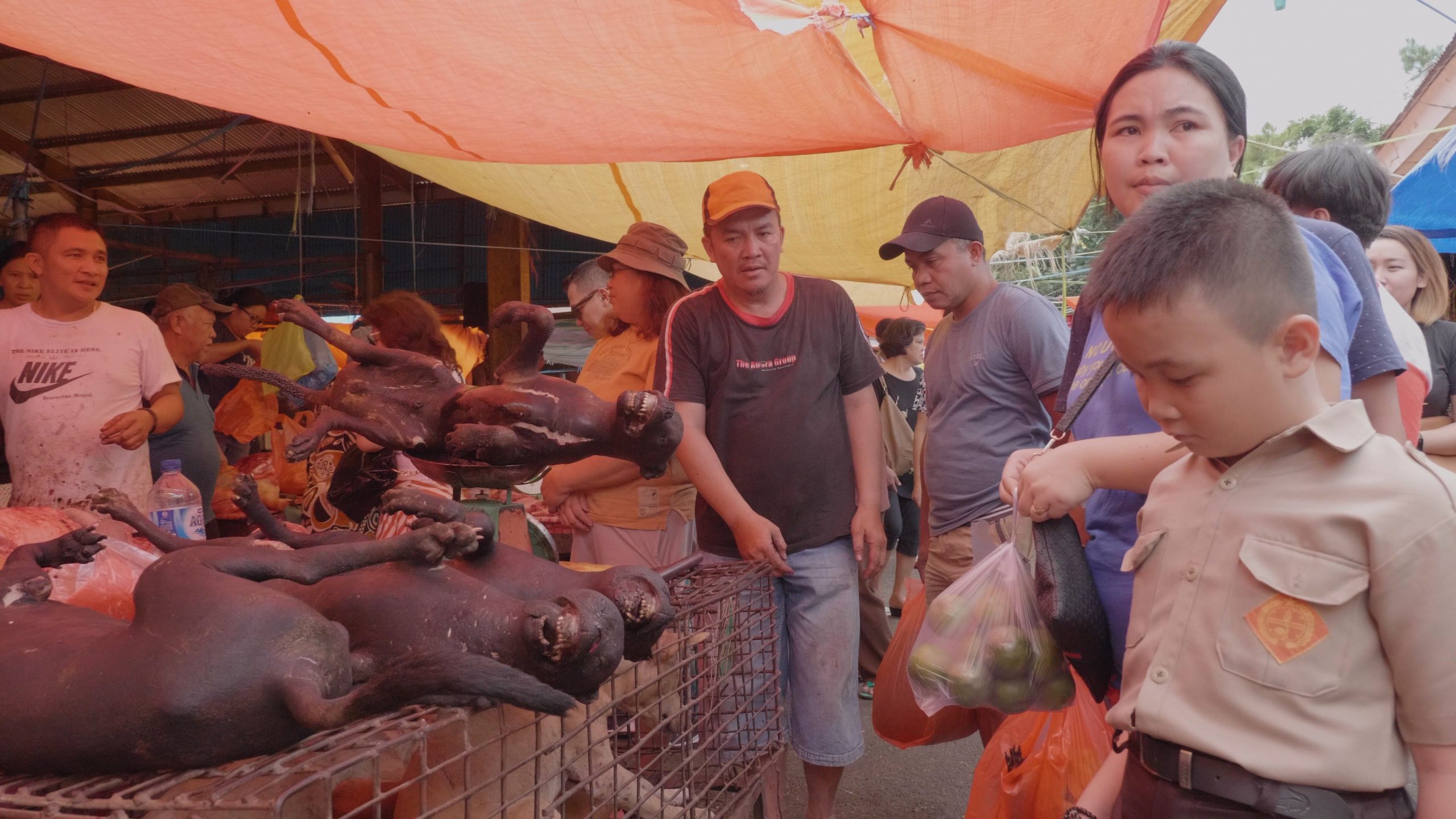
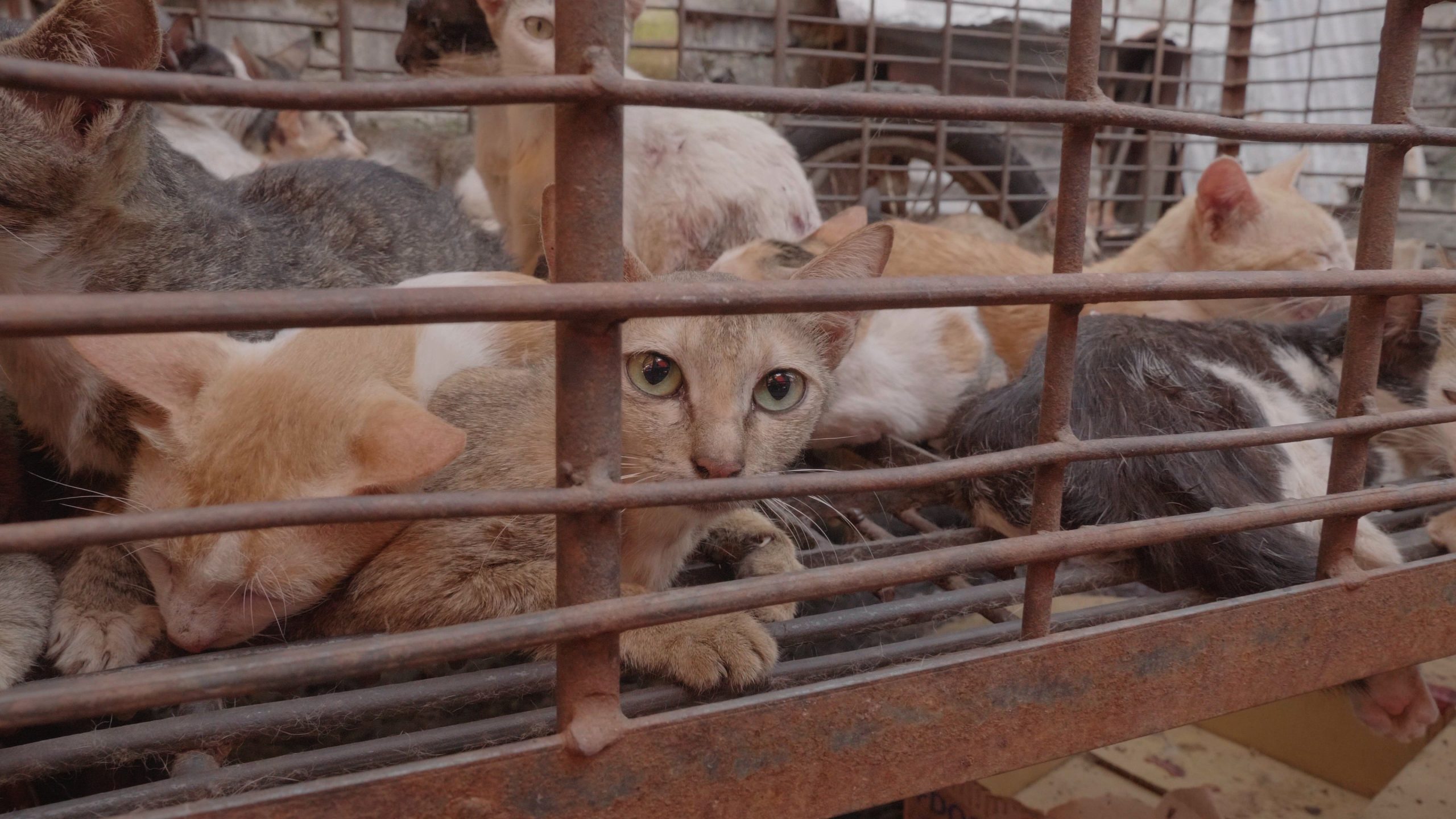
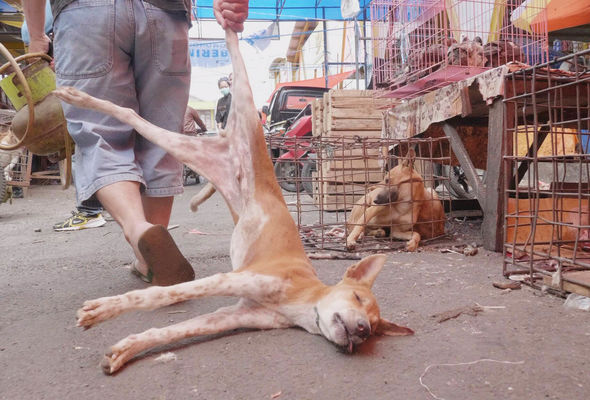
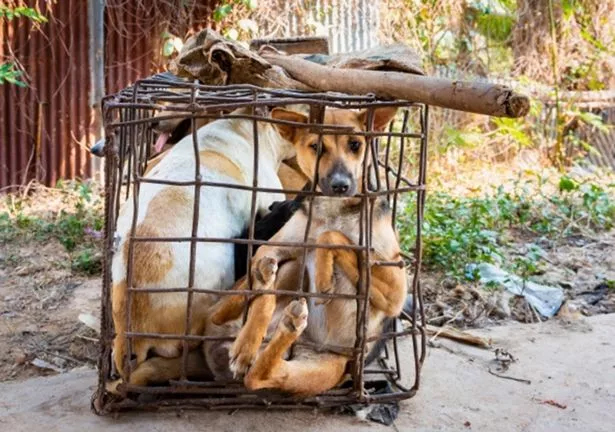
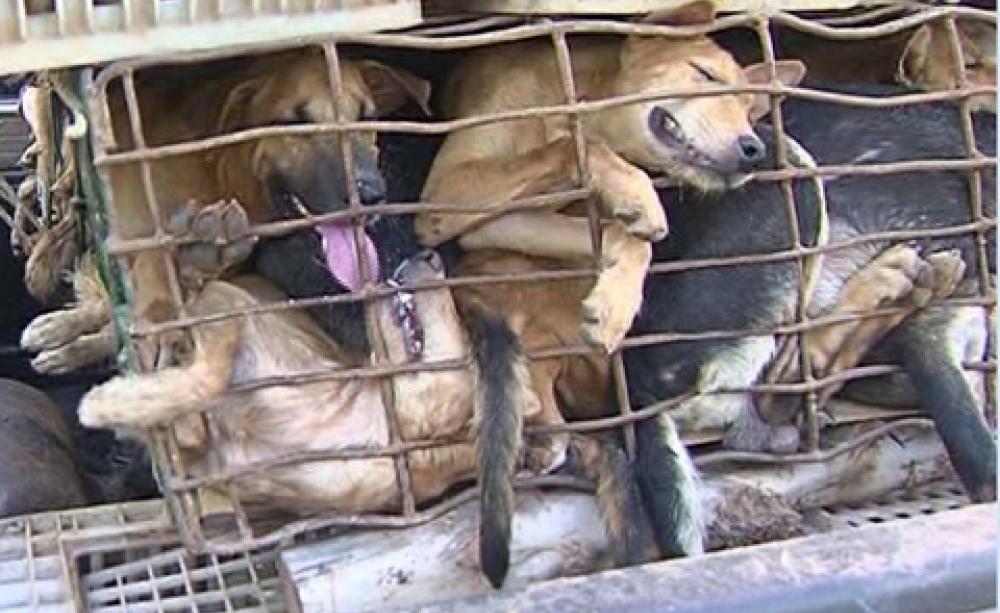
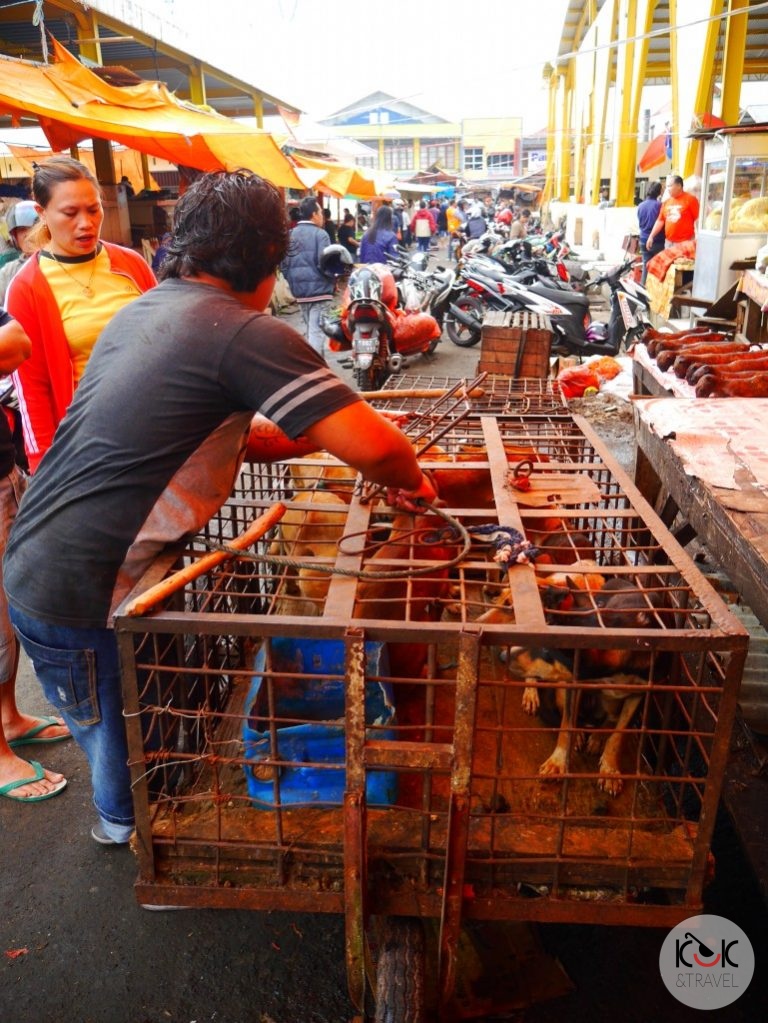
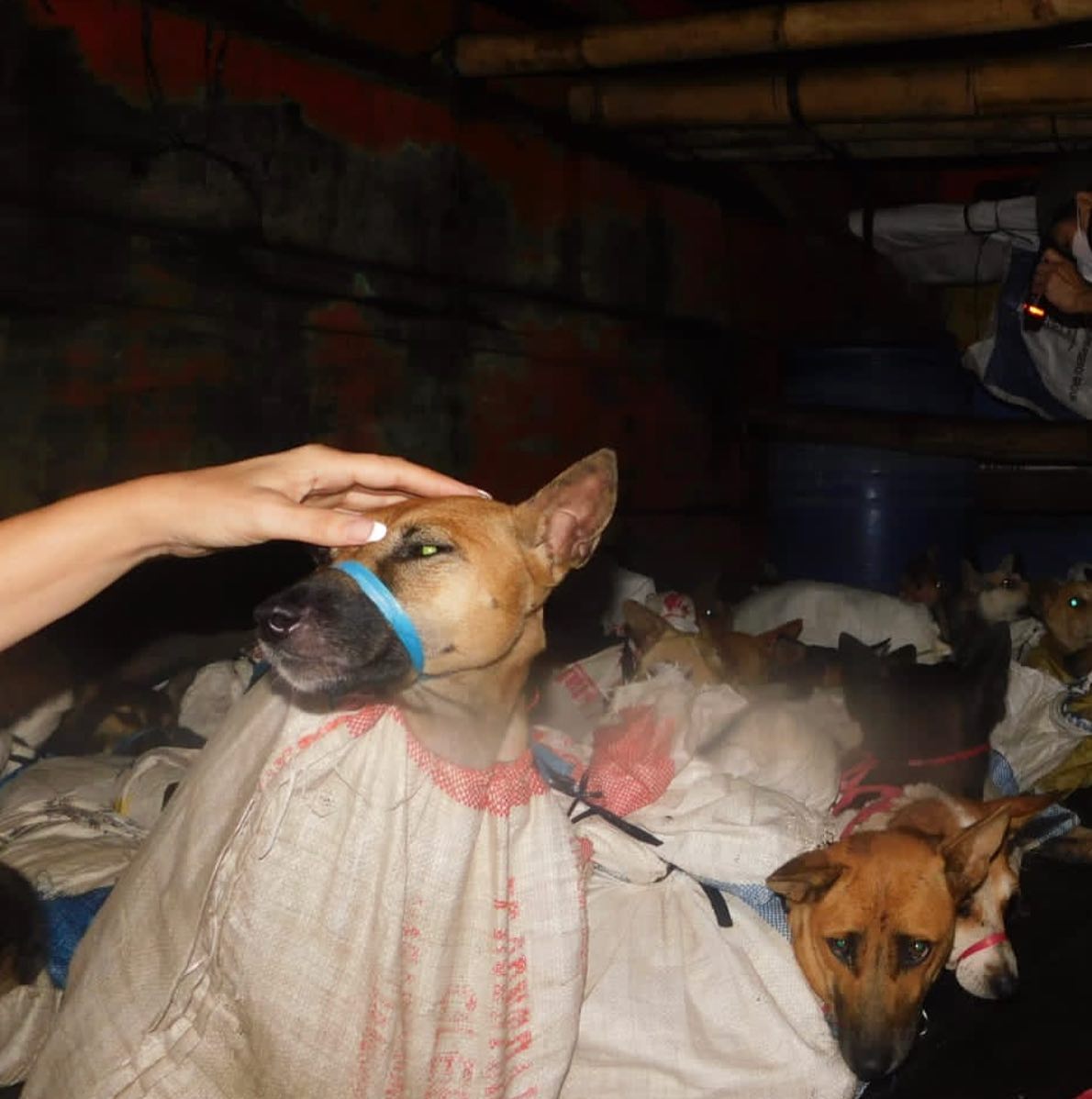
Everything you just saw in the photos and videos can’t be called a “meat market.” This is a real slaughterhouse, a slaughterhouse, where animals are not simply killed, but with particular cruelty and sadism. Before their terrible death, dogs and cats are transported to the markets in dirty cages or bags, where the animals are slaughtered 50-70 at a time into one small cage. Almost all the dogs have mouths Tied up so tightly they can’t breathe, this can go on for days. Animals die en route from dehydration, heat, and stress, from overcrowding and crushing themselves.
When they’re brought to the market, the poor dogs and cats await their agonizing death in horror, watching as their fellow animals are brutally tortured, killed, and even burned alive with blowtorches. The entire market is splattered with blood and brain matter. The piercing cries of animals dying in horrific agony and suffering unbearable pain are heard everywhere…
This can all be described in only one word – HELL! And it’s completely impossible to believe that all this is being done by “people” who seem normal and even welcoming to tourists.
North Sulawesi, Indonesia. The Tomohon Extreme Market: Meet People Who Eat Dogs, Cats, Monkeys, Pythons, Bats, and Common Street Rats…
(A story from a tourist who visited this market)
Traveling usually brings us many positive emotions and impressions, especially when we encounter different and interesting cultures and very friendly people.This time we found ourselves on a trip to North Sulawesi, an Indonesian island near Manado, Tomohon, and Tondano, a region originally inhabited by an ethnic group called the Minahasa. Although we encountered very friendly people here (one might even say, “much friendlier than ever before”), their food habits and culture might be off-putting to many Europeans, Americans, or Australians. At first glance, from our perspective, everything seemed normal: Christian churches predominate over mosques; Locals are thrilled to see a white person on the street, as it’s a rare sight for them. They approach you and start a friendly conversation, even though they don’t speak English. The atmosphere seems so pleasant and relaxing until… you visit Pasar Tomohon (the local market in Tomohon) and discover the true reality and diet of these people.
Besides the standard food at any local market, such as vegetables, fruits, and fish, you’ll also see dogs, cats, monkeys, and bat meat. There will be rats and pythons on the stalls, and you’ll come across cats and dogs locked in cages, about to be brutally slaughtered in a few hours… and this happens right there in the market, in front of other people and small children, as if there was nothing extraordinary or cruel about it.
It seemed like nothing more horrific than this was what we could see that day, but right next to the meat of slaughtered dogs and cats on the stalls were live dogs and cats in cages, covered in bruises, with head wounds, spattered with blood, terrified, huddled together, aware that the same thing was about to happen to them that same day, in the same place. We saw one man carrying a stick with a noose of rope, which he placed around the neck of a caged dog, then tried to pull it out; the dog tried to defend itself and screamed hysterically. The sight was horrifying, and we decided to leave the place, but when we had to go back the same way to get to our motorcycle, the dog was already hanging dead from a stick…
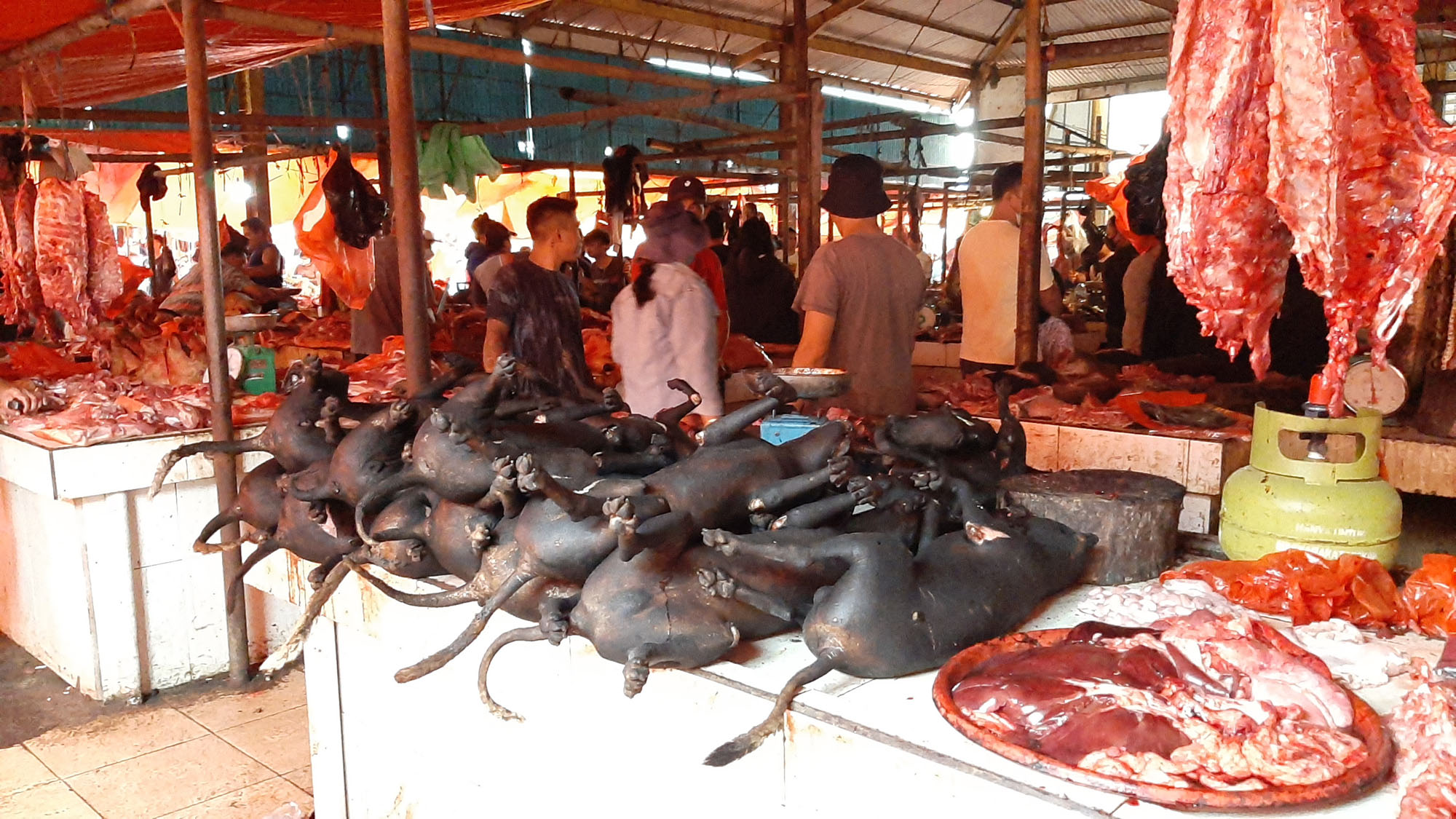
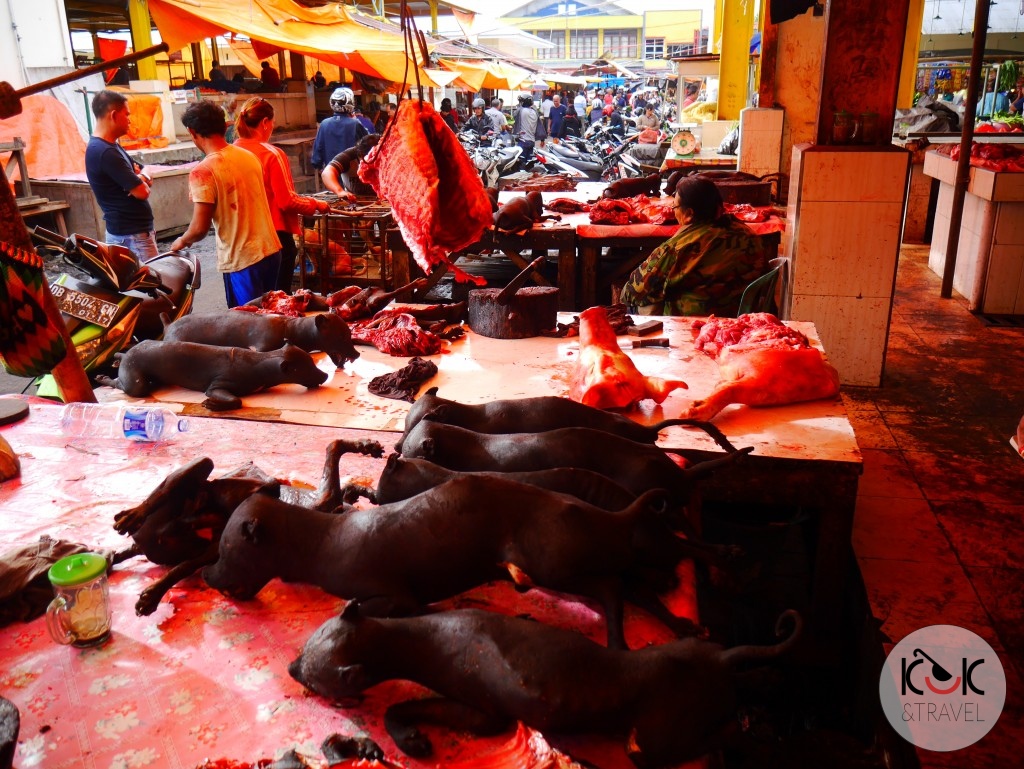
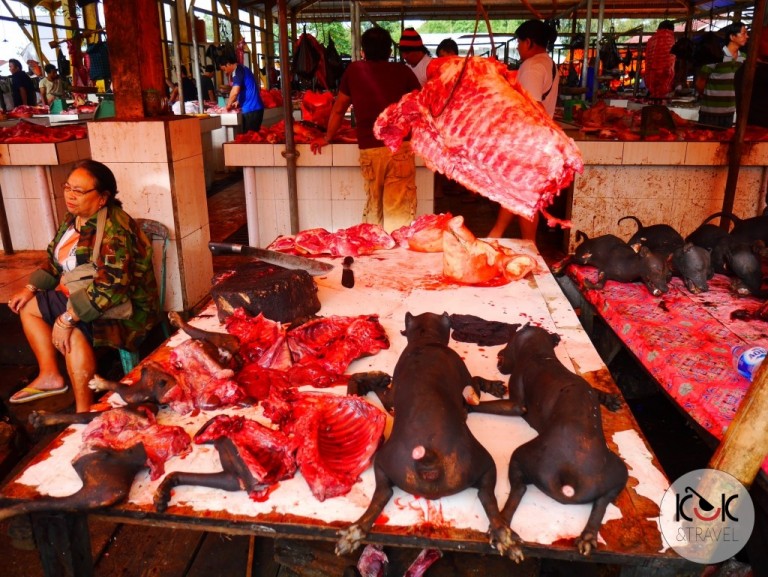
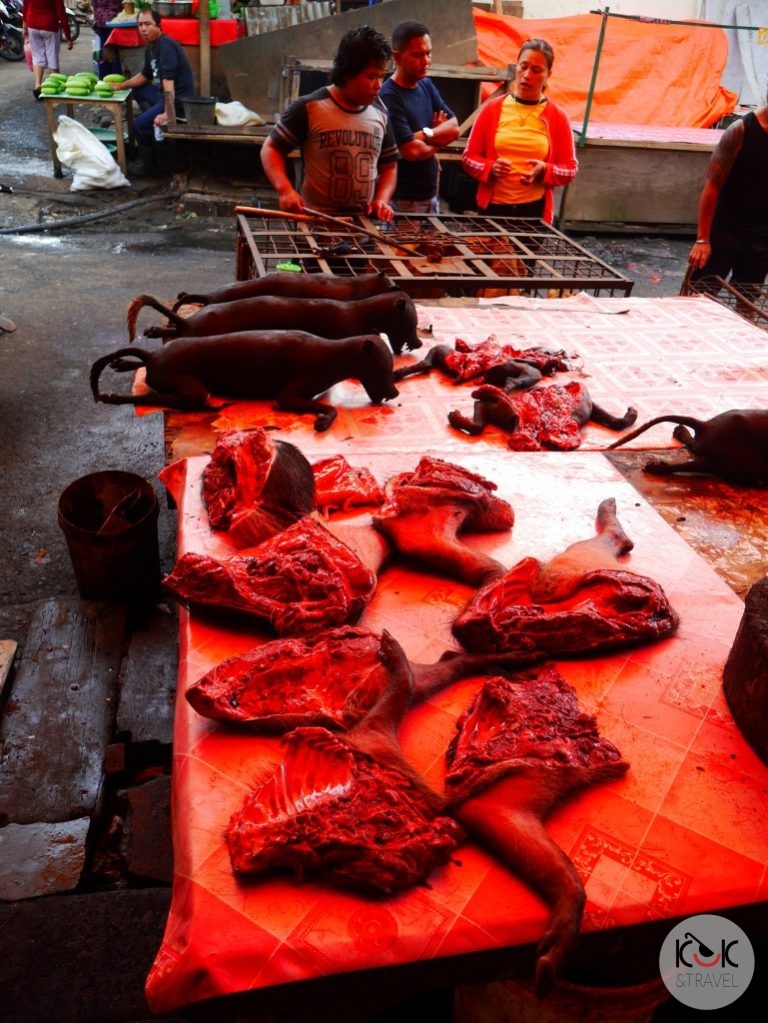
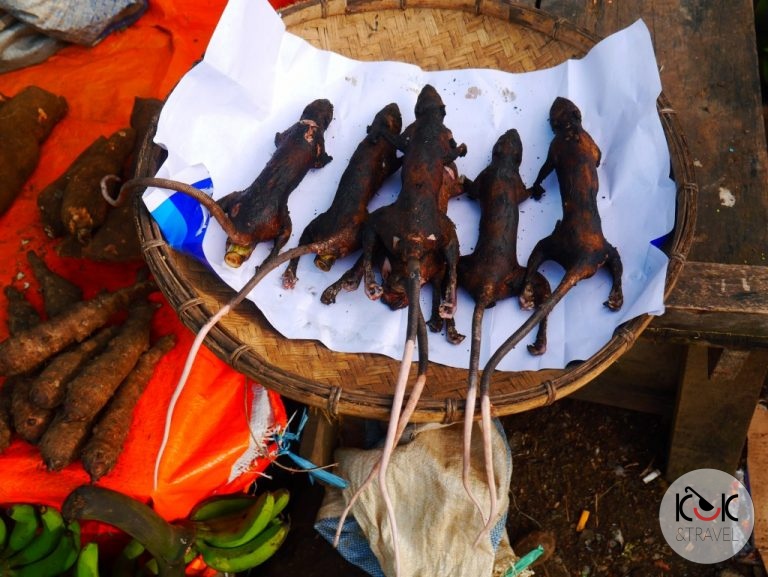
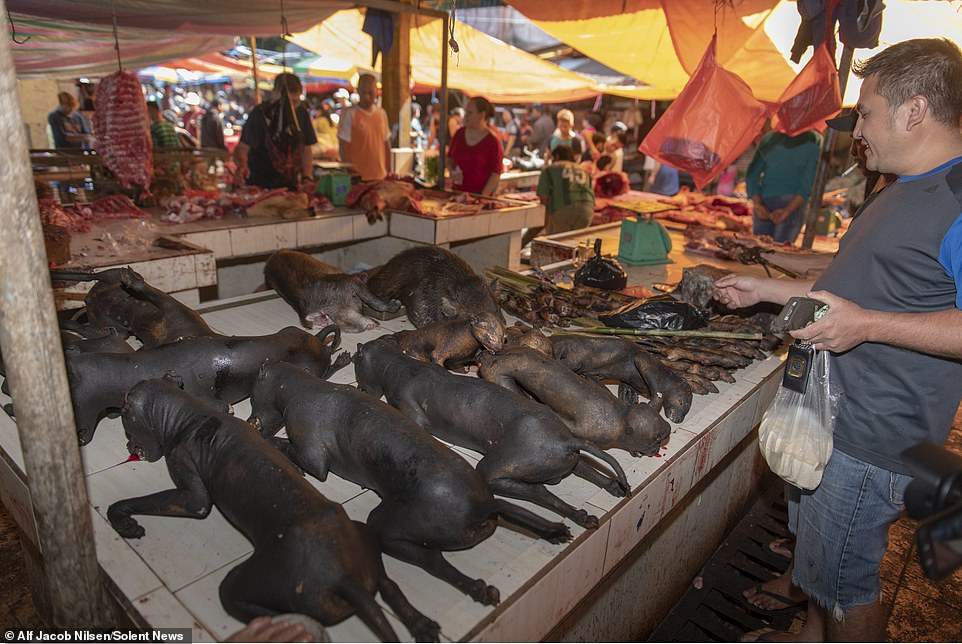
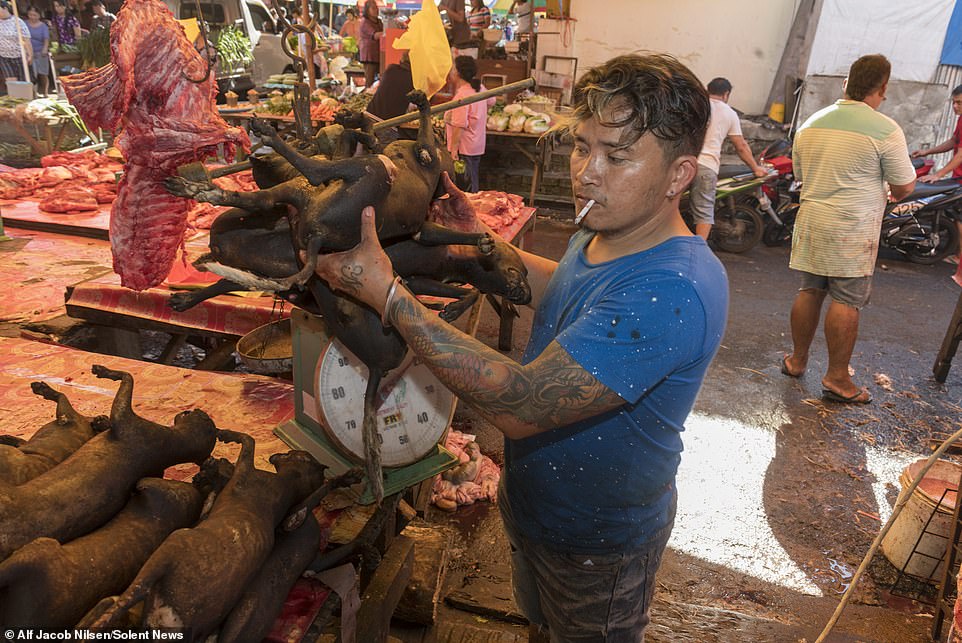
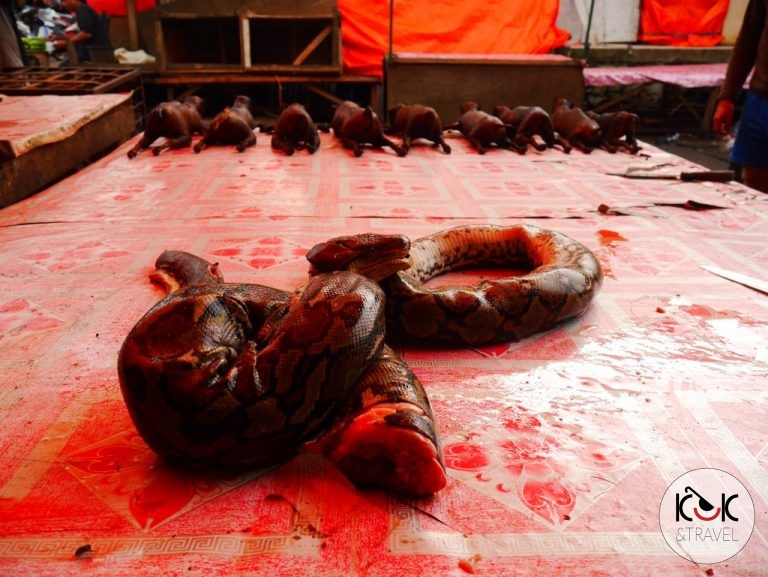
The statement that Asians literally eat everything that moves is most accurate. We rarely saw monkey meat for sale (which they also eat), but there were plenty of stalls selling bats, python meat, rats, and, of course, the world’s most popular meats: pork and chicken.
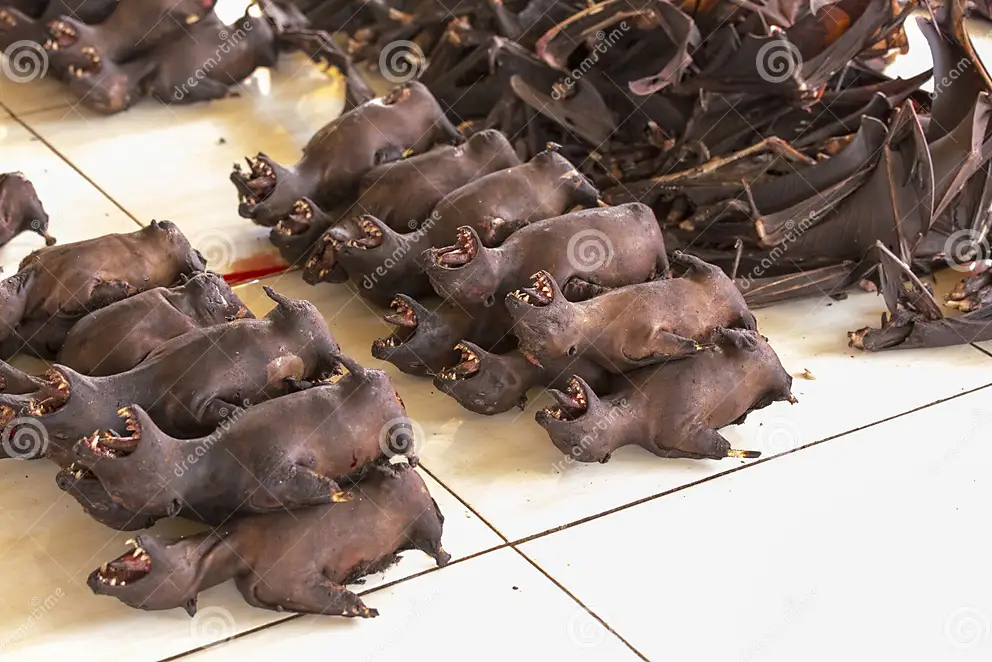
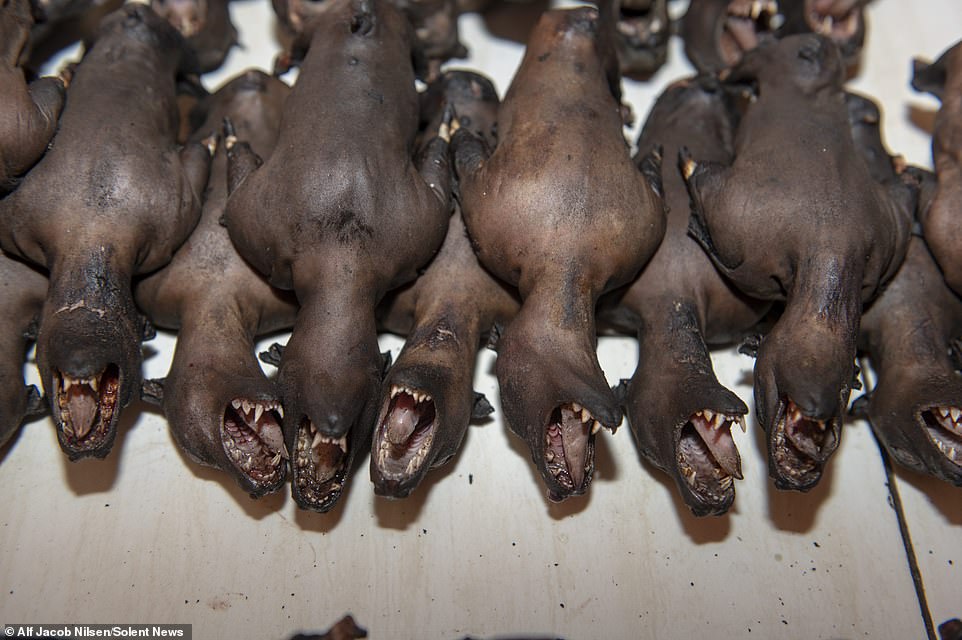
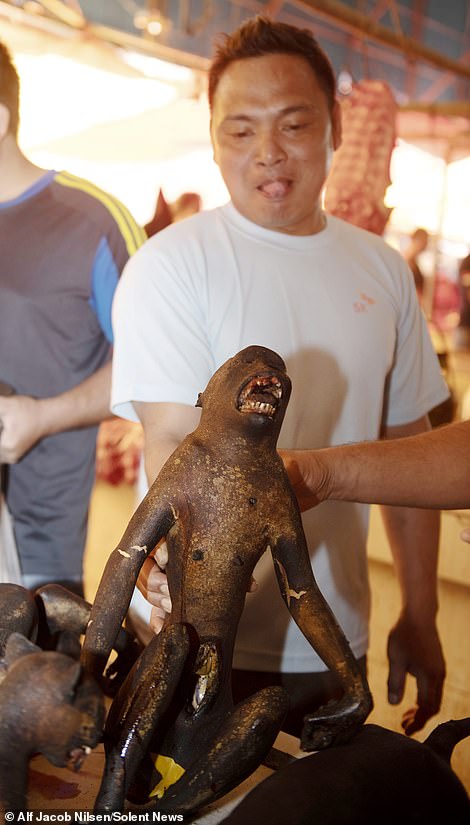
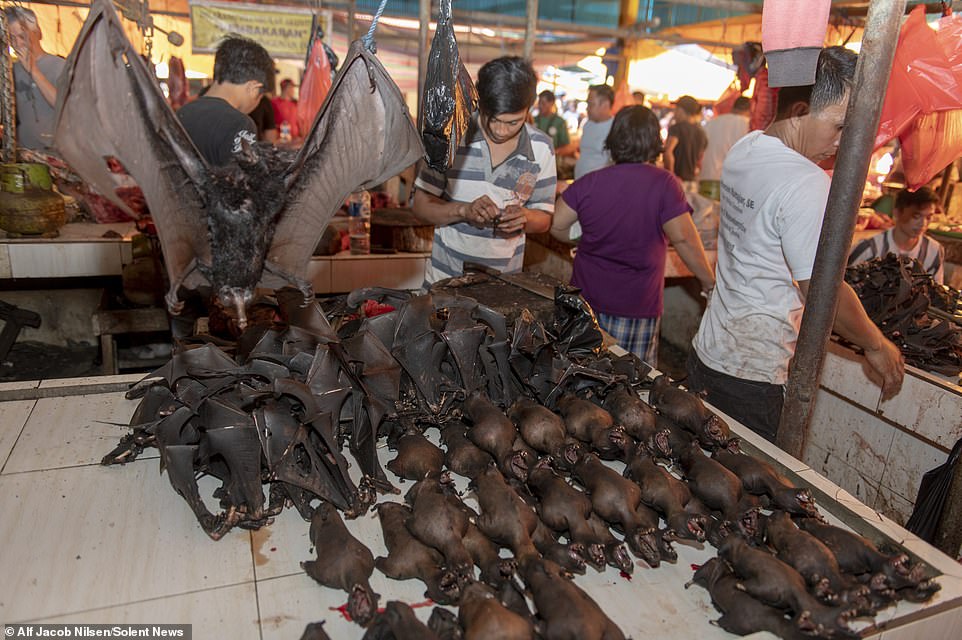
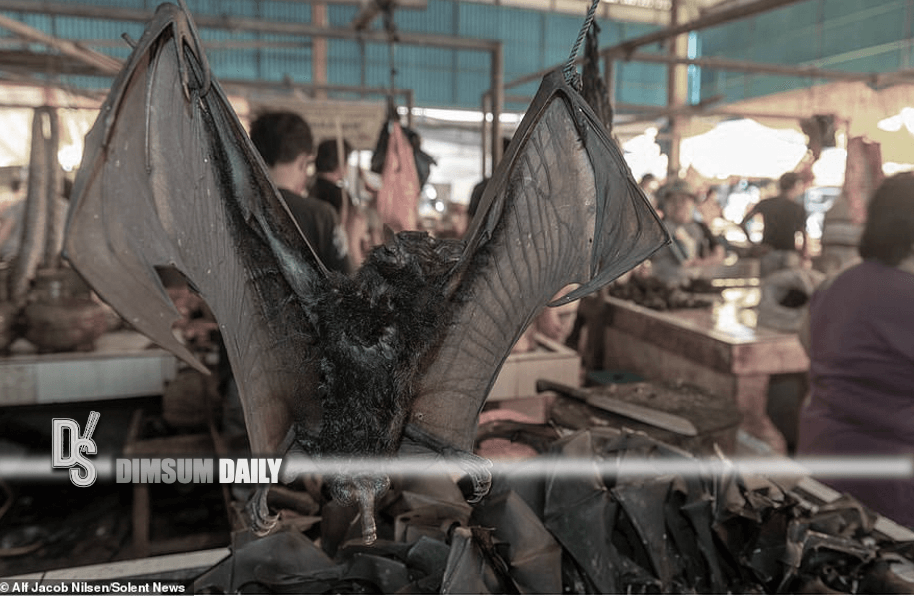
It should be added that eating dogs or bats is as common in Manado as eating chicken or pork is in our country (except for the Muslims living there, who do not eat most animals). The Christian population of Manado eats dogs and cats every day. Also, Manado or Tomohon are full of restaurants serving RW/Rintek Wuuk, which is nothing more than a dish made from dog meat. How can you be 100% sure that no one in a bar or restaurant will bring you a dog (a pet like you have at home) on a plate? Eat vegetarian dishes or fish, or eat in restaurants owned by Muslims – yes! Local Christians, who should be closer to us culturally and nutritionally, inflict terrible harm on animals, mutilating them in the most cruel ways… However, the localsAnd they know that white people don’t eat dogs, but to be on the safe side, choose the bars and restaurants you encounter on your travels wisely.
We’ve never seen anything so brutal and harrowing at the same time… We believe there are some of you who have mixed feelings about us sharing this kind of experience with you. We personally believe that showing reality as it is is crucial during our travels; we won’t skip or try to gloss over difficult or taboo topics, or gloss over the negative aspects of traveling to Asia. We believe travelers should have access to this information and know what to expect before exploring their chosen travel destination.
Tomohon Market, Sulawesi, Indonesia, December 31, 2021
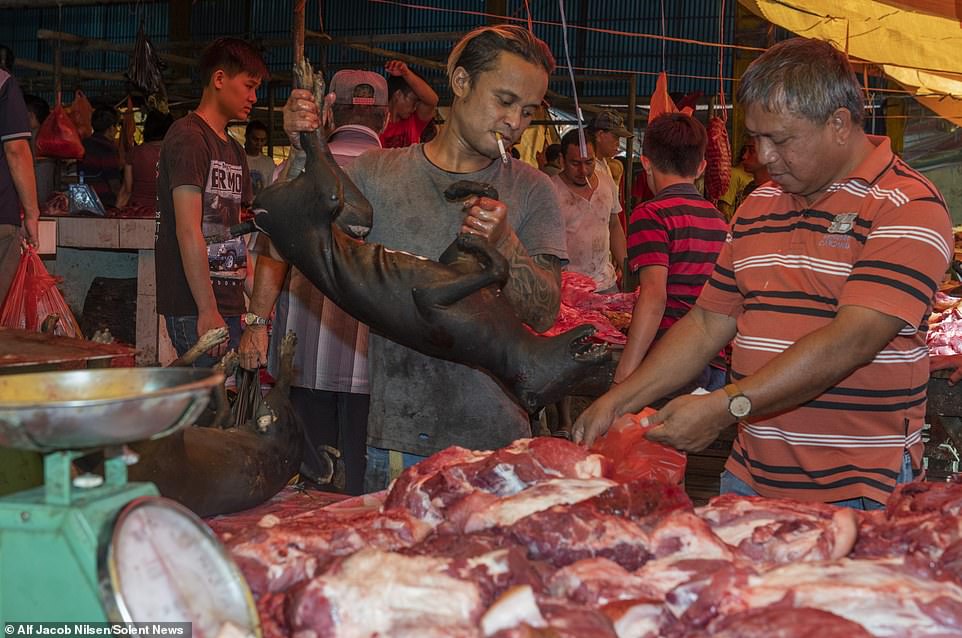
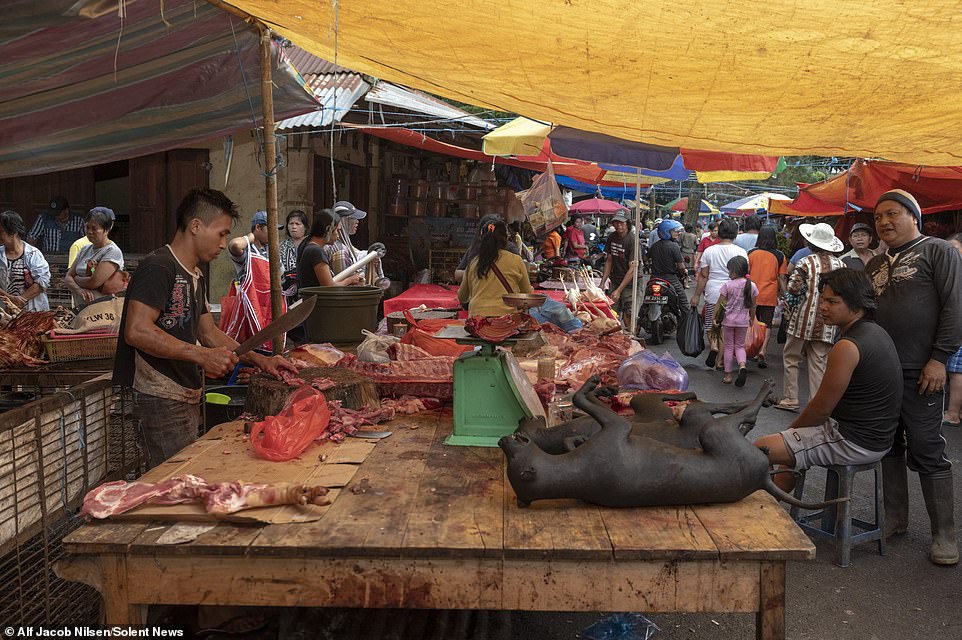
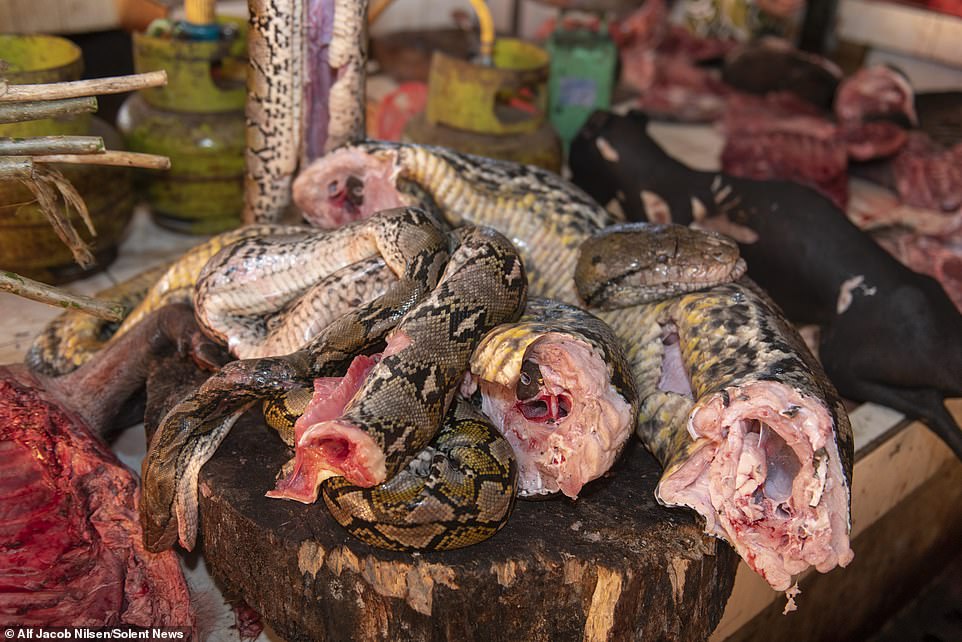
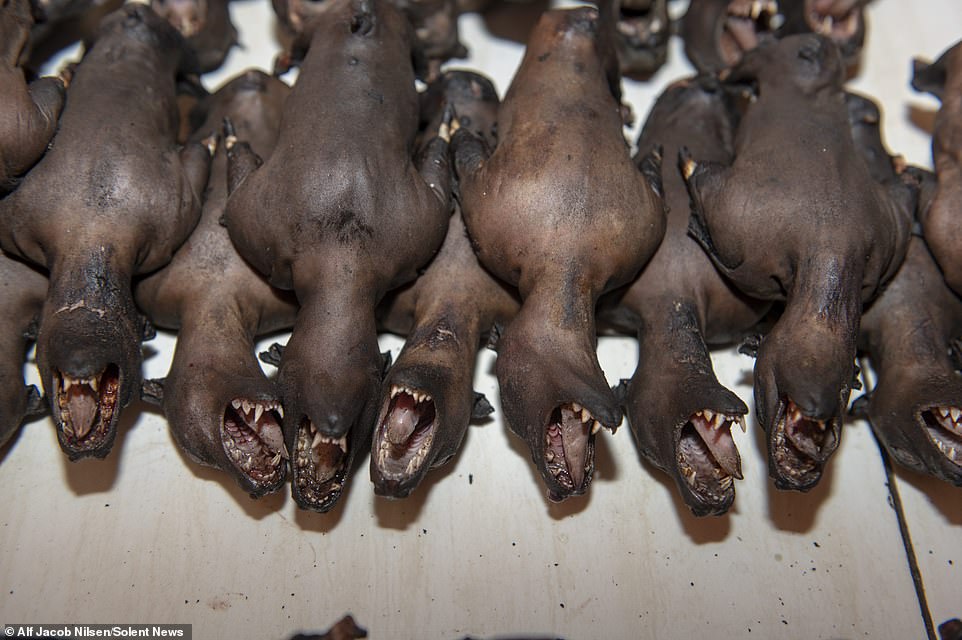
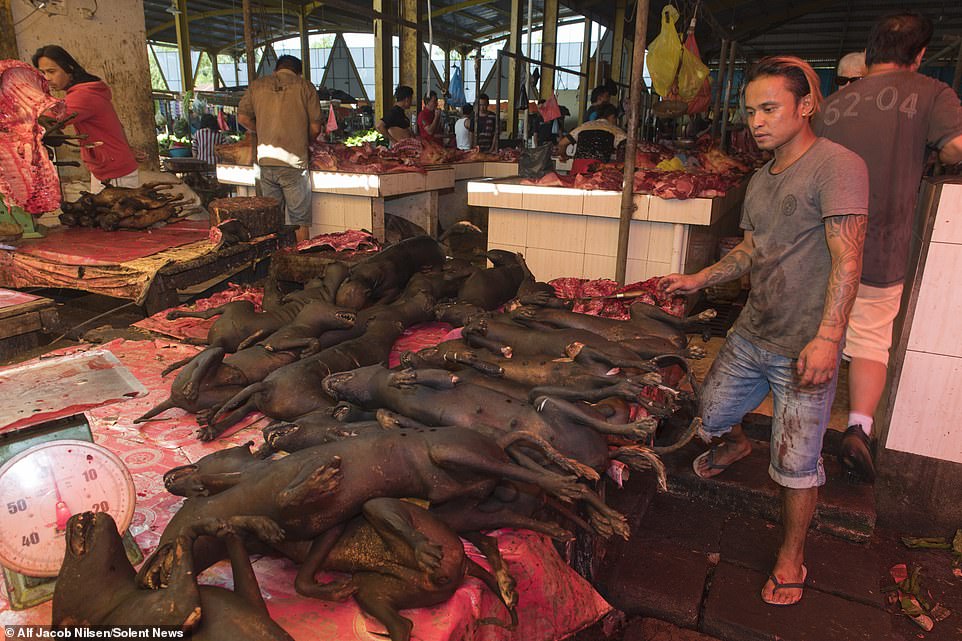
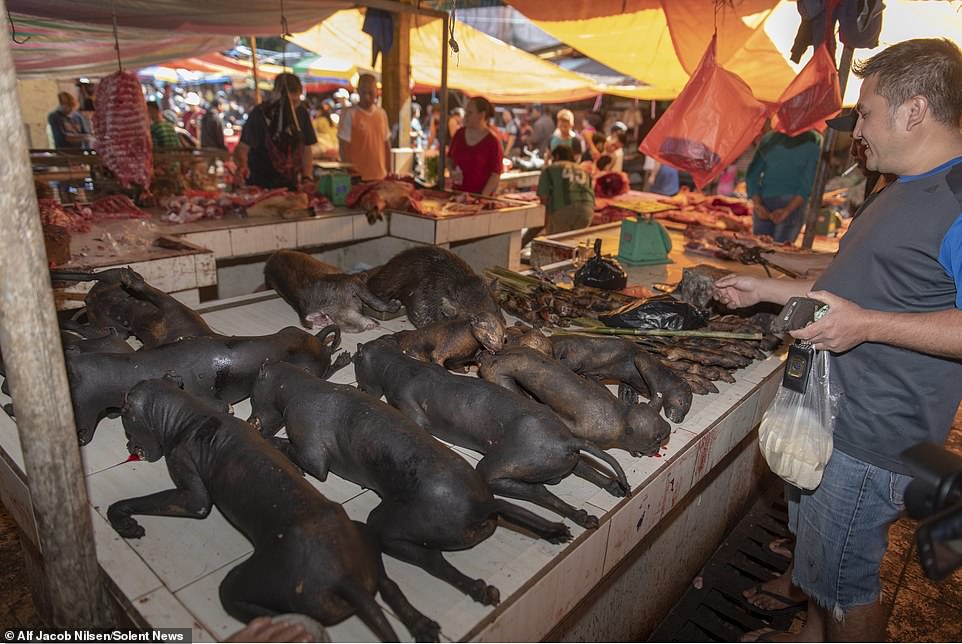
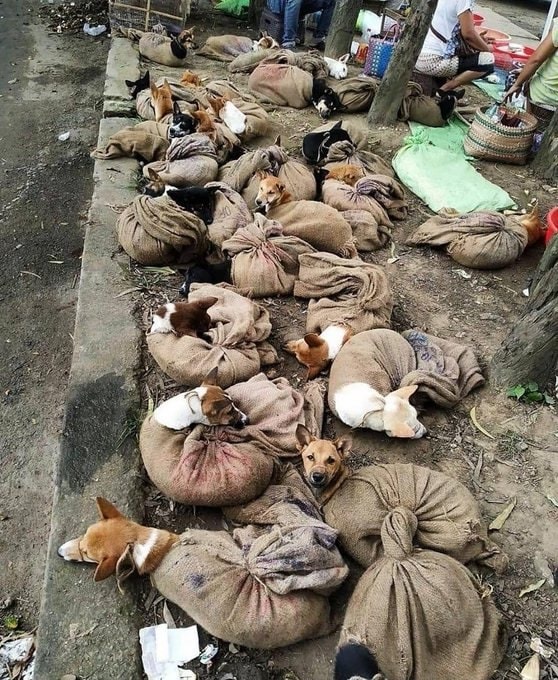
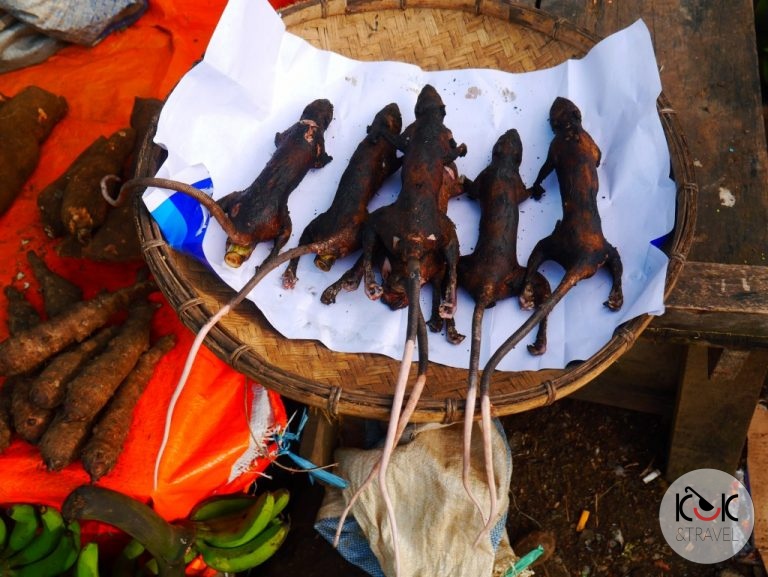
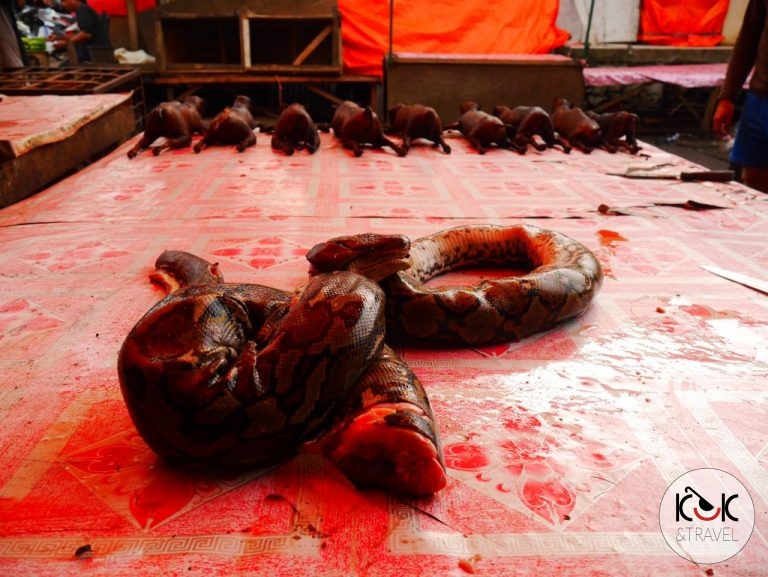
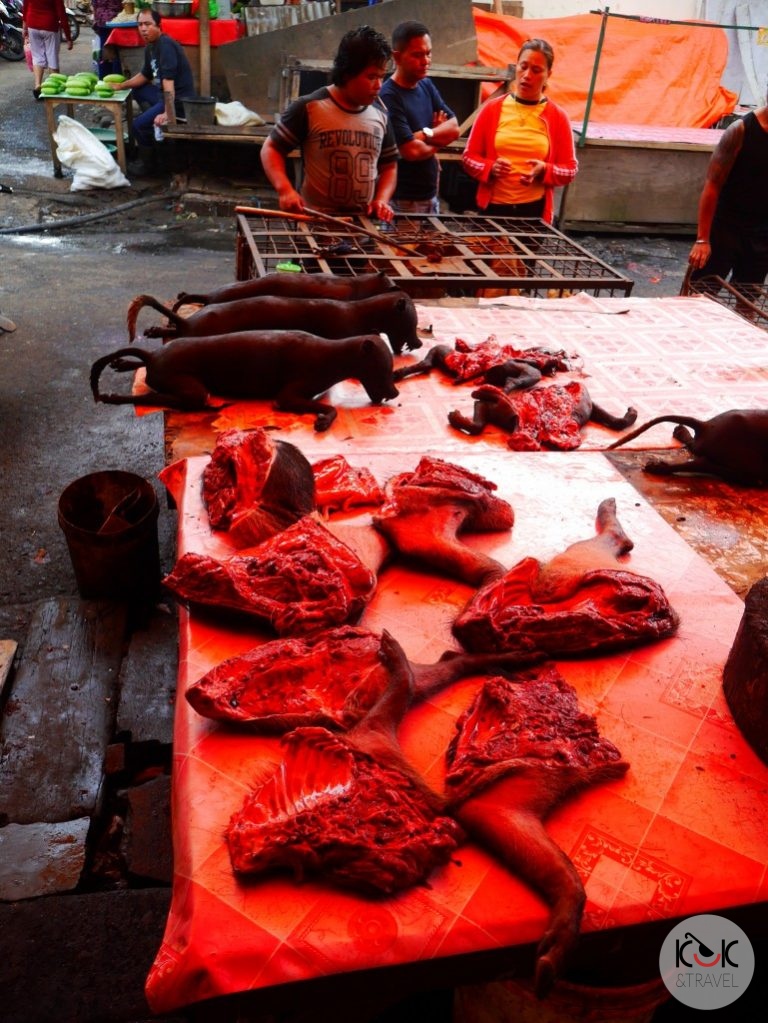
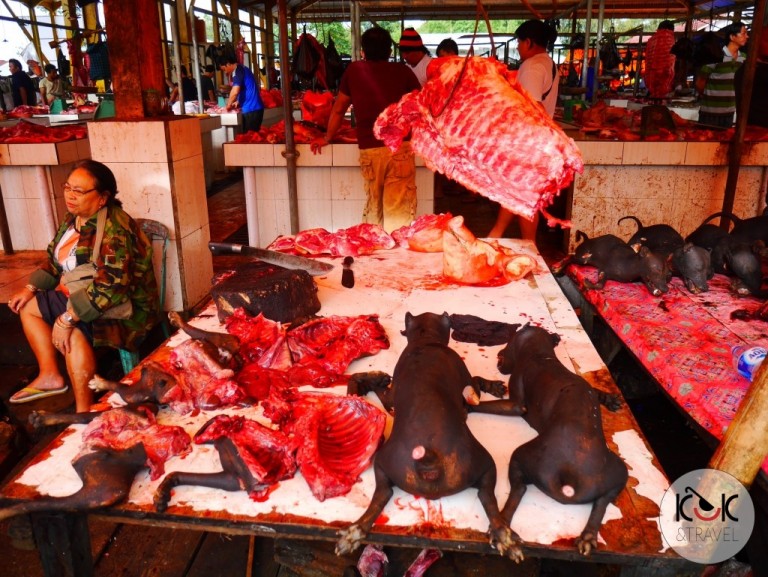
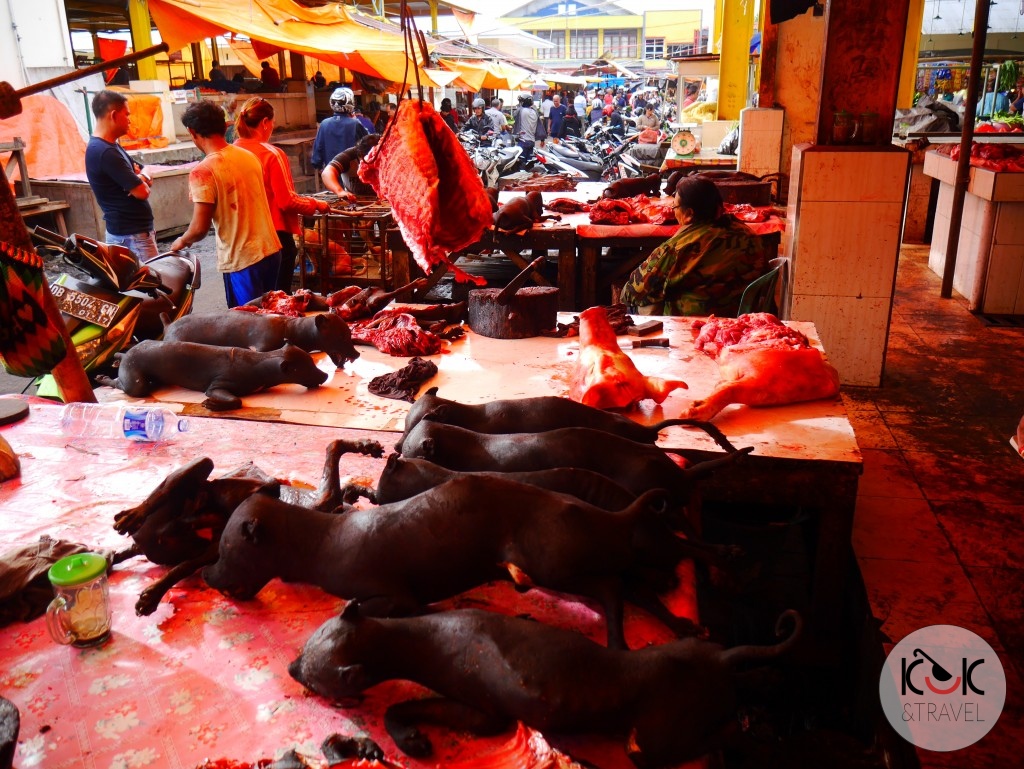
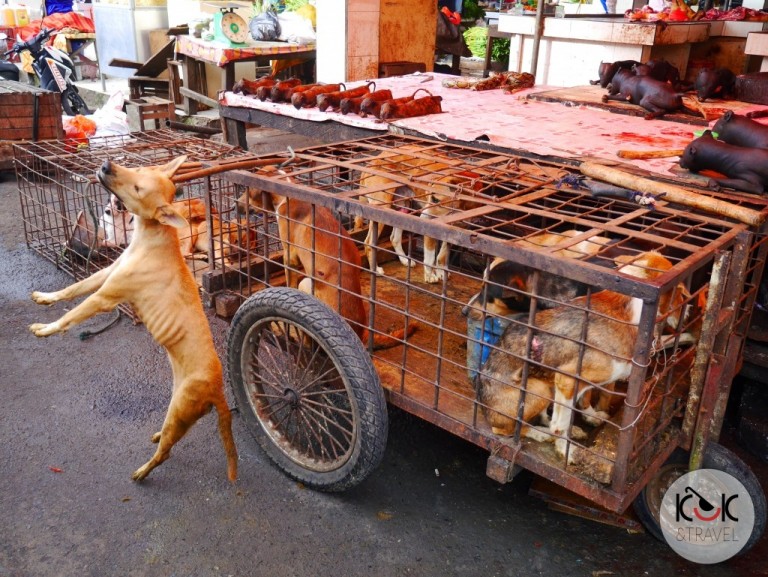
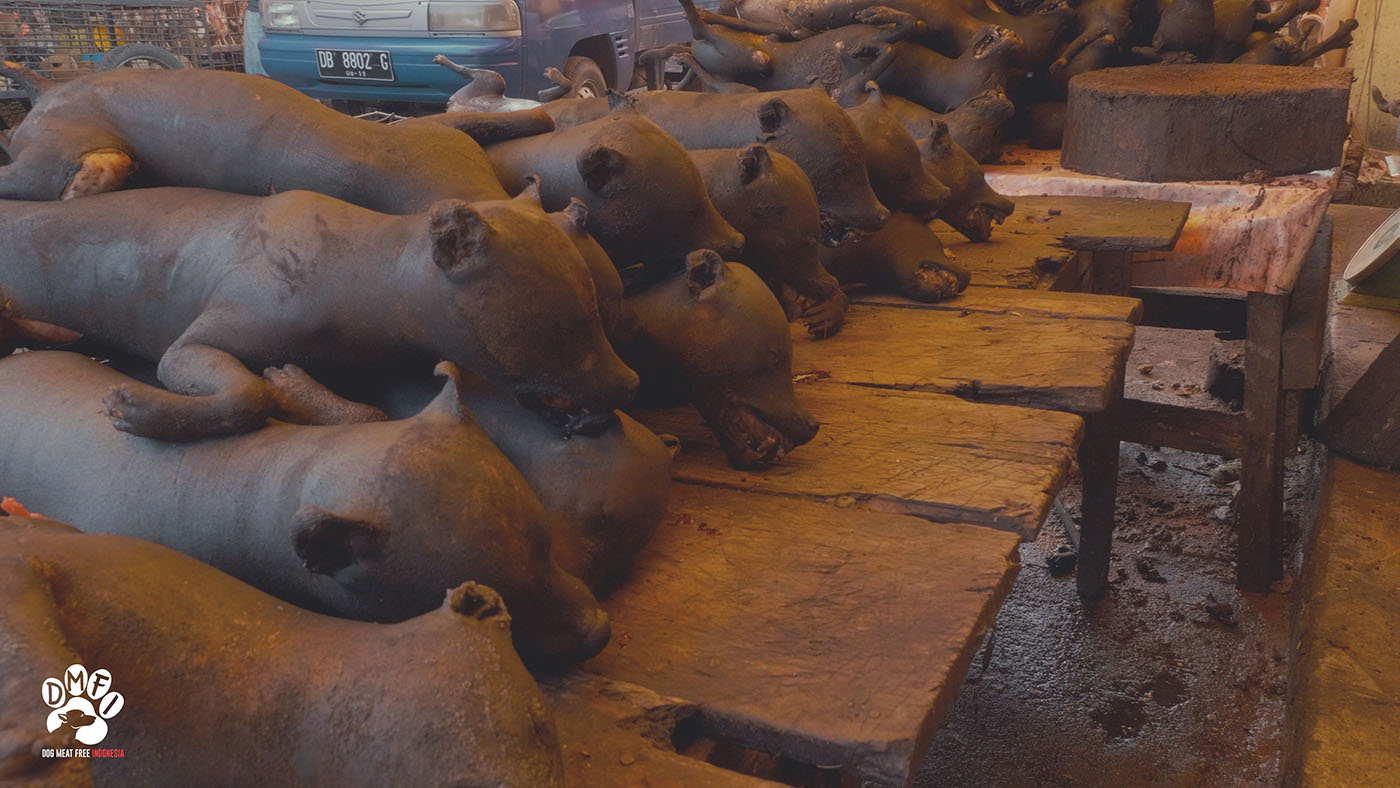
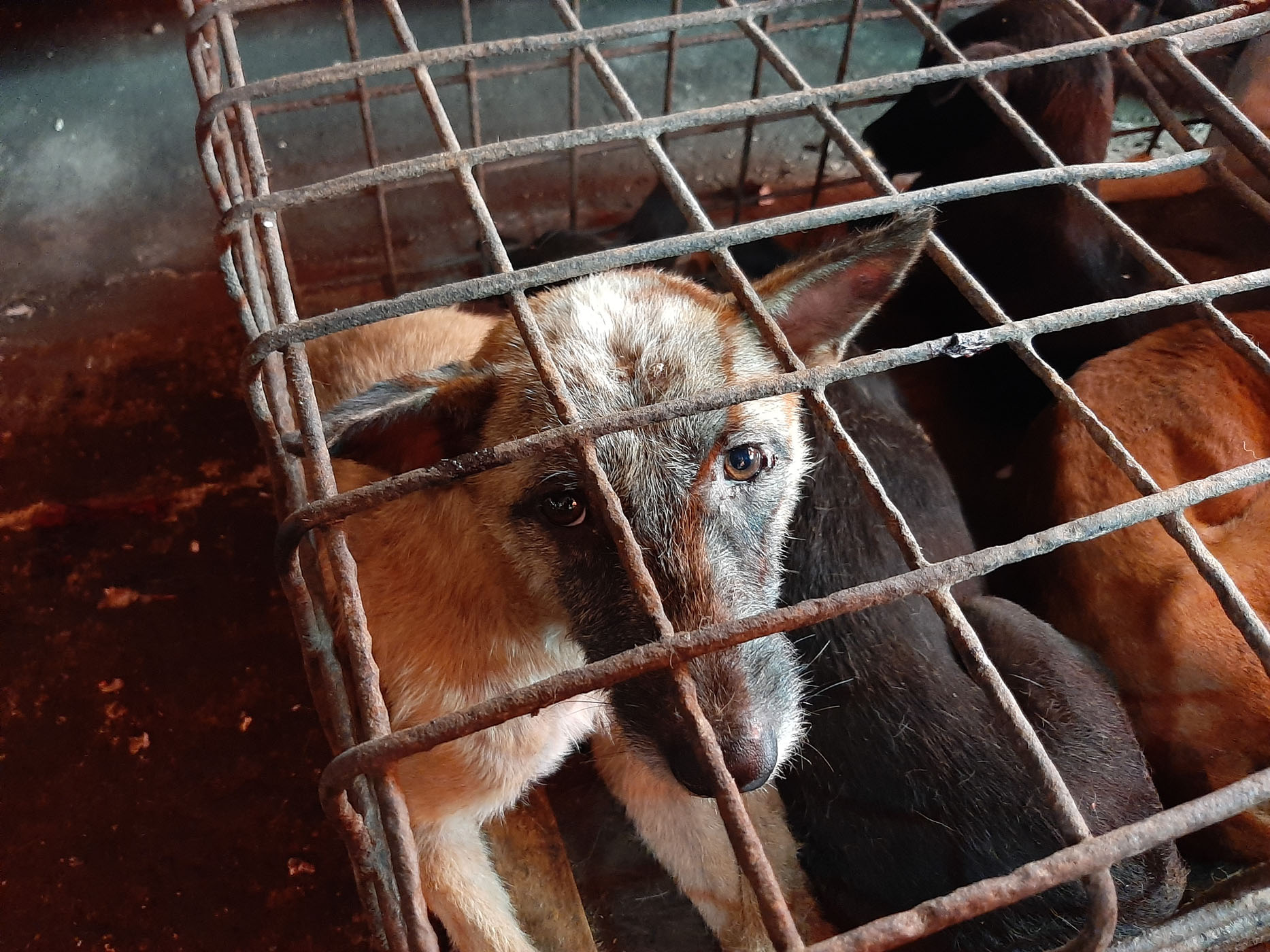
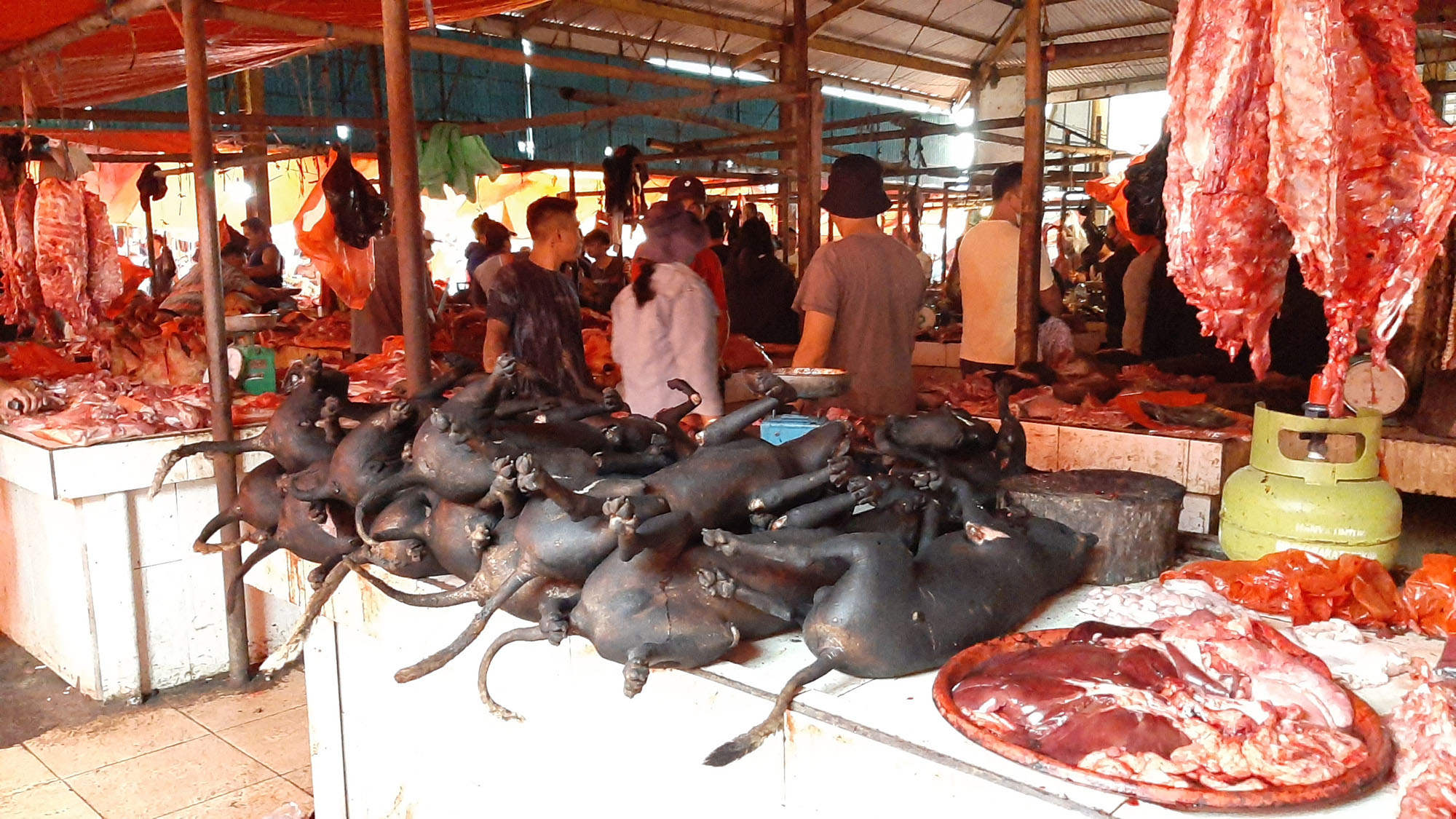
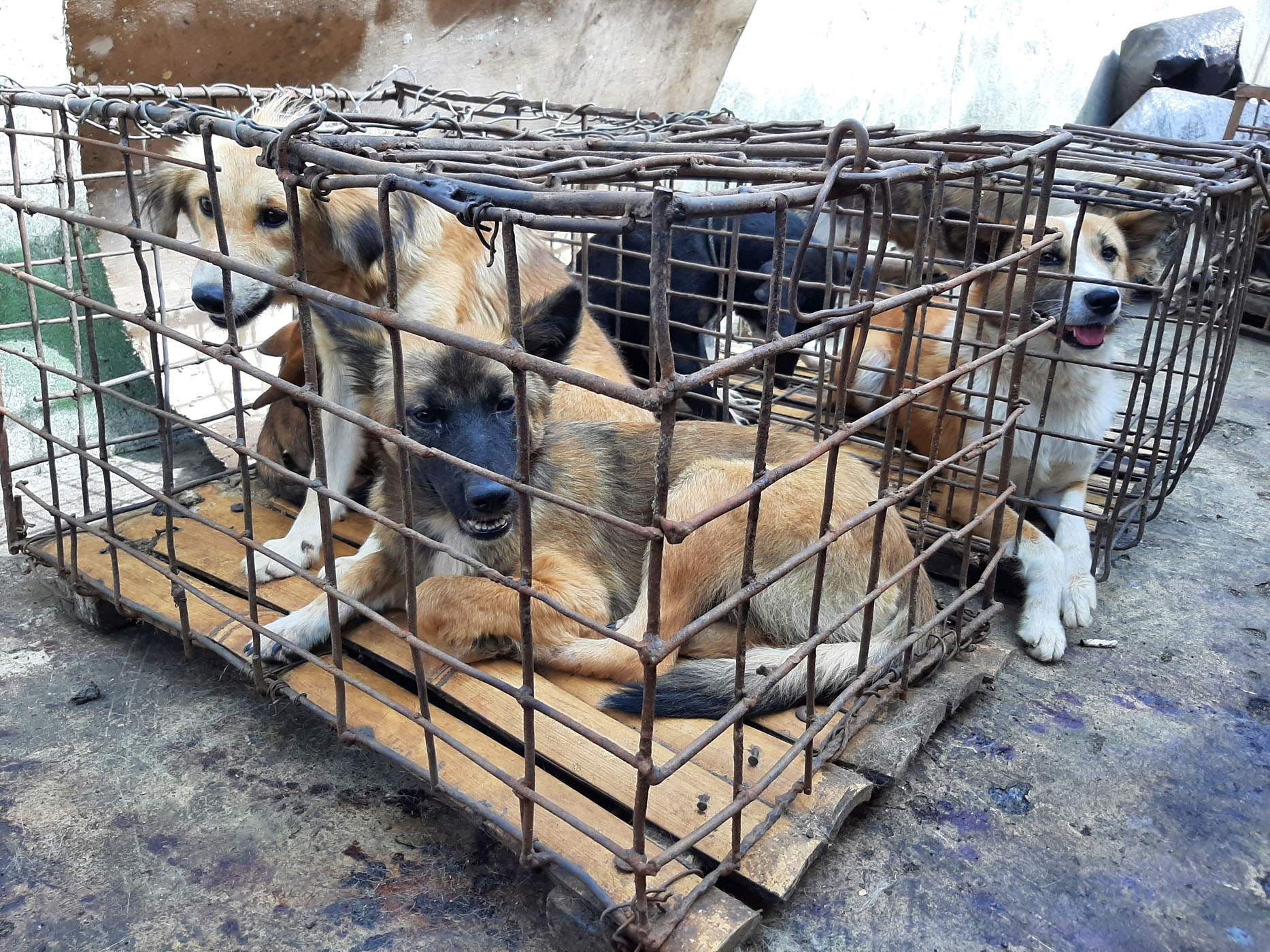
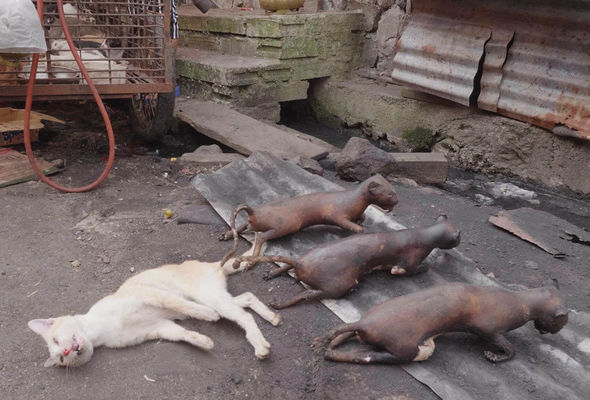
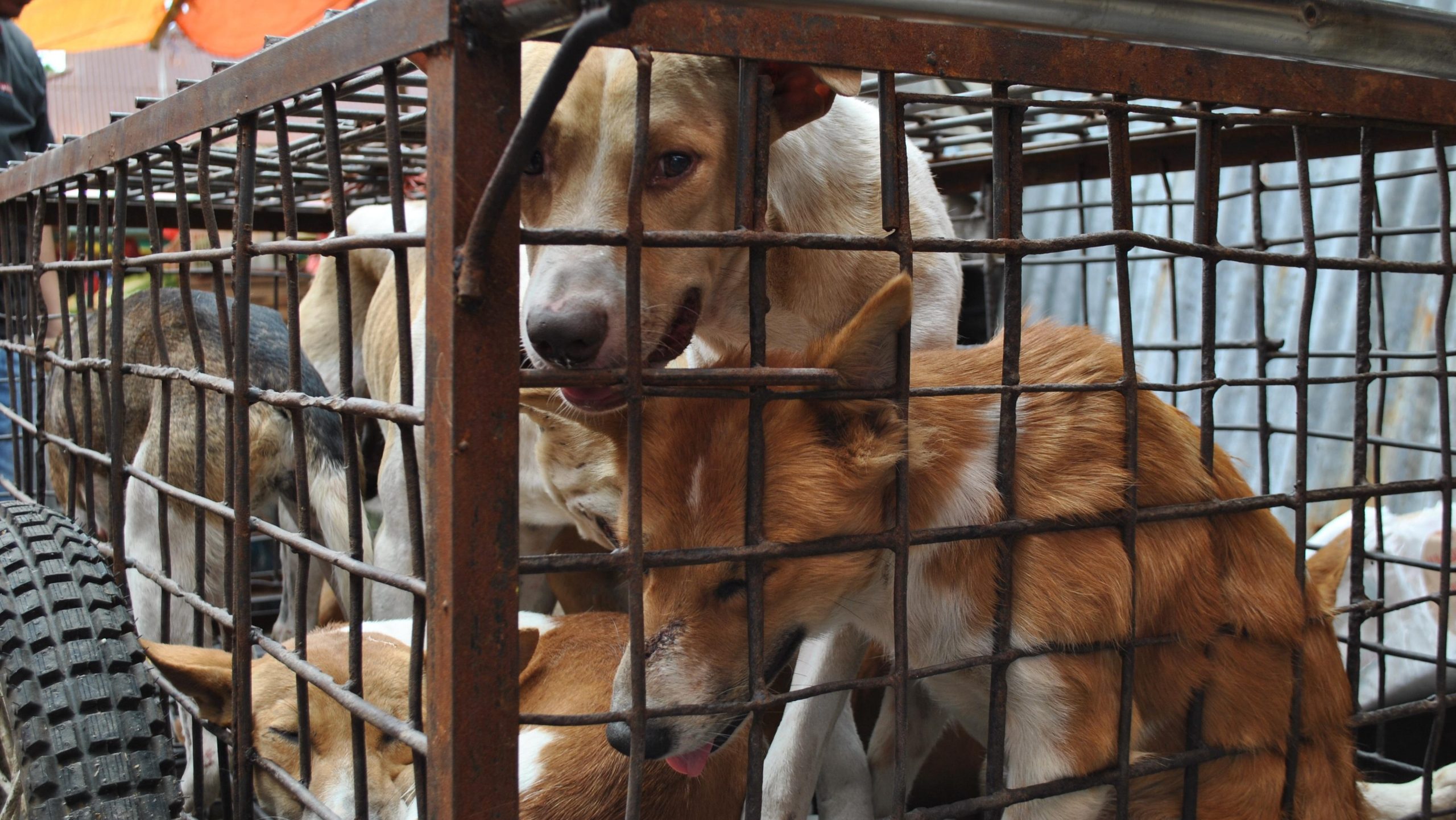
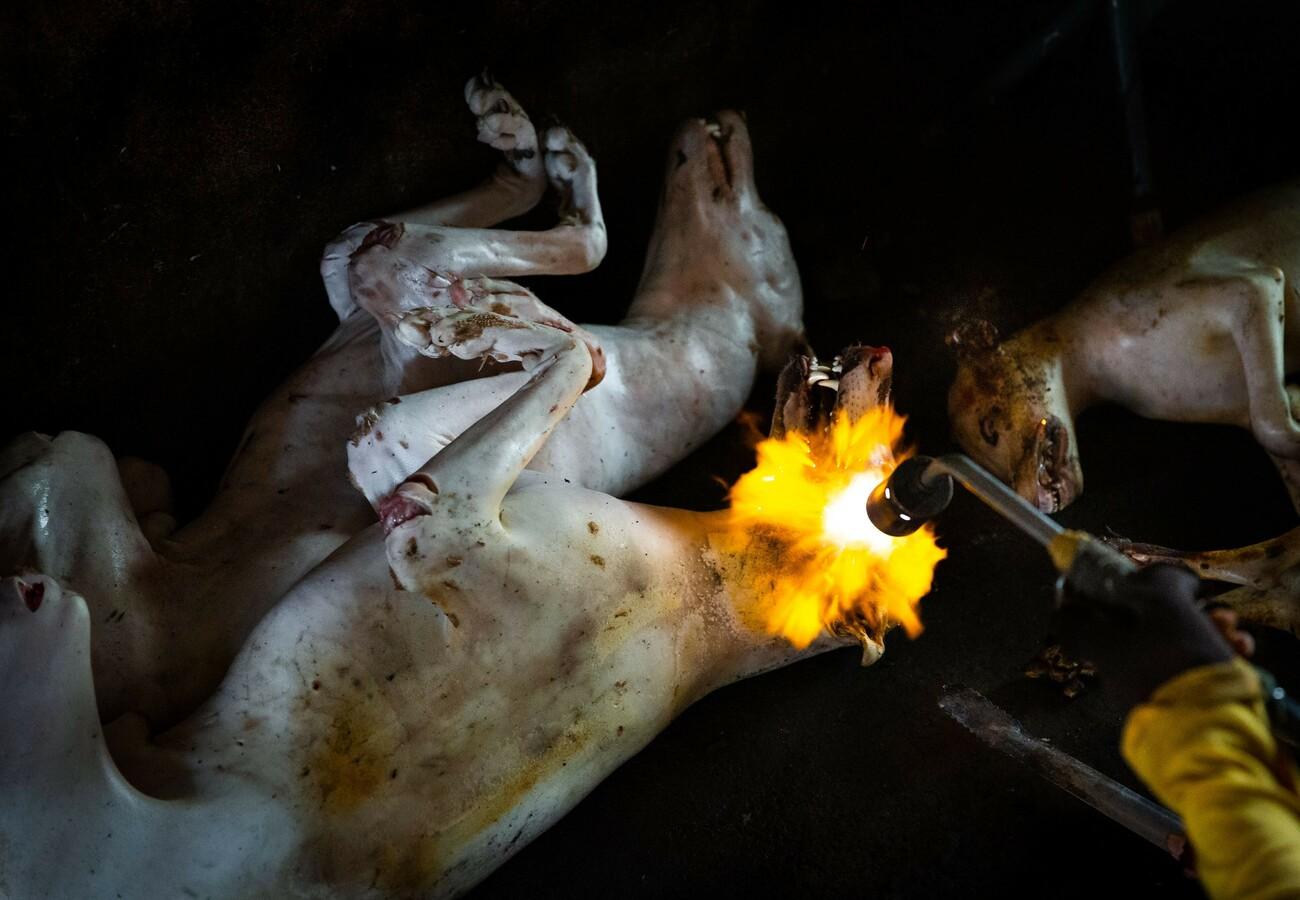
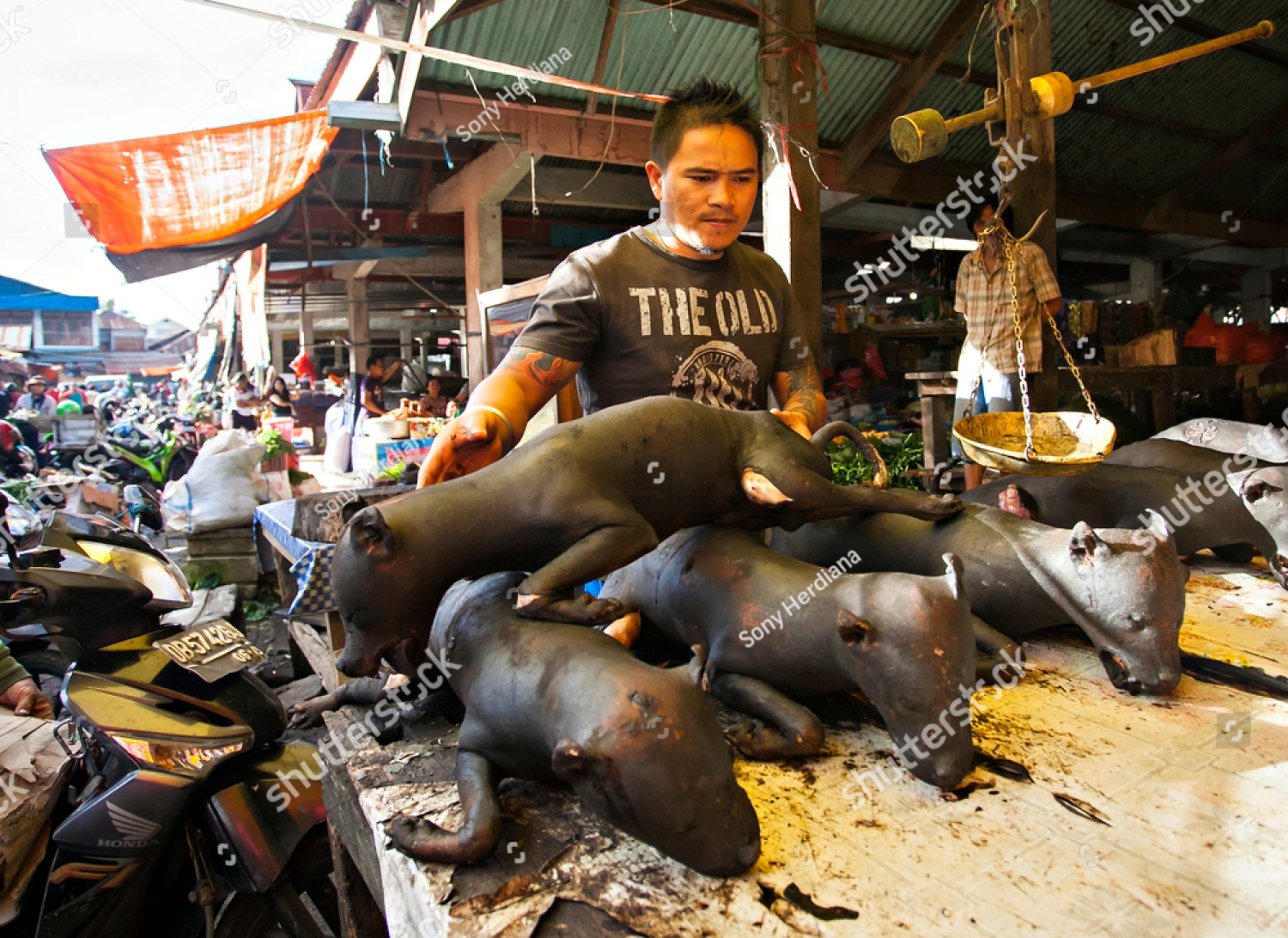
After a long and painful death, all dogs and cats are “sent” to restaurants, or local residents themselves buy up the meat in a matter of hours.
Animal rights activists managed to talk to some “farmers” who run dog slaughterhouses. They say dogs and cats are caught on the streets, sometimes bred on their “farms,” then killed and taken to a restaurant. Or the still-living animals are taken to market for meat.
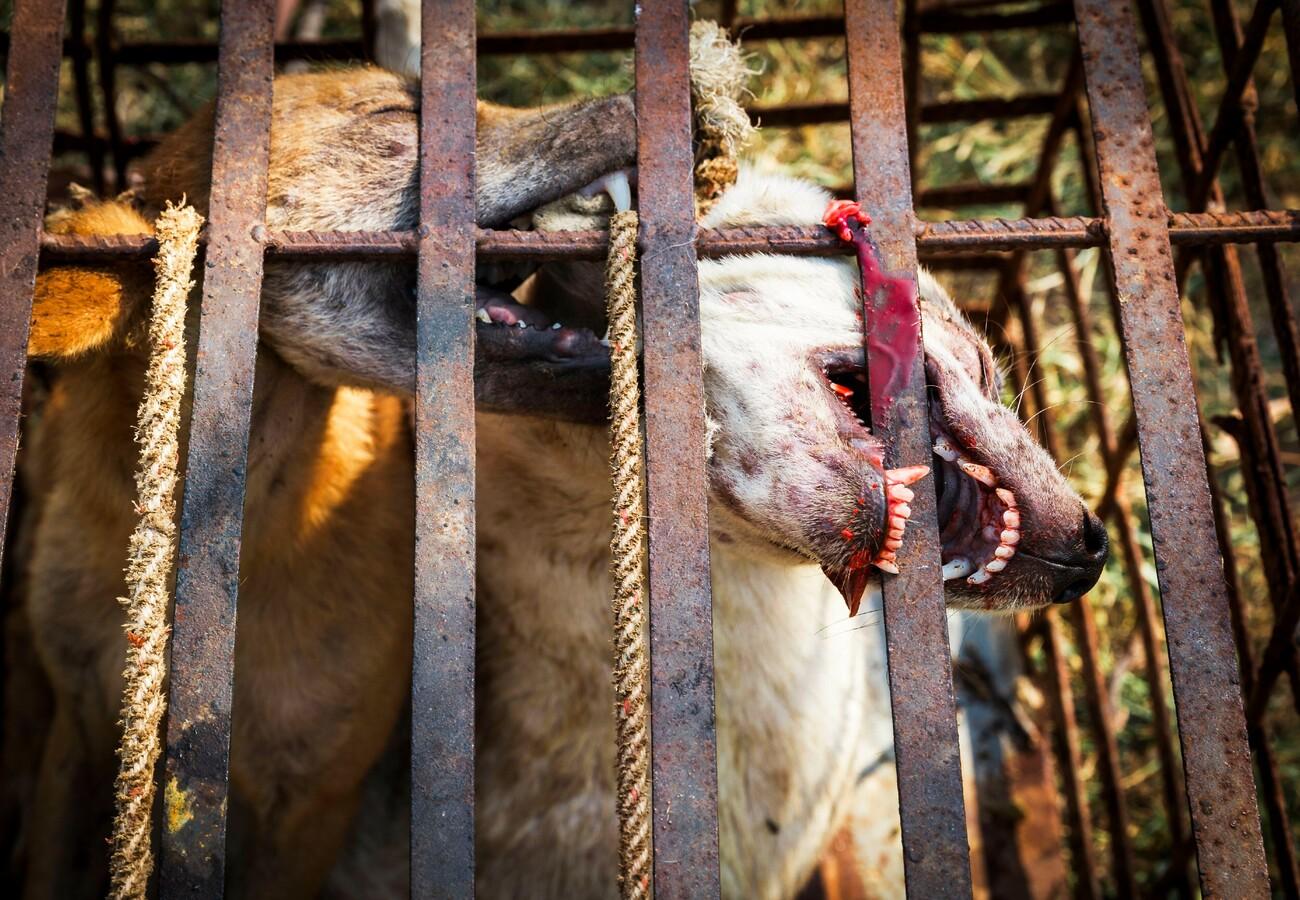
Even on their “farms,” farmers don’t bother with humane methods of killing dogs. The unfortunate animals are kept in a crowd in cramped cages, and, with one after another being pulled out, they are drowned in a cesspool, where the entrails from the corpses are dumped… A monkey is placed around this pit to observe the process. During these atrocities, the dogs tremble in terror, awaiting their grisly death. And when they are pulled from the cage and dragged to their death, the poor animal screams hysterically… Other dogs gnaw on steel bars, causing their teeth to fall out and bleeding.
Realizing their fate, the animals scream in terror before being pulled from their cages and dunked in tanks of slop water. The water bubbles and boils, and the dogs struggle in vain for life. Finally, the dog freezes…. And then the process repeats, cage after cage, day after day, year after year.
The fight against the barbaric trade is led by the animal welfare organization FOUR PAWS, led by a heroic Brit. Leeds native Matt Backhouse has worked with the charity to uncover numerous dog slaughter sites across the country. The horrific scenes were captured by British environmental photojournalist Aaron Gekoski.
He said: “I’ve been covering stories of human-animal conflict for more than a decade, but this is one of the toughest assignments I’ve ever worked on. “The images haunt my dreams, I can’t get the horror of those dogs out of my head. “The macaque massacre was a scene from hell. The stench, the screams and howls of the dogs, and the weapons used to kill them were scattered everywhere. A professional set designer couldn’t have come up with something so horrific even if he tried. It was heartbreaking to see the dogs go through such an ordeal. Some were shaking and shaking, others were vomiting or defecating everywhere.”
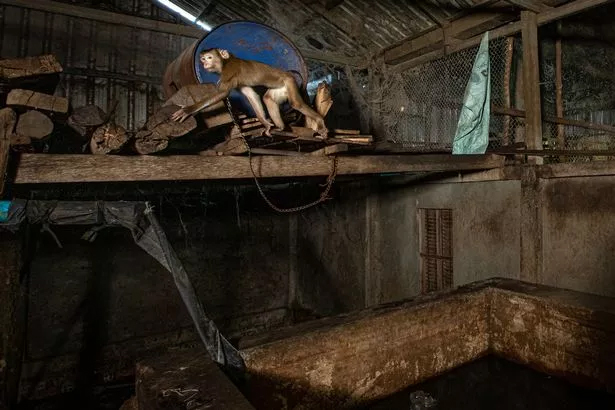
Some bit the cages, causing their teeth to fall out.
- “Some people say, ‘How is eating dog food any different from eating chicken or cow food?’ For one thing, 50% of those dogs may have rabies, which can be transmitted to humans.”
- “Dogs are loyal and intelligent. They should be man’s best friend, but look what we do to them.”
- “The methods used to capture, house, and kill them are incredibly cruel and inhumane.”
There are more than half a dozen dog meat restaurants within a three-mile radius of Angkor Wat, Cambodia’s most famous tourist attraction. More than a million people visit these temples annually, not without paying attention to the suffering happening nearby.
In the capital Phnom Penh alone, there are more than 100 dog meat restaurants, and that number is growing.
“The industry involves a vast network of traders, dealers, suppliers, and slaughterhouses,” says FOUR PAWS consultant Matt.
“Each year, two to three million dogs are consumed in Cambodia.”
The 34-year-old animal rights activist has lived in Asia for over a decade, dedicating his life to helping homeless animals.

“I’ve seen the dog meat trade all over Asia. However, what’s happening in Cambodia, It attracts almost no attention compared to the Yulin Dog Meat Festival or dog breeding in South Korea.
“The industry here is growing quietly and at an alarming rate.”
To meet the growing demand, dogs are collected from the streets daily. Some of them are unwanted pets.which are either exchanged for a pot or pan or bought at £2.35 per kg. Others are strays, whose bones can be broken by cruel collection methods.
The dogs are then placed in small cages, loaded onto mopeds or specially equipped vehicles, and transported to slaughterhouses across the country.
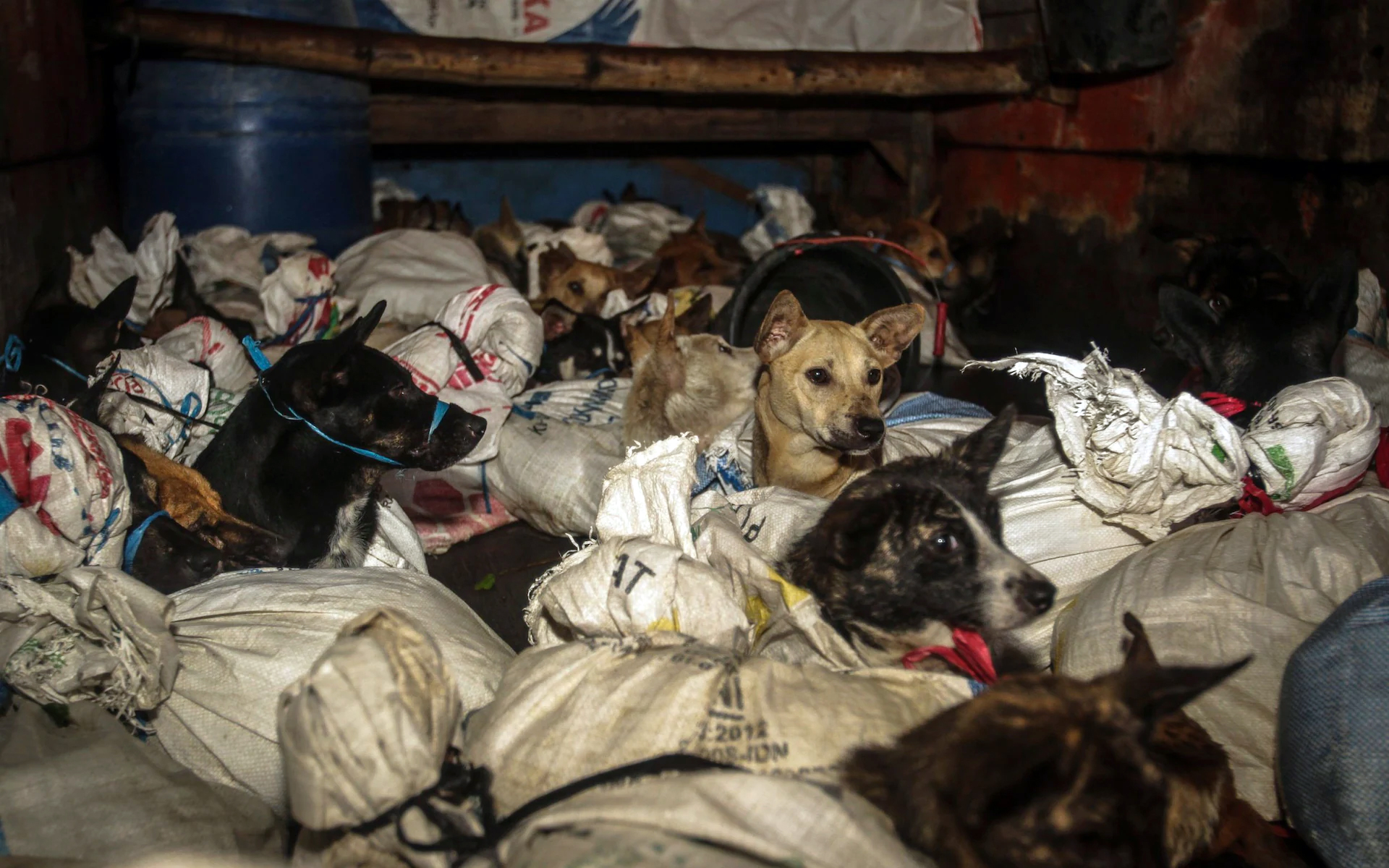
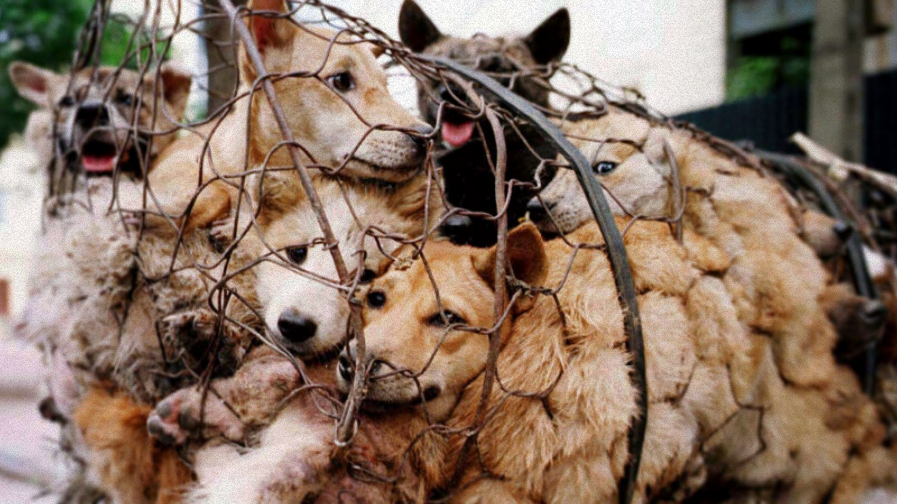
“On these journeys, they are given no food or water and are left to roast in the heat. Some die en route from stress or dehydration,” Matt adds. Those who arrive at the slaughterhouses alive face hell and death.
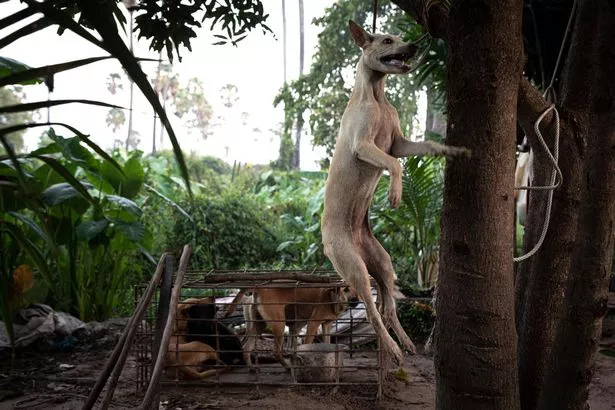
Most dogs are killed in mass drowning pits, but other methods are also used, all of which are inhumane and cause severe suffering. Dogs may be clubbed over the head and stabbed in the neck, placed in a pot of hot water to rip out their fur, or hung from a tree, which takes over 20 minutes before the dog dies.
Often, the penises of black dogs are cut out and hung from trees to dry before being fashioned into bracelets or attached to belts. It is believed that wearing a dog’s penis will prevent curses from being cast on its owner.
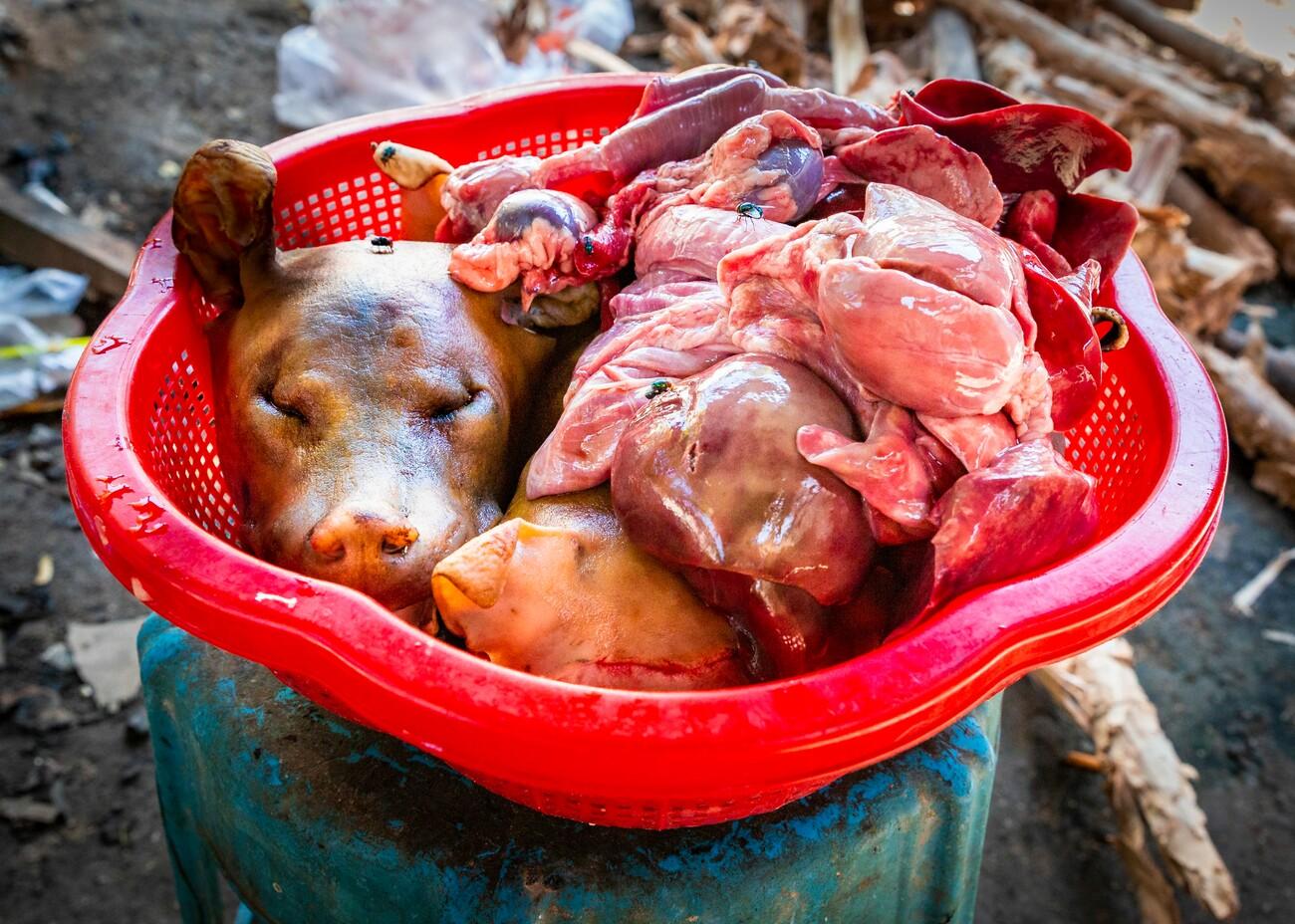
The dog corpses are sold to local restaurants, made into curries and soups, or roasted over hot coals. Both the tail and head are considered delicacies: one dog’s head, with the brain still inside, sells for around £2.
FOUR PAWS investigation found that young men in Cambodia are developing a growing taste for meat, while many women consider eating dog shameful, but may do so for the supposed health benefits. Doctors in Cambodia often recommend eating meat to improve circulation and wound healing, especially during or after pregnancy, as well as for other health complaints. Horrifyingly, the dog and cat meat trade is widespread beyond Indonesia. There are many provinces in China where numerous restaurants specializing in dog meat still exist.
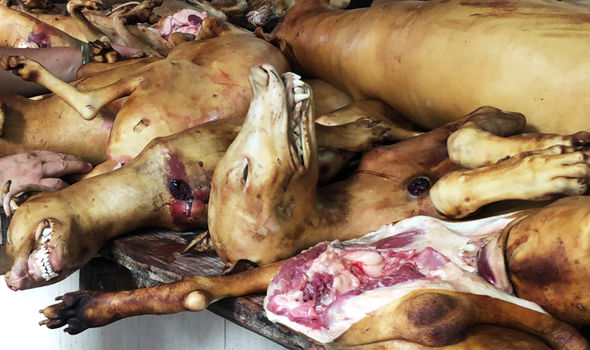
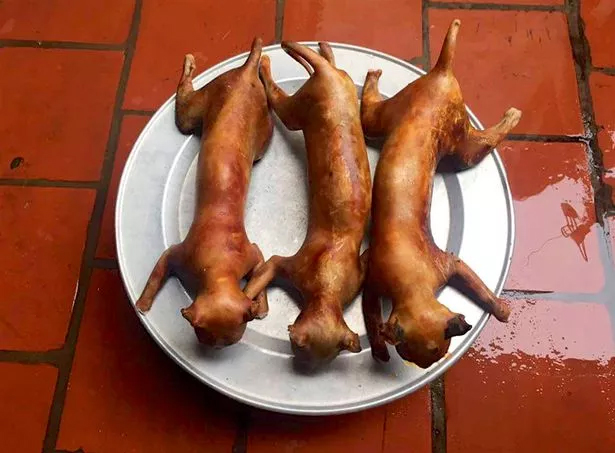
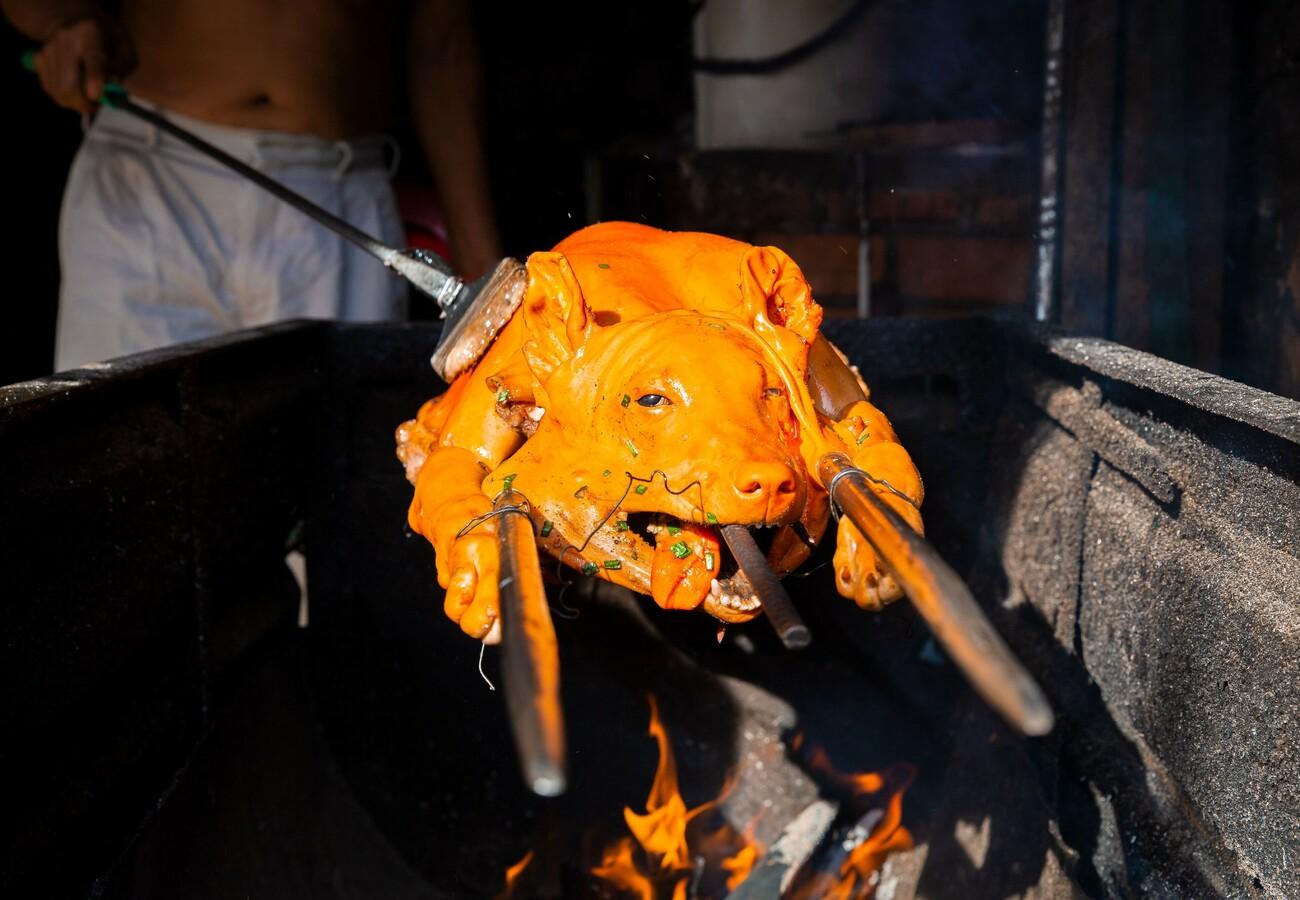
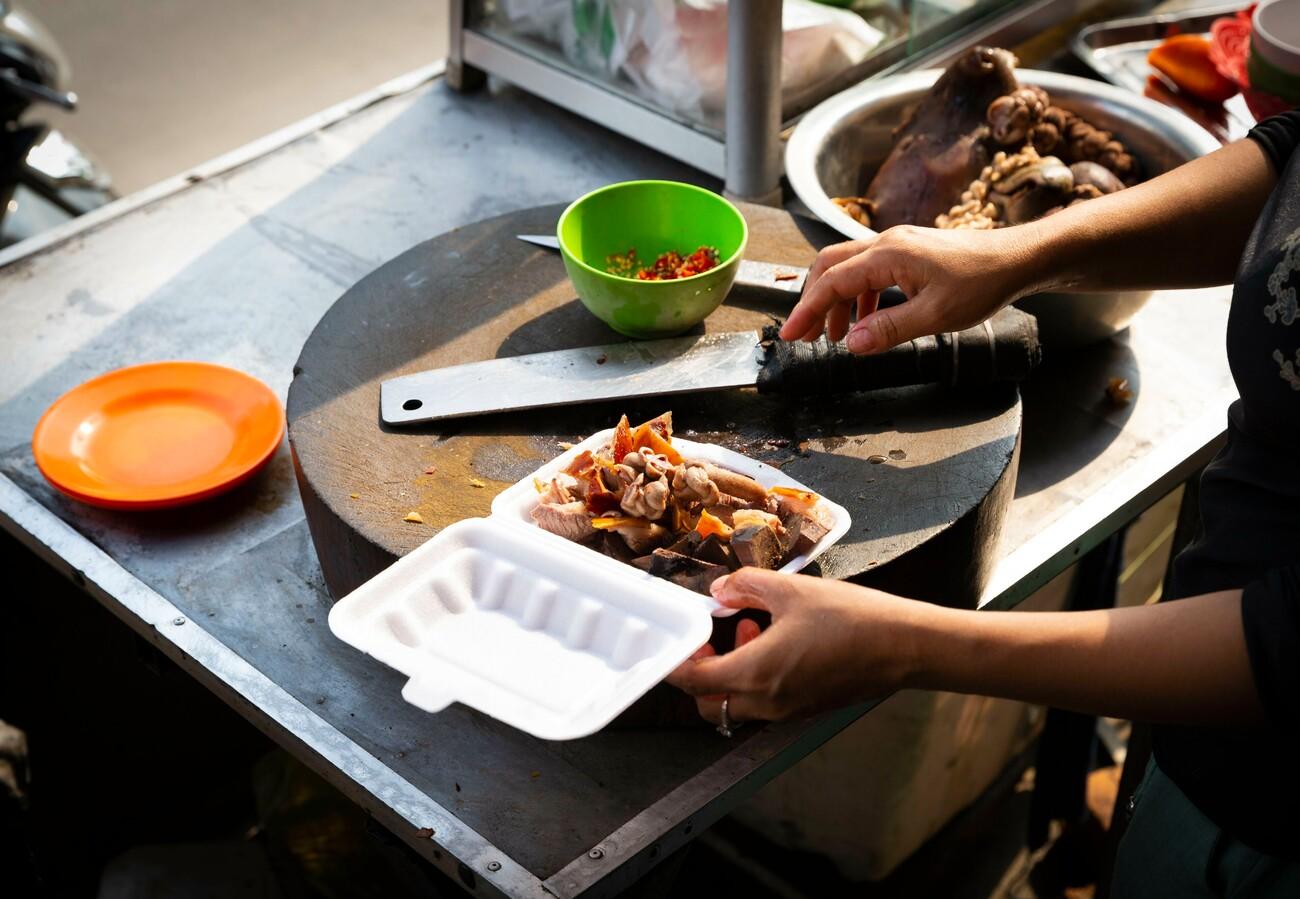
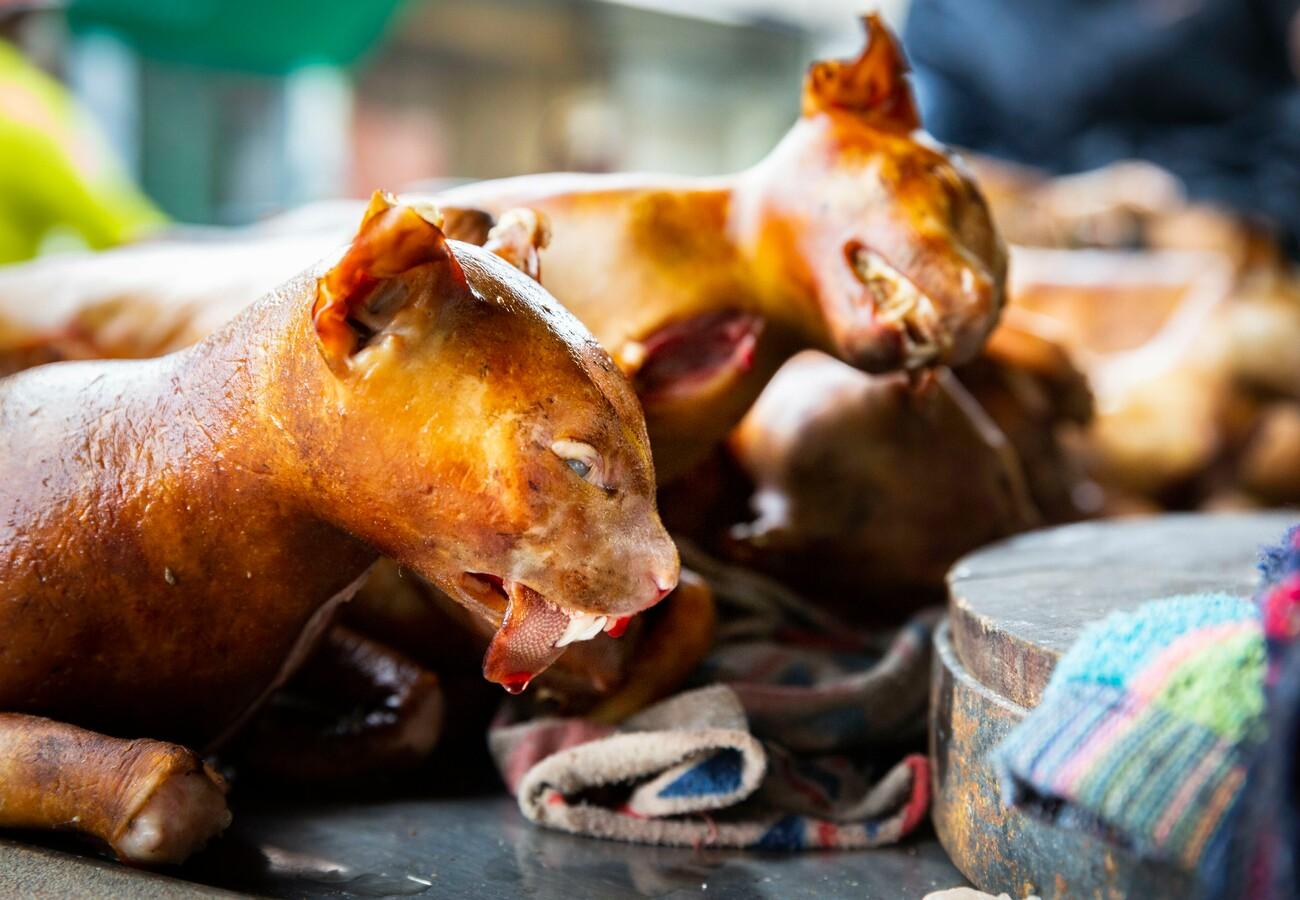
Vietnam and South Korea are also countries that actively specialize in eating dog meat.

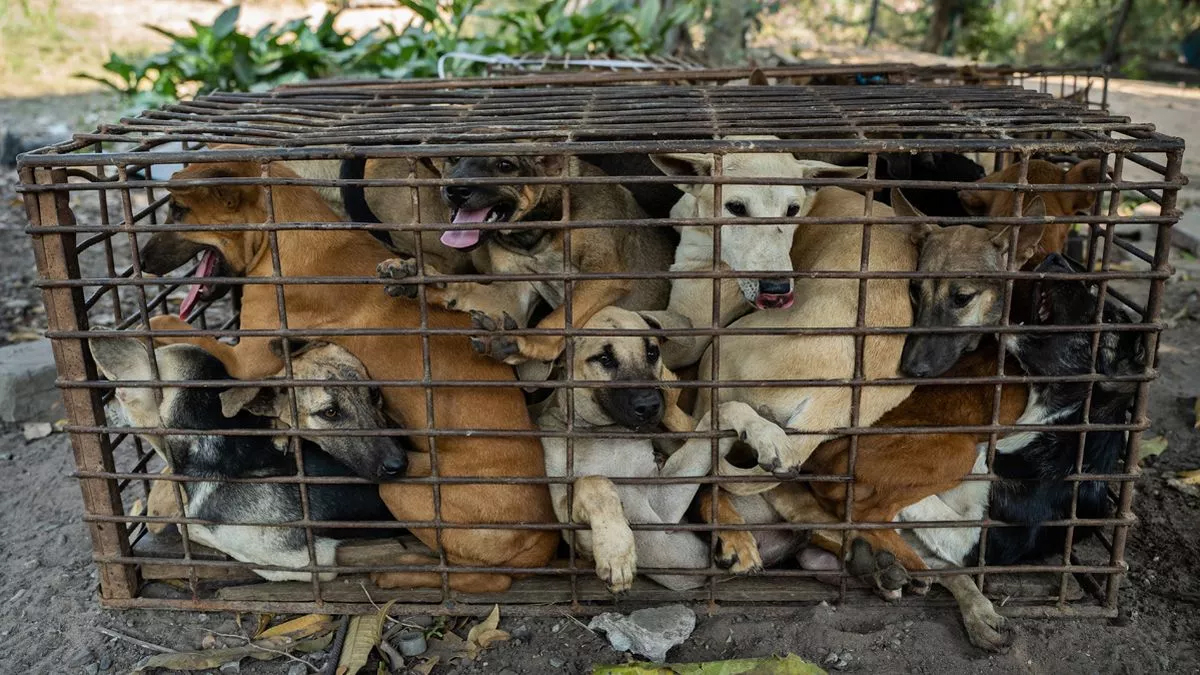
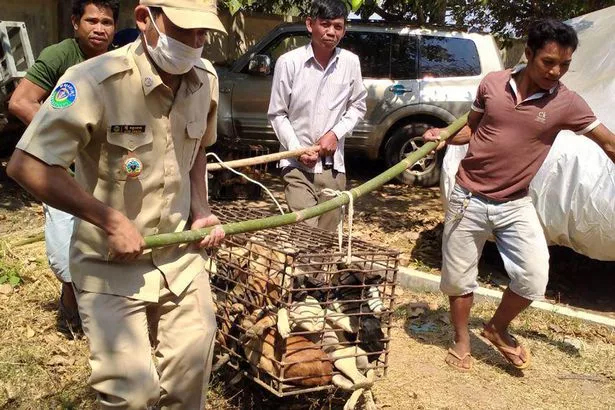
Harrowing footage shows 61 dogs locked in cages being transported to slaughter for meat. Animals in distress were rescued from the horrific dog meat trade in the first-ever intervention by Cambodian authorities.
This heartbreaking image shows dogs locked in a metal cage. These starving and dehydrated dogs, crammed into cages, were being transported to a slaughterhouse to be butchered.
But these stray and stolen pet dogs were rescued!
Just minutes before these heartbreaking photos were taken, the truck driver was detained and arrested by Cambodian authorities.
This is the first time such an intervention has been carried out, saving these animals from a horrific death. The young dogs were suffering from severe heat exhaustion and dehydration. Many had not eaten for several days. And a day later, they were expected to die in terrible agony, surrounded by mud, pools of blood, and crawling maggots on the ground near the market stalls.
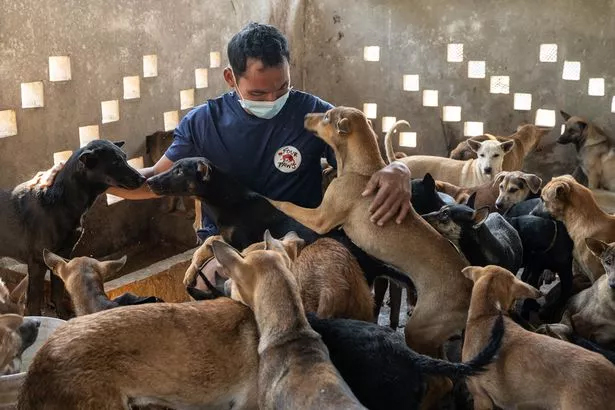
Now, thanks to the efforts of animal rights organizations FOUR PAWS, Paw Patrol Cambodia, and Animal Rescue Cambodia, which rescued, fed, and provided medicine, these dogs have a future. They are also looking for new homes and loving owners.
Another major animal rights organization that fights the cat meat trade is FOUR PAWS International
Here, read their story.
Special dish “Little T”Games”: Vietnam’s Rampant Cat Meat Trade
According to FOUR PAWS and Change For Animals Foundation, more than a million cats are killed for meat in Asia each year as part of a cruel and hidden nationwide trade.
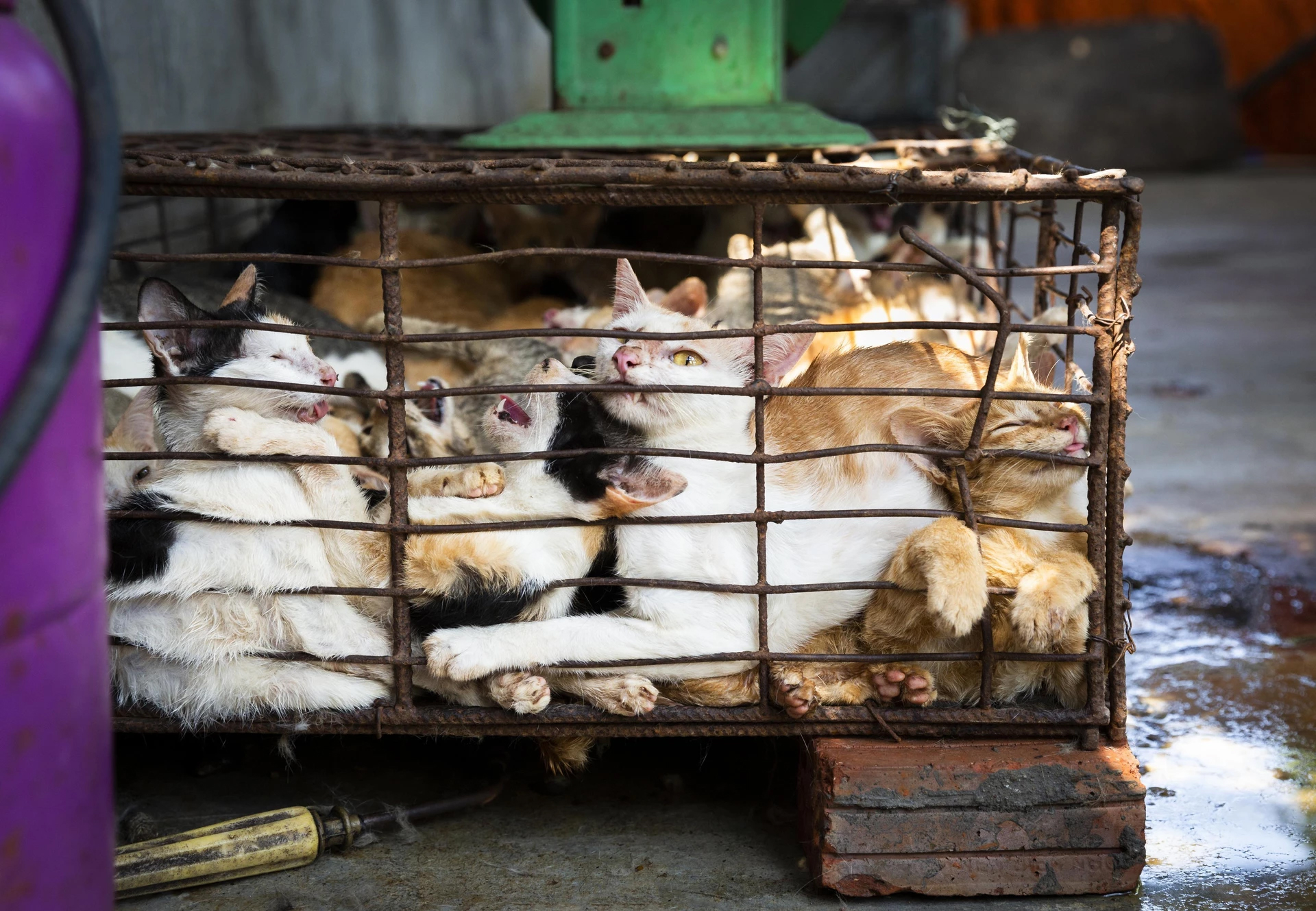
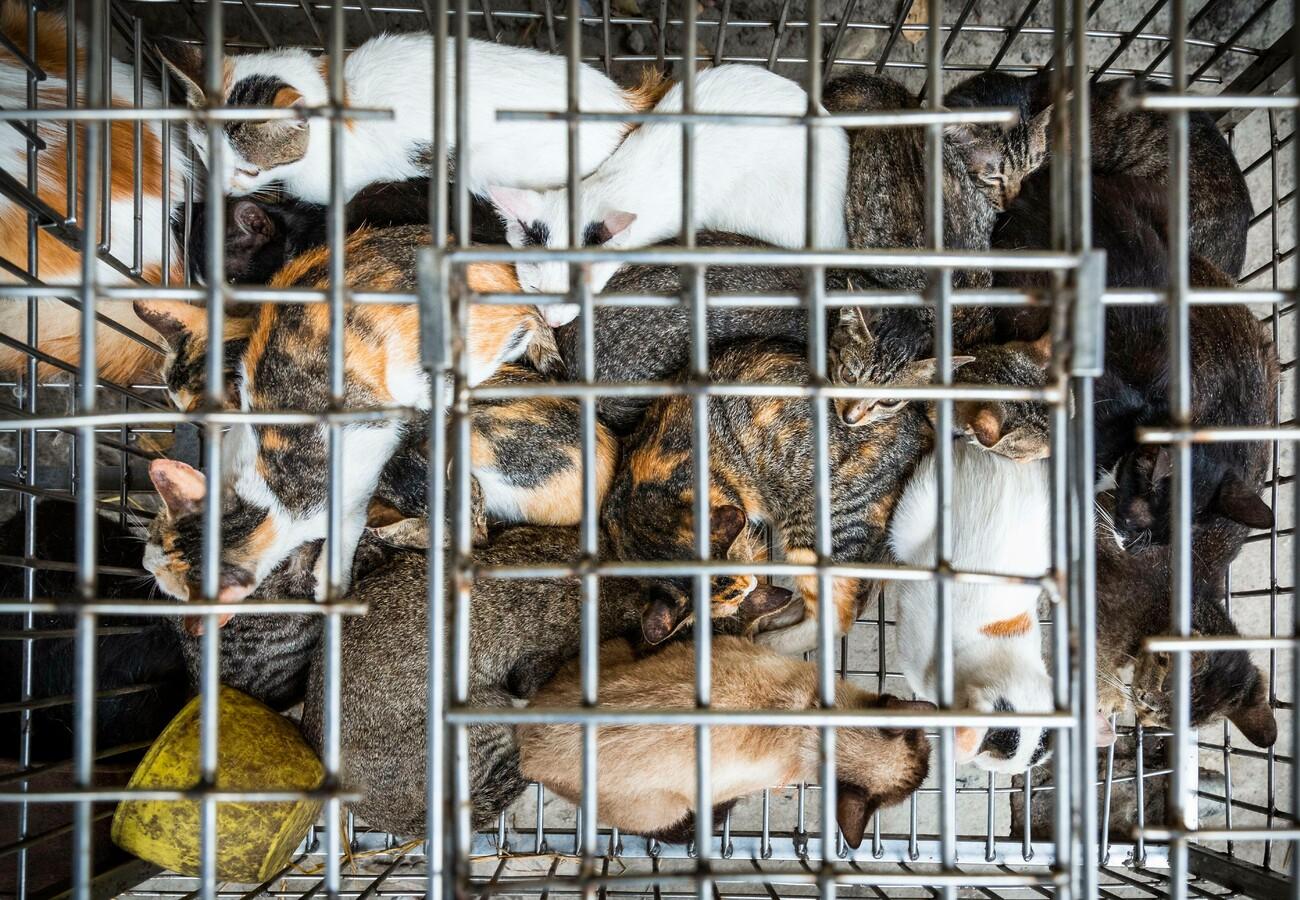
August 12, 2020 – While the dog meat trade and consumption in Asia are increasingly being publicly discussed, the equally cruel cat meat trade remains relatively unknown. Global animal welfare organizations FOUR PAWS and Change For Animals Foundation have published the results of their nationwide investigations into the country’s illegal cat meat trade, revealing the true scale of the hidden trade: in Vietnam alone, approximately one million cats, including strays and pets, are stolen from the streets and even from people’s homes each year, trafficked across the country, and brutally slaughtered. The dish, known locally as “Little Tiger,” though once concentrated in the northern provinces, is becoming popular nationwide despite the increasing number of pet owners. The trade poses a threat not only to animal welfare but also to human health, with the risk of rabies infection. Therefore, FOUR PAWS and Change For Animals Foundation call on the Vietnamese government to reinstate previously existing laws that explicitly prohibited the cat meat trade, as well as to enforce and strengthen existing laws to protect human and animal health and protect pets from theft. Unlike the domestic dog meat trade, the hunting, slaughter, and consumption of cats was explicitly illegal in Vietnam until January 2020. However, the law has been repealed, and cat meat is in greater demand than ever, particularly in the north of the country, but its popularity is spreading to other parts of the country, including Ho Chi Minh City. Investigations by FOUR PAWS and Change For Animals Foundation have identified Hanoi and Thai Binh Province as Vietnam’s most active cat meat regions, with their extensive networks of hundreds of restaurants, warehouses, and slaughterhouses. To meet the growing demand, stray and domestic cats are captured and sold live to wholesalers or directly to restaurants for slaughter.
According to animal rights organizations, “We found many cats with collars at wholesalers—a clear sign that they were pets. During our research, we also encountered many pet owners desperately searching for their stolen cats. Authorities typically turn a blind eye to this, as they are often involved in the cat meat trade, profit from bribes, or are consumers themselves.” — says Dr. Catherine Polak, veterinarian and head of FOUR PAWS Stray Animal Care in Southeast Asia.
Some restaurants buy animals directly from cat thieves and slaughter them on-site, but most work with wholesalers and slaughterhouses. According to investigations, the coastal cities of Da Nang and Hoi An in central Vietnam, popular with local and international tourists, are considered key for the recovery and distribution of stolen cats.
“In holding areas, wholesalers keep cats in small cages for several days until they collect enough animals to cover transportation costs. The cats are transported hundreds of kilometers without water, food, or adequate ventilation to slaughterhouses scattered throughout Vietnam. Some wholesalers even use the luggage compartments of regular passenger buses for their trade,” says Lola Webber, Co-Founder and Program Director at Change For Animals Foundation. Cats are typically drowned in slaughterhouses unless they die from exhaustion, heatstroke, or injuries sustained during brutal capture and transport.
FOUR PAWS and Change For Animals Foundation have also documented that cats are sometimes bludgeoned to death, boiled alive, or electrocuted. The animals are then stripped of their fur, and their skin is burned. Only after this are the cats gutted and frozen for further transportation.
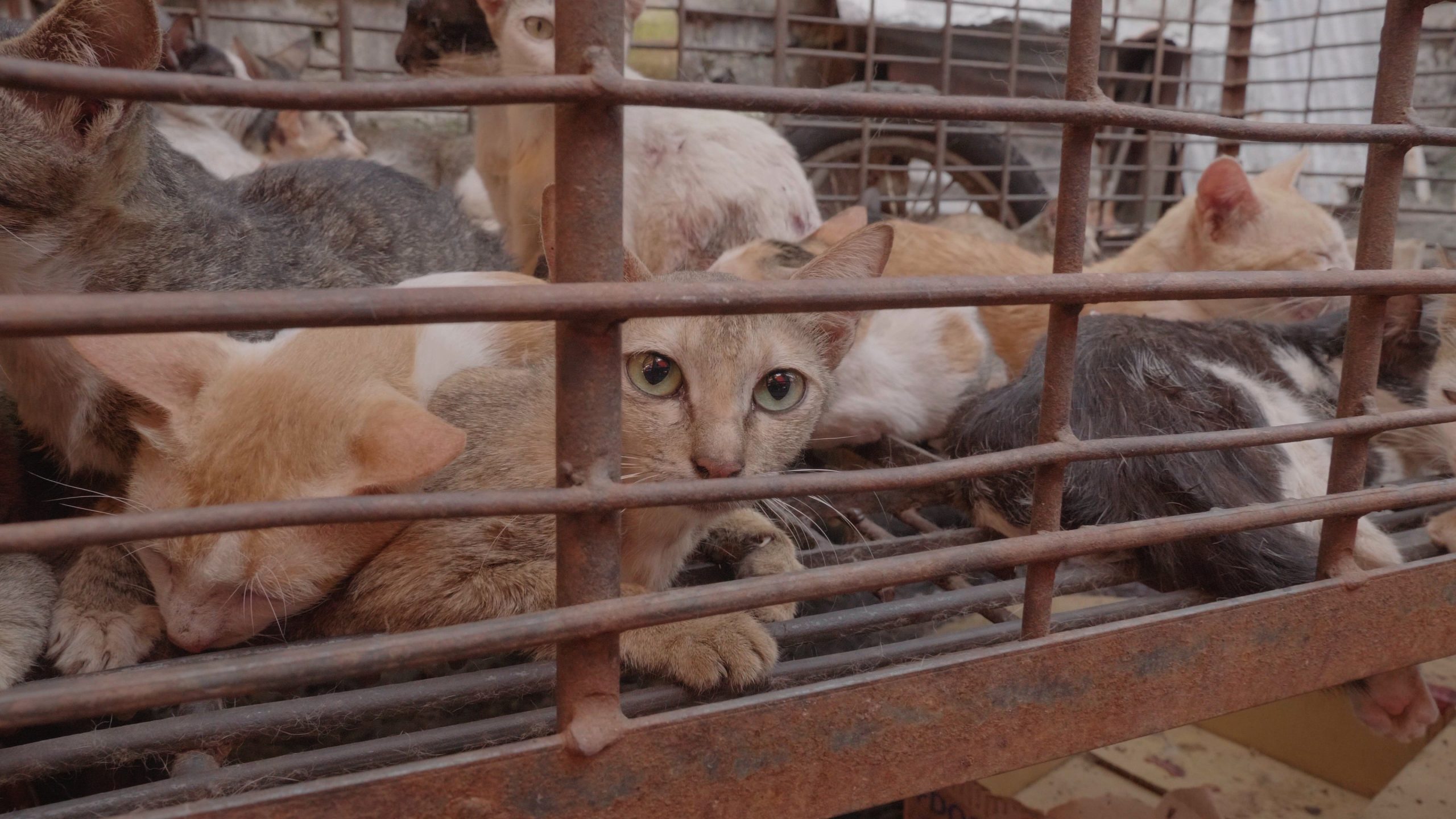
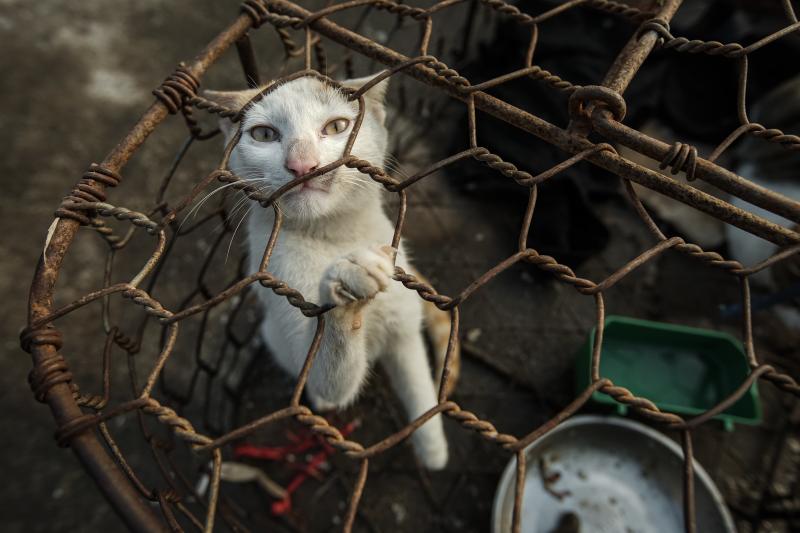
Black cats are considered premium meat
The cat meat trade is a lucrative business. A live cat sells for around $6.50 (€5.70) per kilogram, and a kilogram of their meat costs $8.50 (€7.50). Restaurants offer dishes made from cat meat for around $6.50 (€5.70). According to recent research by FOUR PAWS and the Change For Animals Foundation, black cats are even more valuable. Traders sell them live for US$8.50 (€7.50) per kilogram, while their raw meat can cost up to US$21.50 (€18.90) per kilogram. Younger people consider cat meat an exotic delicacy. For older people, consumption is usually linked to customs, superstitions, and the lunar calendar. Some locals believe that eating cat meat wards off bad luck. Others eat meat, especially black cats, because they believe it has medicinal properties.
Danger to Public Safety and Health
In recent years, cats have become popular pets in Vietnam, despite the growing demand for their meat, which can no longer be met solely by capturing stray cats. Consequently, cat thieves don’t shy away from stealing pets. Violent clashes between cat thieves and pet owners have frequently occurred, some of which have also been fatal. According to FOUR PAWS and the Change For Animals Foundation, the methods used in the cat meat trade also have the potential to lead to future zoonotic disease outbreaks, as seen with COVID-19, due to unsanitary conditions, cruel and unhygienic animal treatment, multi-species transport, holding and slaughter facilities, and cross-border transportation and processing. Without any oversight, many animals—healthy or sick—are transported throughout the country.
Facts about the dog meat trade:
Public opinion polls show that only a small minority of the Indonesian population (4.5%) consumes dog meat, and only a very small number of those involved in the trade rely on dog meat as a primary source of income. Although demand for dog meat is higher in Sulawesi than in the rest of Indonesia, the latest Nielsen public opinion poll (2021) confirms that only 6% of Sulawesi residents consume dogs.
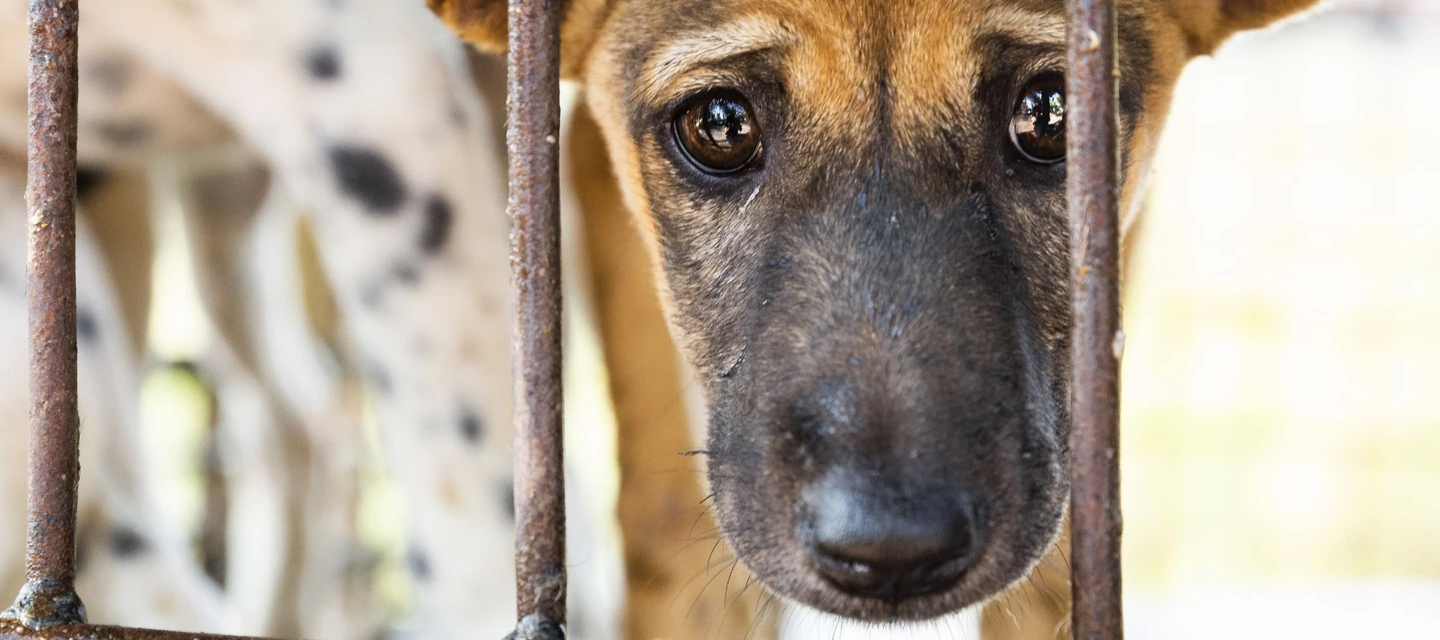
Dog meat is primarily eaten by certain ethnic groups, such as the Minahasa people of North Sulawesi, where 24 markets where approximately 360 live and slaughtered dogs are sold daily, amounting to more than 130,000 dogs annually.
In 2018, President Joko Widodo received a call-to-action letter from DMFI signed by 90 national and international celebrities, including Simon Cowell, Sofia Latyuba, Eslin Wang, Nadia Mulia, Lawrence Ansela, Cameron Diaz, Chelsea Islan, Ellen DeGeneres, and Pierce Brosnan.
The World Health Organization has linked the deadly rabies disease, a zoonotic disease endemic throughout Sulawesi, to the dog meat trade in Asia. North Sulawesi, the destination of thousands of trafficked dogs of unknown disease status, consistently reports the highest rabies mortality rates.There is a growing concern among people in Indonesia.
Indonesia relies heavily on tourists from around the world who care for their beloved pets. In 2019, Indonesia recorded 16.1 million international tourists, of which Australia ranked 4th with nearly 1.4 million visitors, the United States 8th with nearly 460,000 visitors, and the United Kingdom 9th with nearly 400,000 tourists. More than 770,000 people also visited from France, Germany, and the Netherlands.
Across Asia, resistance to the dog and cat meat trade is growing, with a growing number of countries and territories (Taiwan, Hong Kong, the Philippines, Thailand, and two major cities in mainland China) banning the trade, slaughter, sale, and consumption of dogs. In South Korea, the government has created a task force to discuss a dog meat ban, following a proposal from President Moon Jae-in.
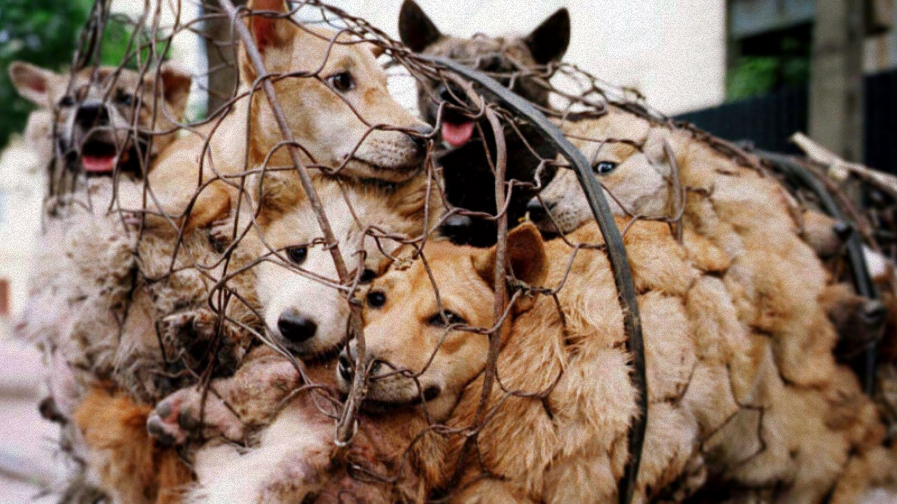
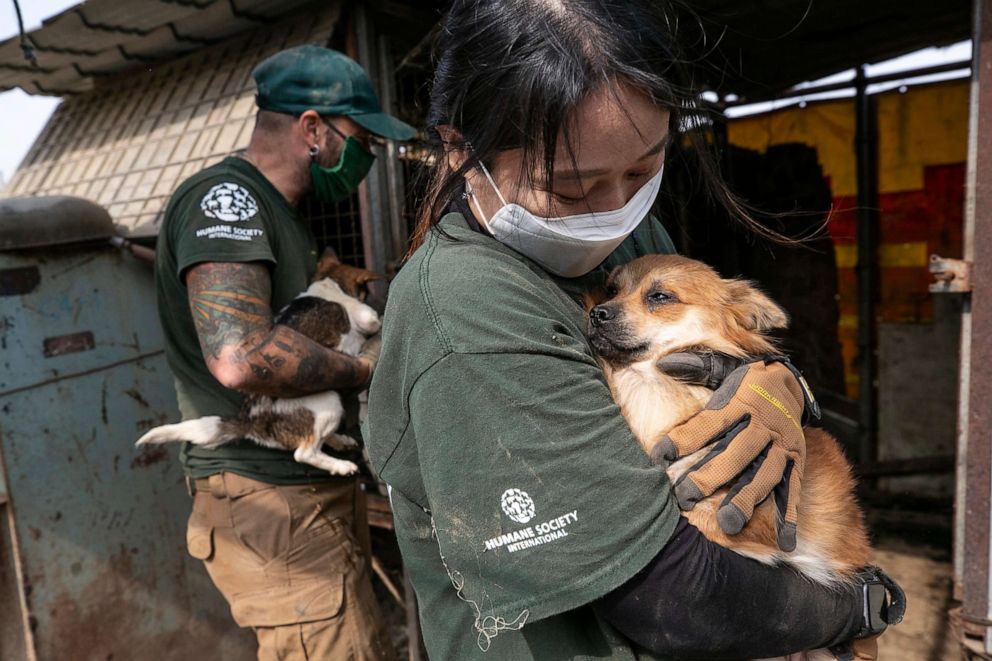
To this day, many animal rights organizations fight to end the cruel business of selling dog and cat meat. Many animals have been saved: through ransoms from traders, interceptions of trucks carrying animals en route to markets, and collaboration with local authorities and country leaders to enact laws prohibiting the cruel killing of cats and dogs.
List and logos of the world’s largest organizations fighting to end the dog and cat meat trade:
Ananta Jyoti Dhayn Kendra
Andhra Pradesh Goshalala Federation
Animal Friends Jogja
Animal Friends Manado
Animal Kingdom Foundation
Animal Liberation Sanctuary
Animal Rescue Cambodia
Animal Rights Committee of Georgia
Animal Rights Hawaii
Animal Sanctuary Trust Indonesia
Animals Asia Foundation
Bali Animal Welfare Association
Bharatiya Prani Mitra Sangh, Hyderabad
Blue Cross of Hyderabad
British Hen Welfare Trust
Capital Animal Welfare Association (China)
Change for Animals Foundation
Coexistence of Animal Rights on Earth
Community Dog Welfare
Compassion Works International
CPR Environmental Education Center
Department of Livestock Services – Bangladesh
Djurrättsalliansen (The Animal Rights Alliance)
Dog Meat Free Indonesia
Dogstop
Environment & Animal Society of Taiwan
Federation of Indian Animal Protection Organization (FIAPO)
FLIGHT
FOUR PAWS International
Free the Bears
Friends of the Orangutans
GAIA (Voice of the Voiceless)
Help Animals India
HERD
Himalayan Animal Rescue Trust
Hollow Logs
Humane Society International
Instituto Pasteur de São Paulo
International Animal & Birds Welfare Society
International Otter Survival Fund
International Primate Protection League
Jakarta Animal Aid Network (JAAN)
Japan Anti-Vivisection Association
JBF (India) Trust
Korea Animal Rights Advocates
Korean Alliance for Prevention of Cruelty to Animals
Landmark Foundation
Life Conservationist Association
Love Animal House Thailand
moonbears.org
Nepal Street Animal Rescue
Nowzad Dogs
Orangutan Aid
PAWS for Compassion
Pecinta Hewan Surabaya
People for Animals, Trivandrum
PETA Asia
Philippine Pet Birth Control Foundation, Inc.
Plants and Animals Welfare Society (PAWS Asia)
Pro Natura Foundation
Sahabat Anjing Surakarta
Sahayog Organisation, Andhra Pradesh Goshalala Federation, Hyderabad
Sanctuary for Health & Reconnection to Animals & Nature
Scorpion Foundation Indonesia
Showing Animals Respect and Kindness
Society for the Protection of Animals Ljubimci
Society for Travelers Respecting Animal Welfare (STRAW)
Stray Relief and Animal Welfare
Sun Bear Centre – Kalimantan
Taiwan SPCA (Sun Bear Centre) – Kalimantan
The Cattitude Trust – Chennai
The Jane Goodall Institute – Global
The Kerulos Center – Elephant Liberation
The Kerulos Center – Science in Service to Animals
Vietnam Cat Welfare
Voice for dogs abroad
VShine (China)
Wild Futures
Wildlife Alliance
Wildlife Salvation
Working for Animals
Zhuzhou Small Animal Protection (China)
Zoocheck Inc.
Links to the websites of animal rights organizations that currently rescue animals directly from markets, for donations and petition signing to close dog and cat markets meat:
FOUR PAWS Stray Animal Care in Southeast Asia
- https://www.four-paws.org
- https://donate.four-paws.org
- https://donate.four-paws.org/s/dog-and-cat-meat-trade
Dog Meat Free Indonesia
- https://www.dogmeatfreeindonesia.org
- https://www.youtube.com/@DogMeatFreeIndonesia/videos
- https://www.facebook.com/dogmeatfreeindonesia
Humane Society International
EPILOGUE
We found Bobby sitting in a wire cage at a bustling dog meat market in North Sulawesi during our latest investigation in December 2017. He was surrounded by scenes from a horror movie, and the terror in his eyes was haunting. We knew we couldn’t leave him.
After being rescued, Bobby was taken to our wonderful partner Animal Friends Manado Indonesia (AFMI) shelter, where over time, Bobby learned the meaning of compassion, love, and joy. He was rescued from the horrors he suffered at the hands of traffickers and truly fell in love with life again.
It breaks my heart that he left this world too soon, on the morning of August 28th… But he left knowing love and with a name. And in his name, we will never give up until the dog and cat meat trade ends across Indonesia.
Bobby meant so much to all of us and embodied what our campaign stood for—righting the world’s wrongs for everyone who needs us, while we fight to prevent other dogs from suffering the way he did. He will forever remain a very strong spirit and will always give us the strength and courage to never give up.

In honor of Bobby, please take action today to make YOUR voice heard.
Change is coming in Indonesia and across Asia… Never before has the dog meat trade or dog meat consumption been questioned as it is now. People are turning their backs on the dog and cat meat trade; people are no longer willing to cover up their inhumanity with the words “culture” or “tradition” of Indonesia.
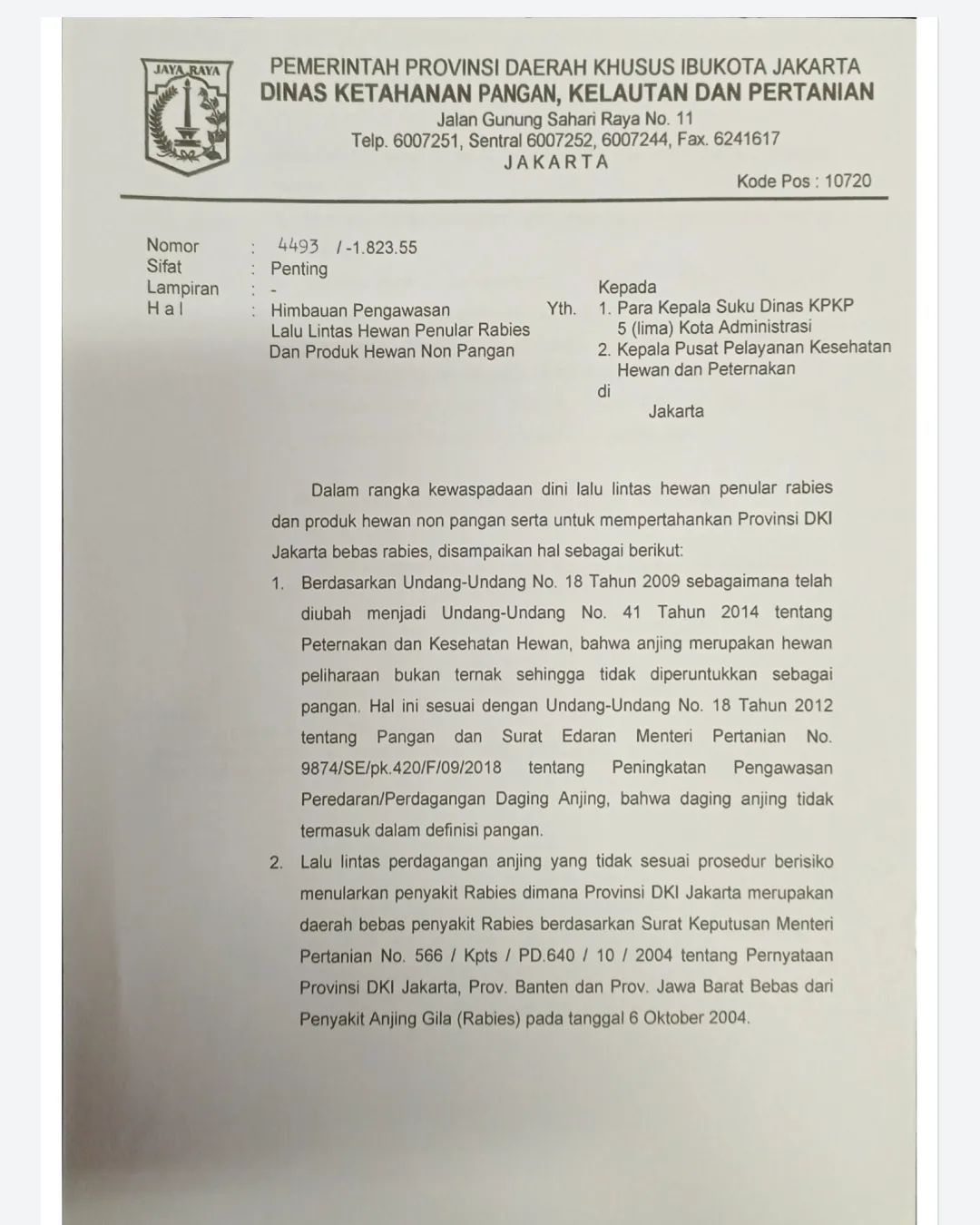
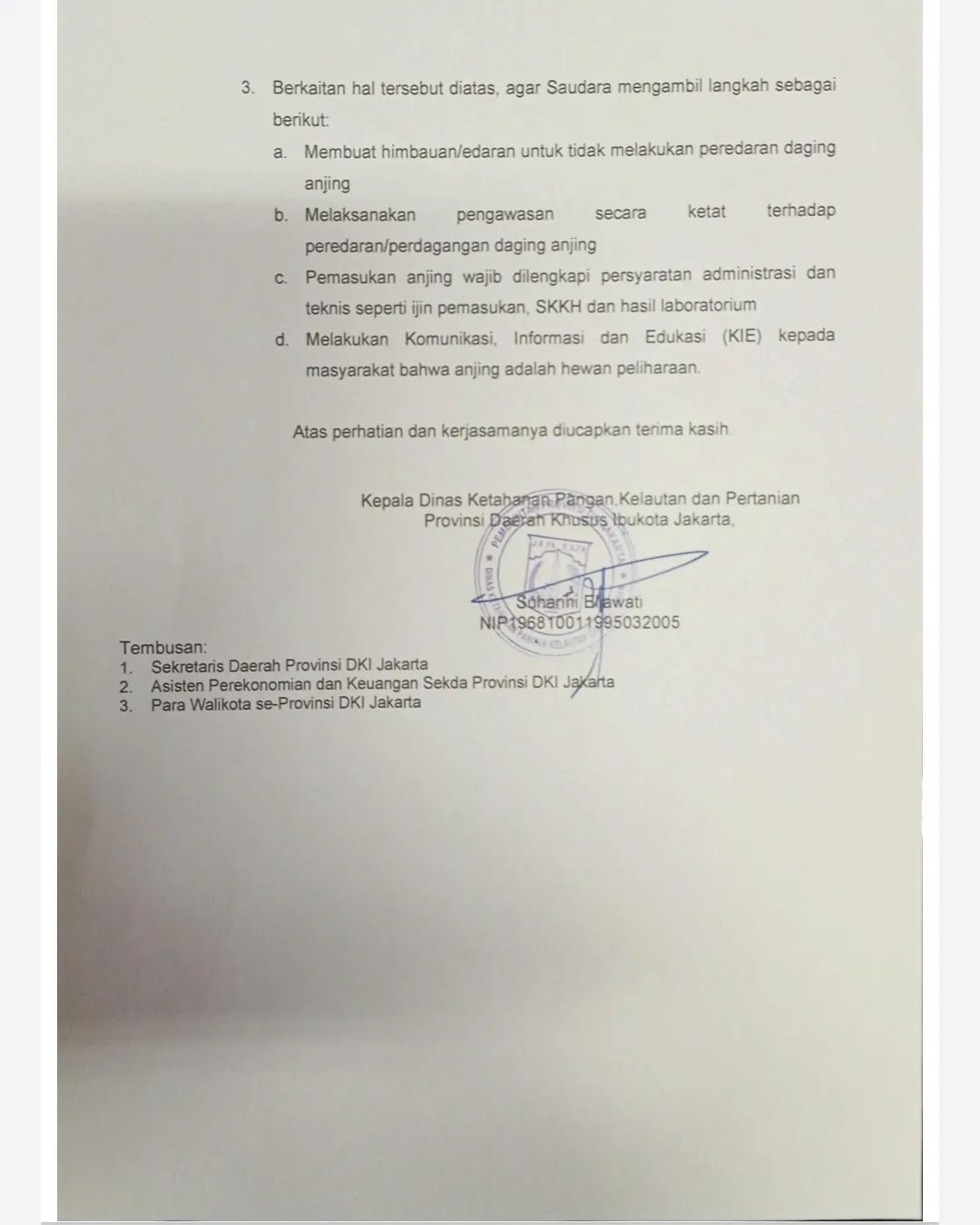
And in conclusion, I would like to say that the colossal work being carried out by global animal rights organizations across Asia has begun to yield the first positive results. So, On July 21, 2023, animal rights organizations in Indonesia, at the government level, officially banned the trade in dog and cat meat!
Source: save-animals.info